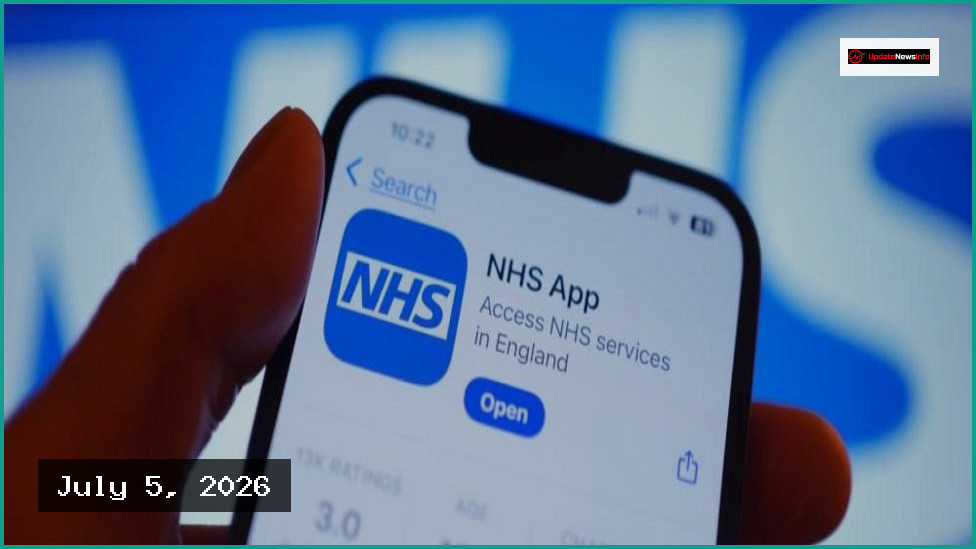
Artificial intelligence is set to be integrated into the NHS app to help determine the most appropriate services for patients across England. According to NHS England, this initiative is a key component of a major technology overhaul, with an initial rollout reaching more than 200,000 patients over the coming year. The health service plans for the tool to be available to all app users by April 2028.
The development is supported by a £10bn government investment allocated in 2025 to modernize the NHS’s digital, data, and technology systems. An early trial of the system at the Wealden Ridge Medical Partnership in Sussex proved successful, resulting in a 29% reduction in telephone queues for appointments. Dr. Ragu Rajan, a physician at the practice, noted that the tool allows patients to communicate their needs effectively, ensuring they reach the correct care provider immediately without replacing human clinical judgment.
Sir Jim Mackey, chief executive of NHS England, stated that the technology is designed to streamline access to services, which will ultimately allow clinicians to prioritize those in the greatest need of GP appointments. Beyond triage, the NHS is also launching an England-wide rollout of AI tools capable of recording patient-staff conversations to generate real-time transcriptions and clinical summaries. This program is expanding at various sites, including St George’s, Epsom and St Helier, Croydon, Kingston and Richmond, as well as Alder Hey Children’s NHS Foundation Trust and Manchester University NHS Foundation Trust.
Research from a trial involving nine London sites, led by Great Ormond Street Hospital for Children, indicated that staff using such notetaking technology spent nearly 25% more time interacting with patients. While the move has been largely welcomed by groups such as the King’s Fund and the Royal College of Nursing, experts have highlighted the need for caution. Prof. Lynn Woolsey, chief nursing officer at the Royal College of Nursing, stressed that patient safety and confidentiality must remain central to any AI system, with a firm guarantee that health professionals retain decision-making authority at critical stages.
Pritesh Mistry of the King’s Fund added that while the technology could significantly improve care delivery, the NHS must maintain a strong focus on preventing digital exclusion. Conservative shadow health secretary Stuart Andrew echoed the support for innovation, provided that the new technology is introduced alongside a fully funded plan that ensures value for taxpayers.