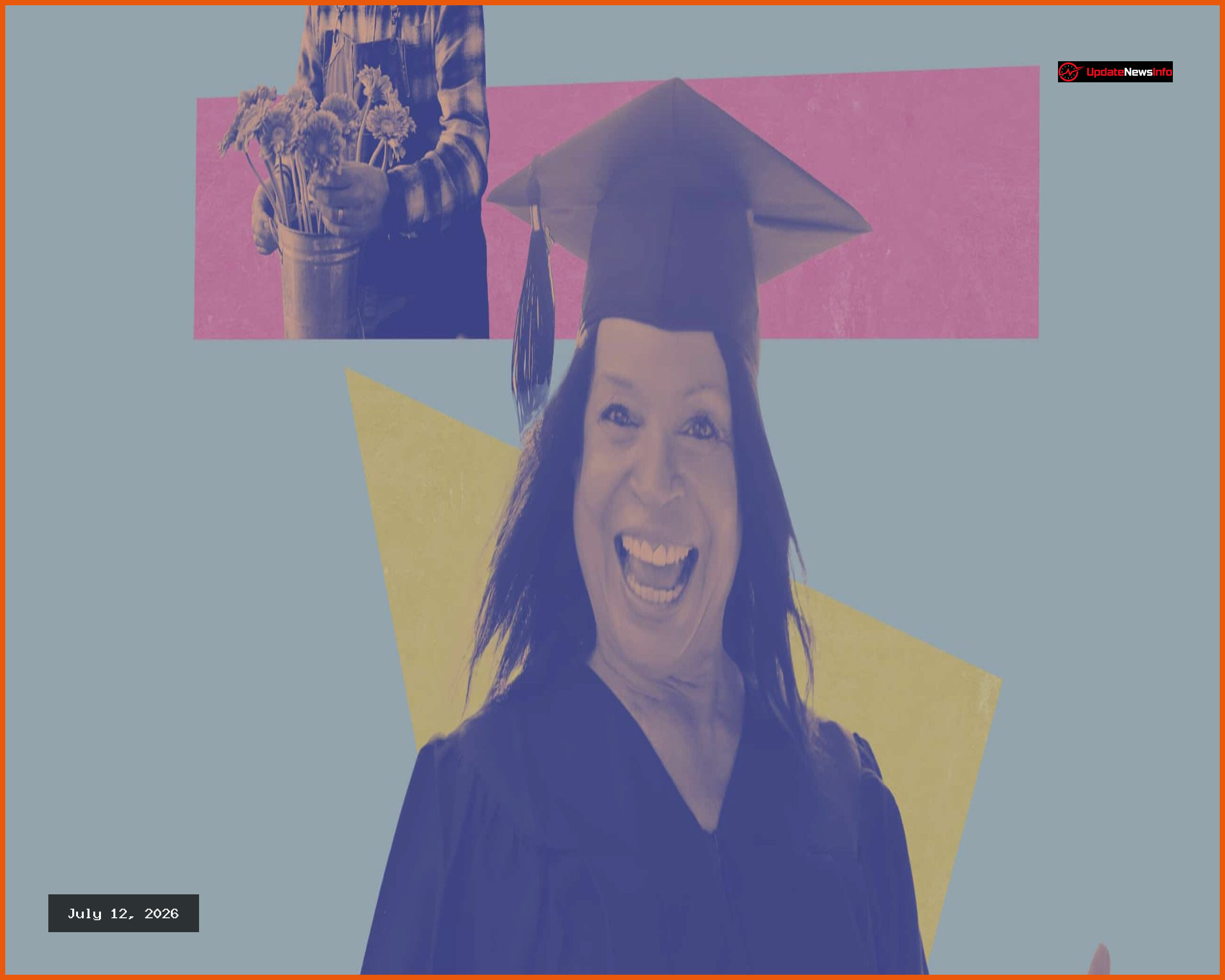
It is never too late to pursue your life’s ambitions, according to a group of successful individuals who have embarked on new careers and passions in their later years. Their shared experiences highlight key strategies for achieving a fulfilling second act, regardless of age.
Fiona Leitch, 56, from Great Yarmouth, who became a novelist at 48 after reworking a screenplay, emphasizes the importance of self-admission. “You first have to admit to yourself that is what you want to do,” she stated. Leitch’s first novel, ‘Dead in Venice,’ was picked up by Audible in 2017, and she has since published 10 Cornish cosy mystery novels.
Nola Bliss, 77, from York in Western Australia, found success as a standup comedian in her 70s, even winning her state’s Next Gen comedy competition in 2025. She advises, “Feel the fear and do it anyway.” Bliss, who started comedy in her 50s, encourages embracing passions, suggesting that if one isn’t sure what to pursue, looking for interests or skills and exploring possibilities is key. “If you want to take up knitting, knit something large – not a pair of booties,” she quipped, advocating for bold pursuits.
Lisbeth Dreyer, who became a flower farmer and florist in her 60s in Aurland, Norway, noted that age brings perspective. “You know that it all goes into the river of life and life keeps going,” she said, suggesting that failures are less daunting. She added, “If there is something you want to do, you should try it. I think people feel bad inside if they don’t try what they want to do.”
Steven Taylor, 73, recently completed a PhD, a goal he had set in his 20s. He credits neuroplasticity for his success, stating, “continuing to develop your cognitive capacity when you’re older – I think that’s what really worked for me.” Taylor, who returned to university in his mid-60s, found his life experience a valuable asset in his studies.
Shashi Aggarwal, in her seventh decade, established the highly successful Spice Kitchen business in Walsall, a significant shift from her previous retail work. “I was itching to do something myself,” Aggarwal explained. Now 75, she enjoys her work immensely and believes starting later might have even contributed to her success. Her business, inspired by her Indian heritage and initially suggested by her son, began with an eBay order on Boxing Day and now stocks 600 shops across the UK.
Aggarwal’s advice for aspiring entrepreneurs is to “try your idea, start small, then gradually it might grow bigger. If you don’t try, you’ll never know.” Dreyer, who has freelanced extensively, finds running one’s own business to be “the most fun thing in the world to find your market, find your customers.”
The individuals also touched on the unique advantages age brings. Leitch noted that more life experience provides a better understanding of the world and people, which is invaluable for writers. Taylor, who wrote a book titled ‘Ageing Radically,’ suggests that the concept of idealized retirement is fading, with many seeking more fulfilling ways to spend their later years, even if financially stable.
Taylor himself doesn’t feel age defines his lifestyle, continuing to engage in activities like researching underground clubs for his PhD and dancing late into the night. He believes the second half of life can be about finding pleasure and ease rather than solely accumulating wealth or possessions.
Aggarwal, who works by choice, stated, “I work when I want to work. That is the advantage of having your own business: you can take time out when you want to.” She finds constant activity more fulfilling than idleness, feeling she has “a lot more to give” after decades of work.
Bliss views age as a state of mind, asserting that a second career will “keep you alive, keep you young, keep you interesting.” She also humorously uses her age for comedy material, joking about dating apps like ‘Tinder Dry’ and ‘Grumble,’ noting that her age grants her license to be more candid.
Leitch also shared that responsibilities, like raising her son, can temporarily pause aspirations. She stopped writing completely when her son was born in 2003, returning to part-time jobs and eventually resuming writing regularly when he was around 10, which ultimately led to her literary success. She stressed the importance of a positive mindset and perseverance, saying, “If you are good at something, admit to yourself you are good at it, and you need to carry on going.” She also highlighted the role of luck in getting opportunities in front of the right people at the right time, urging others to “keep working at it and to look out for opportunities and take them, even if they seem really unlikely.”
Ultimately, the message from these late bloomers is clear: life offers continuous opportunities for growth and fulfillment. “People should remind themselves that they only have one life,” Dreyer concluded, “and if there is something you want to do, you should try it. It is easier to live with it if you try.”
Gone are the days of idealised retirement, continues Taylor: “Kicking back, making jam and going on cruises is becoming less realistic to people. If you can get to a point where you’ve got some [financial] stability, then the second half of life is not necessarily about making more money or having a bigger house.” Instead, you might want to use that stability to find a more pleasurable or easier way of paying the bills.
“I work when I want to work,” says Aggarwal. “That is the advantage of having your own business: you can take time out when you want to.” She says that she has no interest in sitting and watching TV all day. “Because I worked for 40 years, Monday to Saturday, doing nothing doesn’t seem right to me. I have a lot more to give.”