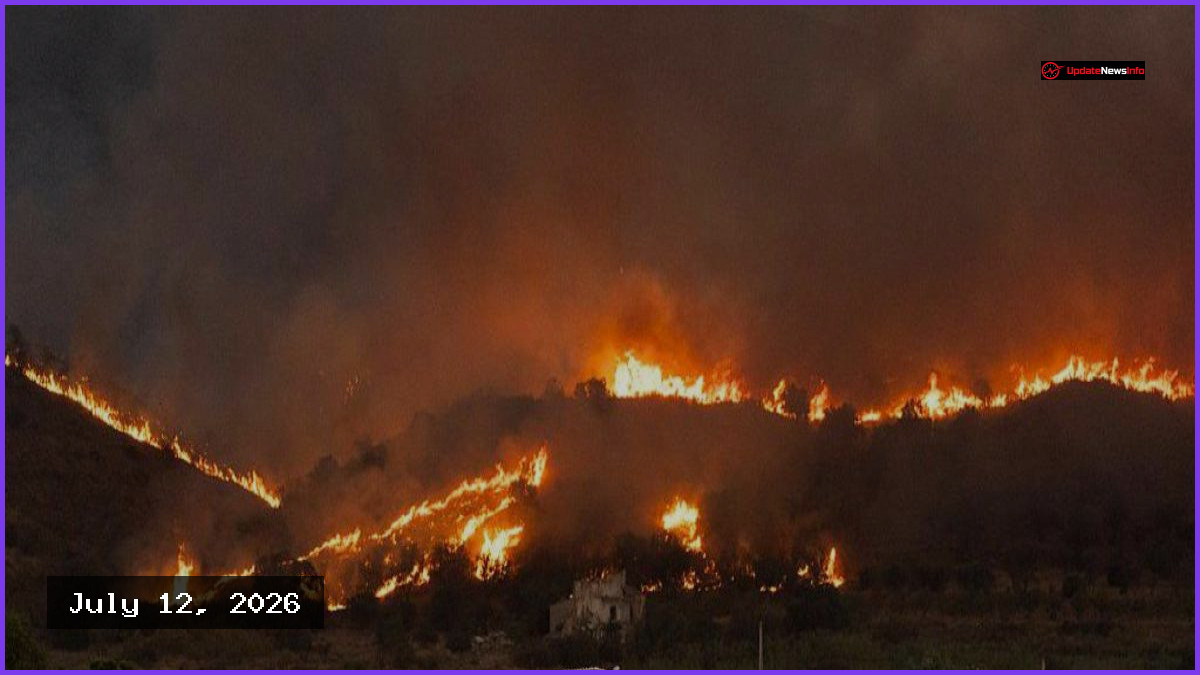
A British couple, found badly burned and semi-conscious in a ravine, have been rescued after being caught in the deadly wildfires that tore through Spain's Almeria province. The pair, believed to have been hiking when the blaze rapidly spread on Thursday, were evacuated and are now in intensive care in hospital.
Civil Guard officers discovered the couple in the early hours of Friday morning while searching for survivors near Bédar, one of the worst-hit villages. Sergeant Pedro Barre, one of the rescuers, recounted hearing distant cries for help. He told Spain's TVE state broadcaster, "As you gain more experience, something inside you tells you, 'Look again, try one more time.'" The rescue team followed the sound, climbing down a hillside to find the couple in critical condition, semi-conscious, and with severe burns covering 40% of their bodies.
Rafael Zea, another officer involved, described their ability to call out in such a state as a "titanic effort," while Sergeant Barre added, "We'll never forget that look of surprise and emotion on their faces."
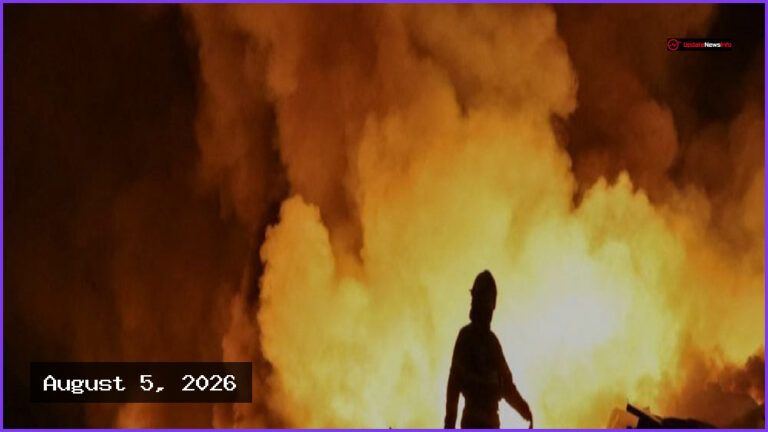
The wildfires, now contained, have claimed the lives of 12 people, including four believed to be Britons, though official identities have not yet been confirmed. Authorities reported that the blaze burned through approximately 7,000 hectares (17,300 acres) of land. On Sunday, Juan Manuel Moreno Bonilla, head of Andalusia's regional government, announced that more favourable conditions had allowed firefighters to bring the fire under control, leading to a downgrade of the overall alert.
Regional emergency chief Antonio Sanz confirmed that about 600 of the nearly 1,500 people evacuated from the Almería province fire zone were permitted to return home.
However, the official response to the crisis has drawn criticism from residents and victims' families. Emma Mitchell, a full-time resident of Bédar for three years, challenged earlier statements by local authorities suggesting some victims had not used designated evacuation routes. She stated, "We've lived here for three years full time and there has never been information that you should take this road if there is a fire, never." Mitchell also condemned the decision not to send a mobile phone alert, similar to those used for earthquakes, despite officials citing technical complexities.
She praised the individual efforts of local police and firefighters who visited dozens of people as the fire intensified.
Thomas-Wolf Verdonckt, whose 63-year-old Belgian businessman father, Stanislas Verdonckt, died in the wildfire, also disputed claims that victims ignored official advice to shelter in place. He told Reuters that his father received "no official warning" or evacuation commands on Thursday evening as the fire approached Bédar. "There was no warning, they were not aware of a fire, and by the time they were – because they saw the fire themselves – it was already too late," he said.
Verdonckt explained that his father and others attempted to use the main road, a designated evacuation route, but found it inaccessible and were forced to take a different trail. He stressed, "It was out of their hands, it's not fair on them that they are [blamed] when it was not their choice to begin with."
Local officials previously stated they did not issue an alert on Thursday night to avoid reaching people beyond the affected area and complicating evacuations. They also maintained that police conducted door-to-door visits or telephoned residents with instructions. Bédar Mayor Angel Collado told reporters on Saturday that he had urged the group, including Stanislas Verdonckt, to shelter in place. The Andalusian regional government and the Spanish Civil Guard police did not immediately respond to requests for comment regarding these claims.
Among those waiting anxiously to return were Mike and Belinda Lithgoe from Cornwall, who own a holiday property near Los Gallardos, an area home to many foreign residents. Since the fires, they had been sleeping in their camper van with their dog, Rocket. They were hopeful their house had survived, noting the smoke was on the other side of the mountain as they fled. Mike remarked, "It's impossible to know. You hope it will have gone down the ravine and round rather than up through the village." Police restricted access to Bédar on Sunday, blocking roads to the village.
The Los Gallardos mayor, Francisco Miguel Reyes, told Spanish radio station Cadena SER on Friday that "it feels like a bomb has fallen" on the area, adding, "This is the first time we've faced a fire as devastating as this." This event is already among the deadliest wildfires in Spanish history, comparable to the 1984 fire on La Gomera that killed 20 people and a 1979 forest fire near Lloret de Mar that claimed 21 lives, including nine children.
The wildfires in Spain are part of a broader pattern across southern Europe this summer, driven by a sustained heatwave with temperatures around 40C (104F) in countries like France, Portugal, and Spain. According to the Copernicus climate service, Europe is the fastest warming continent, heating up twice as fast as the global average, with climate change leading to increased summer heatwaves, greater pressure on water supplies, and more intense wildfires.
'Really frightening, unbelievably quick': Witnesses describe fleeing deadly Spain wildfire