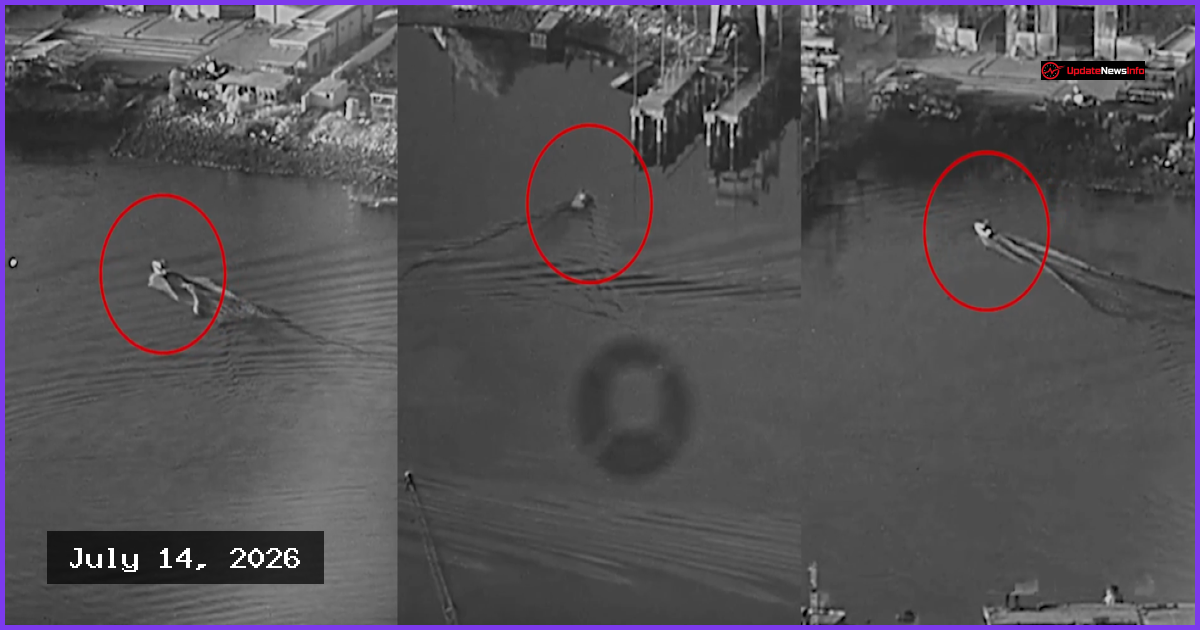
In a significant shift for modern combat operations, the United States military employed one-way attack sea drones for the first time during a mission on Sunday. U.S. Central Command (CENTCOM) confirmed that multiple sea surface drones were utilized to strike a submarine and ship maintenance facility located at the Bandar Abbas Naval Base, situated along Iran’s coast in the Strait of Hormuz.
Video footage released by CENTCOM captured an aerial perspective of three small sea drones navigating toward a raised dock. The dock appeared to house a small submarine before the drones struck, resulting in explosions that sent tall plumes of smoke into the air. While the exact extent of the damage remains unclear, the final blast shown in the video appeared to ignite a significant fire. CENTCOM officials characterized the operation as successful, stating that the strike effectively degraded Iran's capacity to continue targeting commercial shipping in the region.
The technology used in the attack was identified as the 24-foot Corsair Autonomous Service Vehicle, produced by the Texas-based manufacturer Saronic. Following the mission, the company stated on social media that it was proud its technology supported the effort to keep U.S. armed forces personnel safe. According to specifications on the manufacturer’s website, the Corsair drone can carry a payload of up to 1,000 pounds, travel over 1,000 nautical miles, and reach a top speed of 35 knots.
Saronic publicly unveiled the Corsair in October 2024. By December 2025, the company had secured a $392 million production contract with the U.S. Navy, moving the vessel from prototype to production in less than a year. The use of these drones reflects a broader trend in modern warfare, where such tools have become prominent, similar to their deployment by Ukraine against the Russian navy in the Black Sea.
Addressing the strategic implementation of these tools, CENTCOM spokesman Captain Tim Hawkins noted that U.S. forces in the Middle East have utilized various new capabilities throughout the conflict to complete their objectives. Hawkins emphasized that equipping warfighters with cutting-edge technology to enhance combat effectiveness remains a primary goal for U.S. Central Command.