The Gulf of Trieste is witnessing a unique and escalating phenomenon in the Mediterranean: the increasing frequency of sightings of large bull ray aggregations. These rays, among the largest eagle rays in the region, are now a regular presence in the coastal waters off Trieste, a development that has reached a significant scale over the past three years.
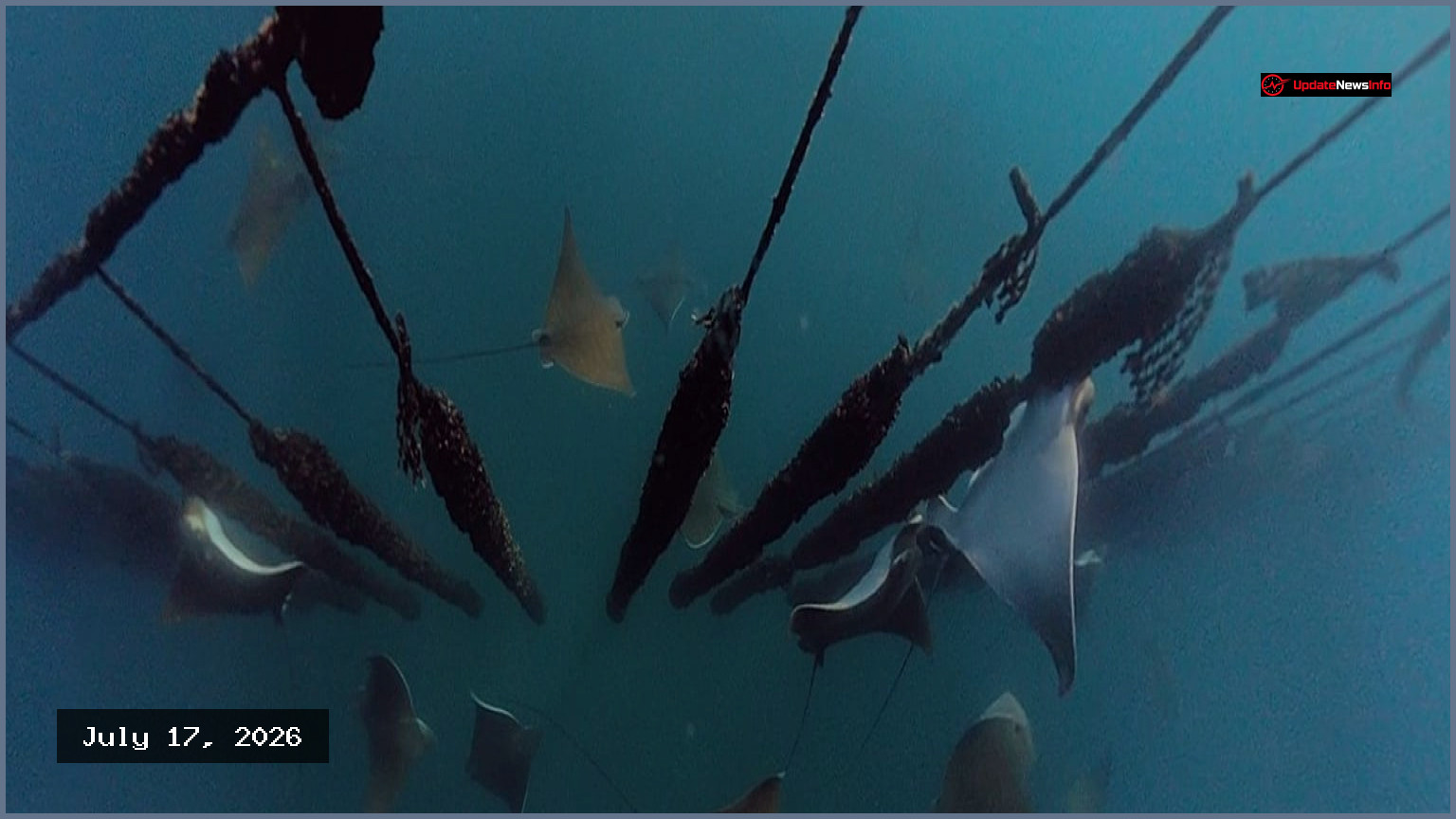
Saul Ciriaco, head of monitoring for the WWF Miramare Marine Protected Area (MPA) and vice-president of the Shoreline cooperative, noted that while bull rays have always been present, recent years have seen a dramatic shift. "In recent years sightings have become steady, around one a week in the summer season," Ciriaco stated. "This is the first year in which we have recorded a high number of animals grouped together, with aggregations reaching as many as 50 individuals. That, as well as the frequency, is what makes it distinctive." He suggests these aggregations are linked to feeding and reproduction, as males and females come into contact.
While the phenomenon has sparked interest among researchers and marine enthusiasts due to the bull ray being a rare, protected species, it has simultaneously created a problem for local mussel farms. The mussel lines have become an easily accessible food source, attracting the rays. Simona Clò, marine biologist and scientific director of MedSharks, an association dedicated to conserving Mediterranean marine species, highlighted the novelty of this interaction. "Such interaction between bull rays and human activities had never been seen before," Clò explained. She emphasized the urgent need to develop non-invasive technologies and solutions that protect mussel farmers' livelihoods without endangering the bull rays.
The Gulf of Trieste is now a testing ground for coexistence strategies, spearheaded by the Miramare MPA and supported by European Union-funded projects like Life Eu Sharks and Life Prometheus. Similar bull ray aggregations near mussel farms have been reported in Greece and Turkey, and near Olbia, but Trieste is the first location to document this on such a substantial scale with significant groupings.
Bull rays (Myliobatidae family) are cartilaginous fish typically found in tropical and temperate waters, including the eastern Atlantic, southwestern Indian Ocean, Mediterranean, and Black Seas. They can grow up to two meters wide. The species is classified as seriously at risk in the Mediterranean and is protected under the Barcelona Convention and the UN Bonn Convention on migratory species. It is also listed on the IUCN Red List.
Several factors are believed to contribute to the increased presence of bull rays. Stricter European fisheries policies have reduced bycatch, leading to improved reproductive success for the species. Ciriaco explained, "Stricter and more selective fishing rules have also improved their reproductive performance." Additionally, rising winter water temperatures in the Mediterranean, now consistently above 10 degrees Celsius and within the bull rays' preferred range of 11 to 28 degrees Celsius, have made the Gulf of Trieste a more suitable habitat for them to stay year-round, rather than just a migratory passage.
The bull rays are not confined to a small area; Ciriaco noted they move across approximately 20 kilometers of coastline, from Grignano to Monfalcone. Shoreline's monitoring efforts, part of the Life Eu Sharks program, focus on counting and identifying individuals. Last year, the Environment Ministry provided drones to aid in tracking and photo-identifying the animals, which is crucial for estimating their population in the Gulf. "The largest group sighted so far numbered about 50 animals, all adults and sub-adults, but the real figures could be much higher,” Clò stated.
Data collected from drone imagery is uploaded to a database where software identifies individual animals by their unique stripe patterns. This allows for an estimation of the actual population size in the Gulf of Trieste. The presence of these rays may vary seasonally, with potential arrival in late spring and departure in autumn, or they might remain permanently.
The specific geography of the Gulf of Trieste, combined with rising sea temperatures and the ready availability of mussels, appears to have created an ideal environment for bull rays to settle. Ciriaco suggests this makes it "simpler and more efficient to eat mussels directly from the ropes." Bull rays are durophagous, typically feeding on crustaceans and molluscs from the seabed, but the accessible mussel farms have encouraged them to forage closer to the surface. Clò described them as "opportunistic animals, like sharks, meaning they make maximum use of the resources available; if they find lines covered in mussels, they feed directly from them. For them it is an ideal situation."
However, this situation causes significant economic damage to mussel farms, although quantifying the exact losses is challenging due to other contributing factors like rising water temperatures and predators such as turtles. To address this conflict, the Life Prometheus project, a collaboration between Shoreline, Miramare MPA, and mussel farmers, is testing electromagnetic deterrents. These small magnets are installed on mussel lines to repel bull rays without causing harm.
The initial deployment of these deterrents occurred in early July, and a month of observation is needed to assess their effectiveness specifically for bull rays, as they are typically used for sharks. Ciriaco indicated that if successful, a cost-benefit analysis will be necessary, comparing the magnets' effectiveness and practicality against other methods like fitting protective sleeves or sticks on the lines, which require substantial labor and cost for large-scale deployment.
Future steps include organizing a roundtable discussion with the Friuli Venezia Giulia region and the coastguard to address the issue and explore solutions. "Bull rays are important animals for the environment. They also swim close to the shore and this is something that should be valued and managed together," Clò urged. She expressed hope for interventions that avoid causing damage and prevent individual farmers from bearing the burden alone with strategies that could jeopardize the protected species.
One proposed compensatory solution is the promotion of snorkeling and underwater photography tours in designated areas of the Gulf, allowing for coexistence and interaction with these rare animals.
Changes in European fisheries policy have led to fewer animals being caught, as they used to be taken as bycatch, or incidental catch, when another species was being targeted.
Thanks to the project, “we are able to identify individual animals through the distinctive pattern of stripes on their back. This will give us an estimate of the actual population in the Gulf of Trieste,” the biologist pointed out.