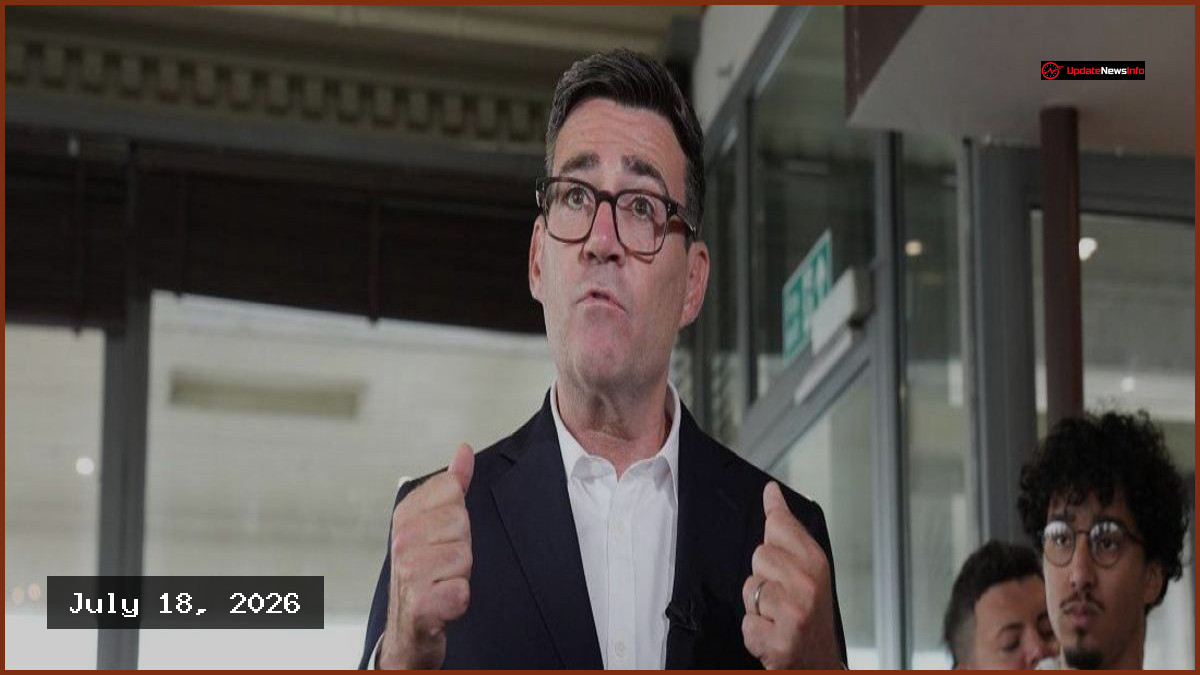
It is a pivotal weekend for Andy Burnham, as he prepares to step into Downing Street to lead both his party and the country. For a man who has long harbored ambitions for the highest office, the current moment feels like a culmination of a journey that began in earnest many years ago.
One supporter remarked on the intensity of the transition, noting that while they have been thinking about this possibility for 16 years, the final weeks have felt like a sudden, rapid rush.
Burnham’s path to the premiership has been characterized by a long, slow climb followed by a remarkably swift ascent. His public designs on Downing Street date back to 2010, when he first contested the leadership vacancy following Labour’s general election defeat. He repeated this effort in 2015 after another party loss.
On both occasions, he was unsuccessful, losing to Ed Miliband in 2015 and Jeremy Corbyn in 2017 and 2019. Now, in 2026, he is set to take the helm, a development that seemed unlikely as recently as January, when he was barred from standing as a Labour candidate for a parliamentary seat.
The transition has moved with unexpected speed. Sir Keir Starmer, who had previously barred Burnham from standing, is now preparing to vacate Downing Street, with removal vans already spotted at the residence. Sir Keir and his family are expected to depart on Monday morning.
Because no one formally challenged Sir Keir for the leadership and no one stood against Burnham to replace him, the process was far more efficient than some had anticipated, leaving Team Burnham to scramble to complete their preparations.
In recent days, Burnham and his team have been engaged in access talks with the civil service to coordinate their plans for government and schedule a series of early events for the coming week. Indications suggest the new administration intends to hit the ground running with a blitz of public appearances and policy announcements.
Furthermore, the incoming prime minister has begun receiving national security briefings as the handover of power shifts into a higher gear.
Regarding his cabinet, Burnham has stated that he has not yet made final decisions on his top team, though he later clarified that he is in the process of finalizing those choices. This weekend is dedicated to those critical decisions, which include the high-profile appointment of a chancellor and the distribution of many other roles.
According to the Institute for Government, there are 149 ministerial posts to be filled by 122 people. While some dismiss the speculation surrounding these appointments as mere soap opera, the selections are vital as they will define the style, tone, and outlook of the new government.
The process is a complex exercise in organizational jenga, requiring the prime minister to balance factors such as politics, gender, geography, and experience. Many, including current cabinet ministers, remain in the dark about their futures. Those hoping to retain their positions have been privately advocating for stability and continuity, while others have already accepted their departure.
Within the Labour Party, there is a palpable sense of renewed optimism, with many members feeling that the leadership reboot has allowed the party to remember how to smile again. One Labour MP, clutching a water bottle, described the change as a much-needed hydration break, drawing a parallel to the footballing novelties seen at the World Cup.
As the party shifts tactics and installs a new captain, Burnham has expressed towering ambition, claiming he will personify the most significant change in British politics in 40 years. His enthusiasm for tackling difficult issues, such as social care in England, appears genuine. However, he will face significant challenges both domestically and internationally starting Monday.
The central question remains whether the Brand Burnham persona can survive the realities of governing and if his characteristic charm will prove resilient enough for the tasks ahead.
Within the constraints of the party's two-year-old manifesto, he must deliver results quickly to satisfy an impatient and expectant electorate. As he becomes the fifth prime minister in four years, he enters a role that has recently offered very little job security.