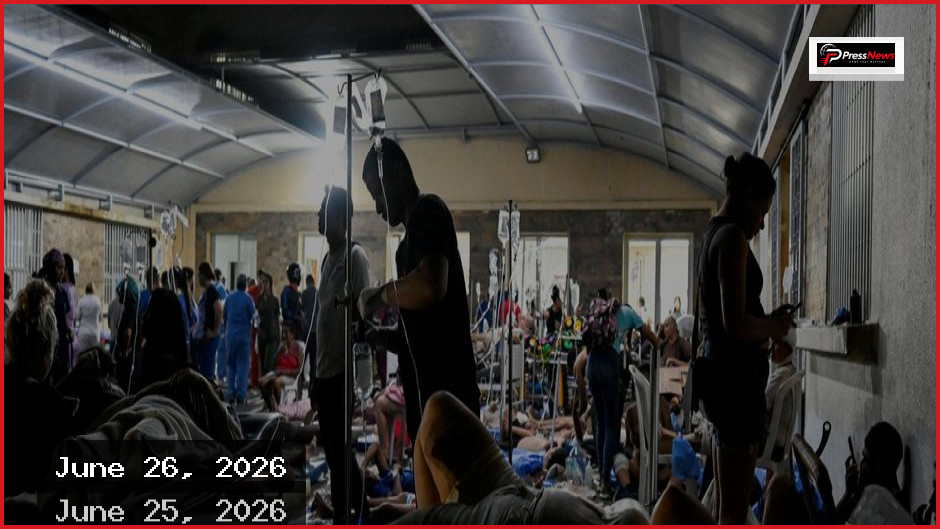
Earthquakes are an inescapable natural phenomenon, yet the experience of living in seismic zones does not inherently mandate a life governed by constant fear. Through a combination of innovation, determination, and proactive preparation, several nations have demonstrated that communities can effectively manage these risks. Recently, central Venezuela experienced two major earthquakes in quick succession on a Wednesday, with magnitudes of 7.2 and 7.5. These events resulted in at least 32 fatalities, hundreds of injuries, and significant infrastructure damage in Caracas and the state of La Guaira, highlighting the persistent threat posed by tectonic activity.
While Venezuela is situated near multiple fault lines, major tremors are relatively rare there compared to regions along the Pacific Ring of Fire, which accounts for approximately 90% of global seismic activity. Countries such as Japan, Chile, and Mexico have long grappled with this reality, transforming their historical vulnerability into a model of resilience by focusing on systems that protect populations before the ground begins to move.
Japan remains one of the world’s most earthquake-prone regions, having mastered a balance of technology, architectural innovation, and public readiness. A cornerstone of this strategy is the Earthquake Early Warning system managed by the Japan Meteorological Agency. Since 2007, this network of over a thousand seismic sensors has detected initial P-waves to provide critical seconds of warning via smartphones, television, and radio. Architecturally, Japan mandates strict standards, notably the 1981 Shin-Taishin regulations, which require modern buildings to utilize seismic isolation systems that allow structures to sway rather than resist kinetic energy. Preparedness is further embedded in daily life through regular drills and a network of over 240 designated evacuation sites in Tokyo alone.
Chile, also positioned along the Ring of Fire, fundamentally altered its disaster policies following the 1960 Valdivia earthquake, which measured a record-breaking 9.5 in magnitude. The country implemented rigorous building codes that proved their worth during the 8.8-magnitude Maule earthquake in 2010, where many modern structures remained intact. The Chilean National Disaster Prevention and Response Service (SENAPRED) now coordinates national risk reduction strategies, emphasizing that preparedness requires a multi-faceted approach involving policy, capacity building, and localized community planning.
Mexico’s path to resilience was shaped by the devastating 8.0-magnitude earthquake that struck Mexico City on September 19, 1985. This tragedy spurred the development of the Mexican Seismic Alert System (SASMEX) in 1991, which alerts inland cities up to a minute before shaking starts. This system proved effective during the 2017 earthquake, where improved building standards and rapid response protocols significantly saved lives. Today, the nation marks the anniversary of the 1985 disaster with nationwide drills to ensure constant readiness.
In North America, cities like Vancouver and Victoria are addressing seismic threats linked to the Cascadia Subduction Zone. Recognizing that the global population in high-risk seismic cities is projected to double by 2050, planners are focusing on community-centric resilience. Vancouver has established a network of disaster support hubs in public spaces such as libraries and parks. These locations are marked with yellow signs and are intended to serve as centralized points for medical aid, supplies, and recovery coordination, ensuring that public infrastructure functions as a lifeline during crises.