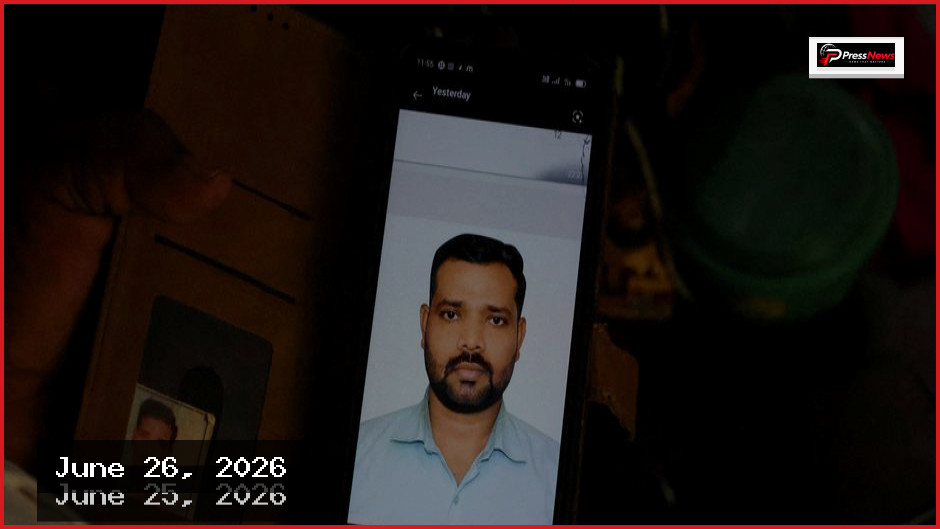
Sushila Devi is grappling with profound grief after the loss of her husband, Indian sailor Shivanand Chaurasia, who was killed on June 9 during a US military strike on the commercial ship MT Settebello in the Gulf of Oman. Chaurasia, an engineering fitter by profession, had dedicated years to rigorous training for his maritime career in hopes of securing a better future for his family, yet they are now left to face an uncertain life without him.
Chaurasia was one of three Indian sailors killed when the US military struck the Palau-flagged oil and chemical tanker earlier this month. The US military stated the action was taken to enforce a blockade on Iranian oil exports amid the ongoing Iran war. The other two deceased were chief engineer Patnala Suresh and deck cadet Aditya Sharma, while the remaining 21 Indian crew members were rescued. US officials claimed the vessel was carrying Iranian oil and ignored repeated warnings, a claim the ship’s management disputes, stating the vessel had no ties to Iran and received no warnings before the strike.
Sushila Devi expressed her anguish over the loss, stating that American forces were responsible for her husband’s death and criticizing the silence of Prime Minister Narendra Modi and Uttar Pradesh Chief Minister Yogi Adityanath. The Chaurasia family lives in a small farming village in the Deoria district of eastern Uttar Pradesh, characterized by modest brick-and-mud houses amidst rice fields. The family feels neglected, noting that no government leaders have visited them. The family had previously borrowed 860,000 rupees (approximately €8,000 or $9,000) to pay for his marine engineering course, expecting his career at sea to be their escape from poverty.
India provides one of the world’s largest maritime workforces, with Indian nationals accounting for roughly 12% of global seafarers. Many of these individuals work on merchant vessels navigating highly volatile routes. Following the incident, residents in Chaurasia’s village have expressed a desire to keep their men from working at sea, viewing the career as a high-stakes gamble. Indian seafarers have also faced danger from Iranian strikes; a sailor named Bhumesh, who survived an attack on the tanker Skylight on March 1, shared his trauma. That attack, during which he witnessed the deaths of the captain and another sailor, left him unable to return to sea, and he is currently still waiting for compensation while driving a truck in Delhi.
Manoj Yadav, general secretary of the Forward Seamen’s Union of India, is tracking dozens of similar cases, noting that many vessels in the Gulf are facing critical shortages of food and supplies. As tensions continue, the UN’s International Maritime Organization has launched an operation to evacuate over 11,000 seafarers and hundreds of vessels trapped in the Strait of Hormuz. While India’s government initially faced criticism for its silence, Prime Minister Modi eventually raised the issue of protecting Indian seafarers with US President Donald Trump during the G7 summit.
For the Chaurasia family, the priority remains accountability, compensation for their debt, and the safety of other sailors. The family’s painful wait concluded on the ninth day after the attack, when Shivanand Chaurasia’s remains were finally returned. After a funeral attended by hundreds of villagers, the family continues their search for justice, still burdened by the financial impact of their loss and the need for government intervention in the dangerous waters where their loved one served.