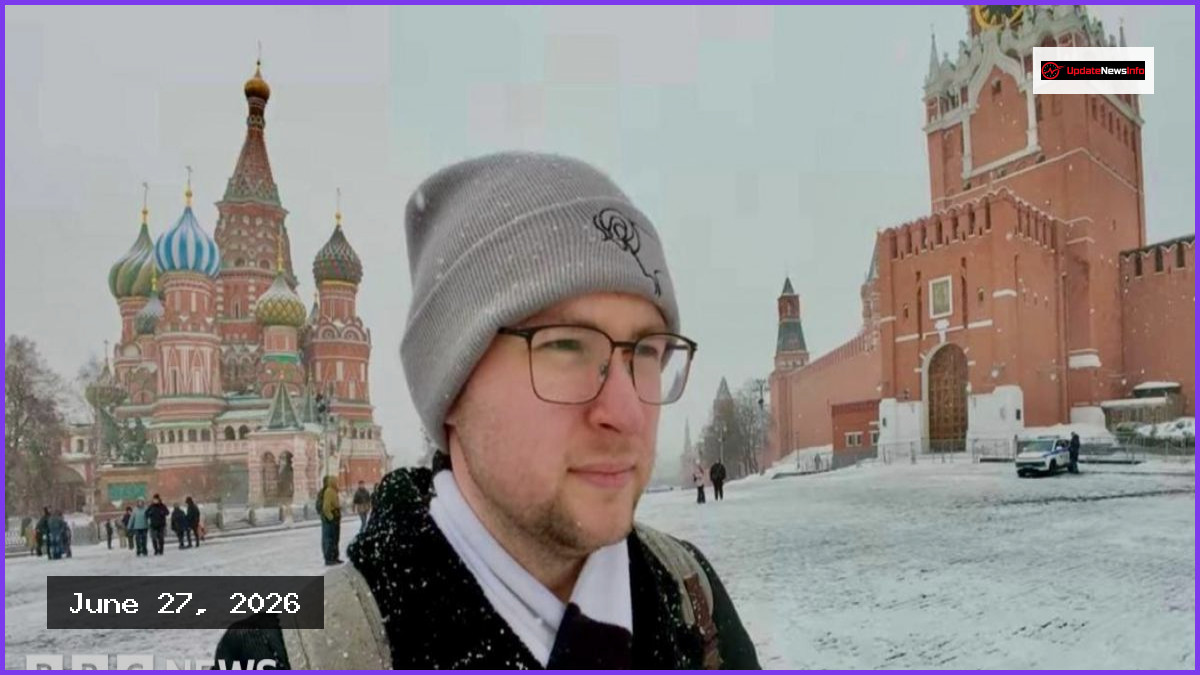
When Leo Hare relocated from Texas to Russia in late 2023 under an asylum grant, he envisioned a new future for his three children. Embracing his new surroundings, he began filming content about his life, which included farm chores and trying local cuisine. A devout Christian, Hare was disillusioned by what he perceived as political polarization, LGBTQ advocacy, and genetically modified food in the United States. He viewed Russia as a society anchored in faith and traditional values, a narrative heavily fostered by the Kremlin.
Hare is among a small, unconventional migration of individuals from countries like the UK, Canada, and various European nations choosing to move to Russia despite the country’s international isolation, its invasion of Ukraine, and severe restrictions on civil liberties. Many of these migrants are drawn to the “Shared Values” visa program, introduced by President Vladimir Putin in 2024. This policy provides a three-year temporary residency to citizens from 47 countries labeled as “unfriendly” by Moscow, bypassing standard language or legal testing requirements in exchange for a declaration against “destructive neoliberal ideologies.”
The application process requires a small fee of 1,600 roubles, roughly £17 or $22, along with health and criminal record screenings. As of spring 2026, Russia reported approximately 3,400 applicants under this scheme, though these numbers are difficult to verify independently. Unlike typical immigration pathways, the program offers no financial or housing assistance. After three years, participants must either leave or convert their status into a Permanent Residence Permit, which mandates rigorous language and history examinations.
Relocation agencies and influencers often promote this transition by capitalizing on feelings of cultural displacement among Westerners. Ilja Belobragin, a managing partner at Move To Russia, notes that his clients frequently feel estranged from their home communities and dissatisfied with rising immigration and perceived declines in living standards. For many, the war in Ukraine is not the primary factor; some remain neutral or supportive of Russia, while others, like Moscow-based consultant Philip Hutchinson, prefer to avoid political discussions entirely, focusing on their desire for a quiet family life.
For the Hare family, the reality was more complex than the initial state-broadcasted reception. Shortly after arrival, the family was defrauded of 5 million roubles, or about £52,000, leaving them destitute. Hare eventually found work as an English tutor, and while he remains touched by the generosity of his Russian neighbors and church members, his experience has been a mix of highs and lows. He is currently concerned about the Russian economy and restricted access to information, noting that he misses certain freedoms inherent to the American experience.
Other migrants maintain a more critical perspective. Ben, a British citizen living in Kursk who moved on a private family visa, appreciates the personal safety he feels but rejects the notion that Russia is a conservative utopia. He points to high divorce rates and the widespread social acceptance of abortion as evidence that the country is not the paradise some influencers suggest. Ultimately, while Russia’s attempt to attract ideological migrants remains small-scale, it continues to serve as an alternative path for those seeking a different way of life, regardless of their original motivations.