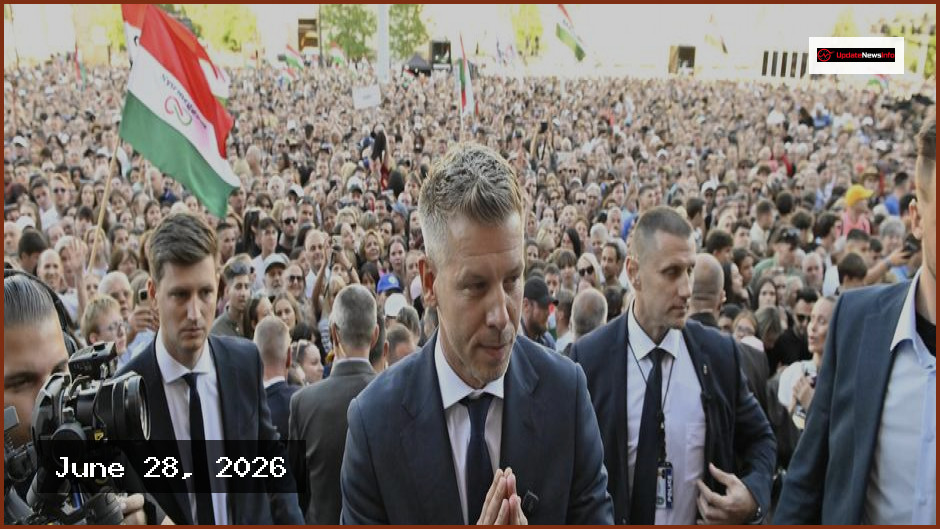
The new government in Hungary is advancing quickly to dismantle the institutional system established by former Prime Minister Viktor Orban, with a firm focus on curbing corruption, reforming media, and safeguarding democracy. In his first few weeks in office, Prime Minister Peter Magyar has successfully lifted EU blockades that were previously implemented by his predecessor and has commenced a dialogue with Ukraine, a country Orban had once dubbed the “Empire of Evil.”
Domestically, the Hungarian parliament has passed legislation to reduce the salaries of ministers and lawmakers, while also capping a prime minister’s tenure to a maximum of two terms. While these moves initially appeared as anti-Orban symbolism, Magyar has since directed his efforts toward the core substance of his predecessor’s regime. Orban had engineered a system designed to persist for decades, ensuring that even if his party lost an election, civil servants and financial networks—backed by billions in hidden assets—would remain to sabotage incoming administrations.
With a comfortable two-thirds majority in parliament, the government of Magyar and his Tisza party is now actively deconstructing these structures. During an address to parliament on Monday, Magyar explicitly branded Orban’s style of governance a “mafia system.” He vowed to purge these elements through what he termed “Operation Purgatory,” a name reflecting his preference for religious and historical motifs. Magyar promised that thorough investigations would reveal how Orban’s friends, family, oligarchs, and high-ranking party members profited, and he pledged to recover any illegally obtained assets.
On Tuesday, the parliament approved a primary legislative package for “Operation Purgatory,” which includes key anti-corruption measures. These steps are vital for the European Union to release approximately €17 billion ($19.3 billion) in funding that was frozen due to corruption concerns during Orban’s administration. The timing is critical, as a deadline for a significant tranche of €10.4 billion in funds arrives in August. A major component of these new laws is the abolition of public interest asset management foundations (KEKVA), which were established under Orban to move between €5 billion and €9 billion in public assets into private hands.
These KEVKAs often stripped universities of their autonomy by installing Orban loyalists in administrative roles. One notable example is the Mathias Corvinus Collegium (MCC), a primary elite training and propaganda school for the Fidesz party. In 2020, at the government’s request, the MCC was gifted 10% of the state’s shares in the pharmaceutical firm Gedeon Richter and the oil company MOL, a transfer worth roughly €1.3 billion. Beyond these foundations, the new parliament has strengthened the “Integrity Authority” and implemented stricter transparency requirements for asset declarations and public tenders, which were previously used as vehicles for corruption. For instance, companies owned by Lorinc Meszaros, a former plumber from Orban’s village who became Hungary’s richest man and is frequently called “Orban’s wallet,” heavily benefited from such tenders.
The parliament also fulfilled another promise by reorganizing public media, which served as a propaganda outlet throughout Orban’s 16-year rule, to include representatives from journalistic organizations rather than solely politicians. It also restricted political hate campaigns on billboards and advertisements. Furthermore, the government is moving toward establishing the National Asset Recovery and Protection Office (NVVH), a measure political scientist Gabor Torok describes as the administration’s most important, as it addresses the societal demand for accountability and potential prosecutions for the first time since the fall of communism. As reported by 444.hu, while Orban attempted to tie the hands of the next 10 governments, the Magyar administration is now dismantling that plan. Magyar is also seeking to limit lawmakers to three terms and intends to remove President Tamas Sulyok, whom he labels a puppet of the previous regime. Experts like Zsuzsanna Szelenyi emphasize that Magyar must now carefully navigate the “post-illiberal trilemma” to balance swift re-democratization with legal and constitutional norms.