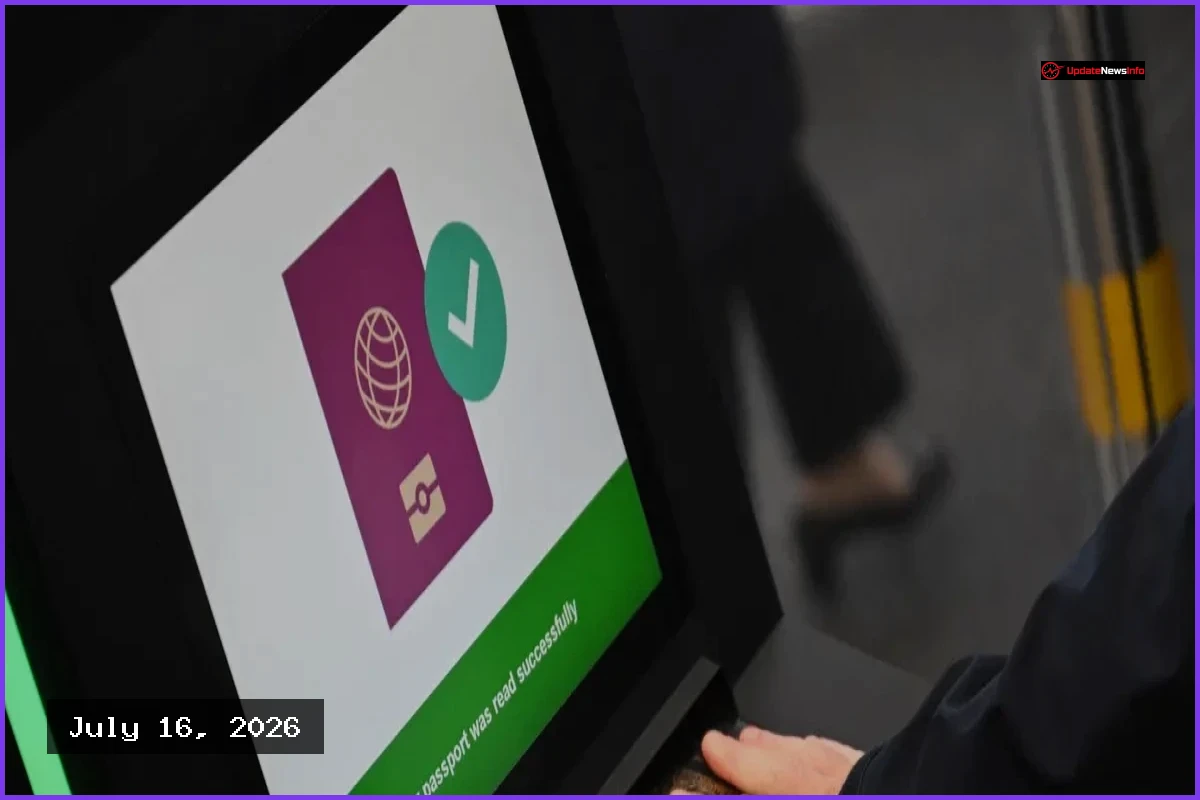
Travelers crossing the UK-France border this summer will not face the full implementation of the European Union's new Entry/Exit System (EES) biometric passport checks. Both the Port of Dover and the Eurotunnel terminal have confirmed to The Local that the transition to 100 percent biometric processing is being postponed until after the peak summer travel season concludes. The UK-France border has long been identified as a potential bottleneck for the new system, which was designed to record the entry and exit of non-EU short-term visitors to the Schengen area, replacing the manual stamping of passports. The combination of high passenger volumes and the unique nature of juxtaposed border controls raised significant concerns about potential congestion. While the EU's deadline for the full implementation of EES was April 2026, UK border crossings have not yet scaled up to full biometric capture.
A spokesperson for Eurotunnel, which operates the LeShuttle car-train service, confirmed that there will be no EES biometric capture at its terminals in Folkestone and Coquelles during the summer months. Operations will continue as they have since April, with French border police (PAF) creating digital EES records for non-EU travelers without capturing biometric data. This means passengers will remain in their vehicles while border police create a digital record. Eurotunnel has invested extensively in its terminals, infrastructure, and systems to ensure readiness for biometric capture, and the company continues to conduct live operational trials. The spokesperson noted that they are awaiting confirmation from French authorities regarding the timing of the next phase, which is expected to occur after the summer peak.
Similarly, the Port of Dover has invested £40 million into new infrastructure, including the installation of 84 self-registration kiosks. However, the back-end technology required for full file creation has yet to be provided. Doug Banister, the port's chief executive, had previously warned that the lack of flexibility in the EES rollout could lead to repeated episodes of severe congestion, with queuing cars potentially spilling out of the port onto public highways for miles, which he noted could have a dire local impact. Despite these concerns, the port maintains that it has thorough plans in place, developed in cooperation with the French authorities and Kent County Council, to manage the busy summer getaway period. The port advises travelers not to arrive more than two hours before their expected ferry departure time and to use the main A20 and A2 roads to avoid clogging local Kent roads.
Currently, the only travelers at these crossings subject to full EES-compliant checks are coach passengers and freight drivers. A Eurotunnel spokesperson noted that the French Border Police (PAF) have been delivering full EES compliance for these groups since October 2025. In Dover, a new border processing area is open for coaches, where passengers must disembark, have their passports manually scanned by border police, and then return to the coach, which is then manually sealed with a sticker. The UK government recently announced £20 million in additional funds to increase the number of passport check booths at the Port of Dover, building upon a previous £10.5 million investment across Dover, Eurotunnel, and Eurostar terminals.
Eurostar rail terminals at London Saint Pancras and Paris Gare du Nord have also not begun full implementation of EES, with the same technical issues believed to be the cause. Although self-check-in kiosks have been installed at Saint Pancras, they are not currently operational. A Eurostar spokesperson confirmed that the full rollout will not begin until after the peak summer travel period. The EES, which has been gradually introduced since October 12th, 2025, with full implementation at Schengen external borders beginning on April 10th, 2026, allows countries to temporarily suspend checks if there are serious problems with queues. Such issues have already been observed at several Italian airports, as well as in Spain and Greece. The UK government and the European Commission have agreed to work together to ensure that cross-border travel remains as seamless as possible throughout the summer and autumn.