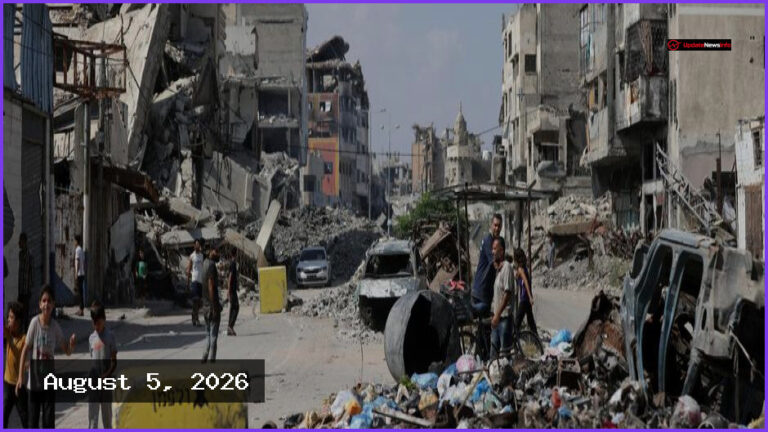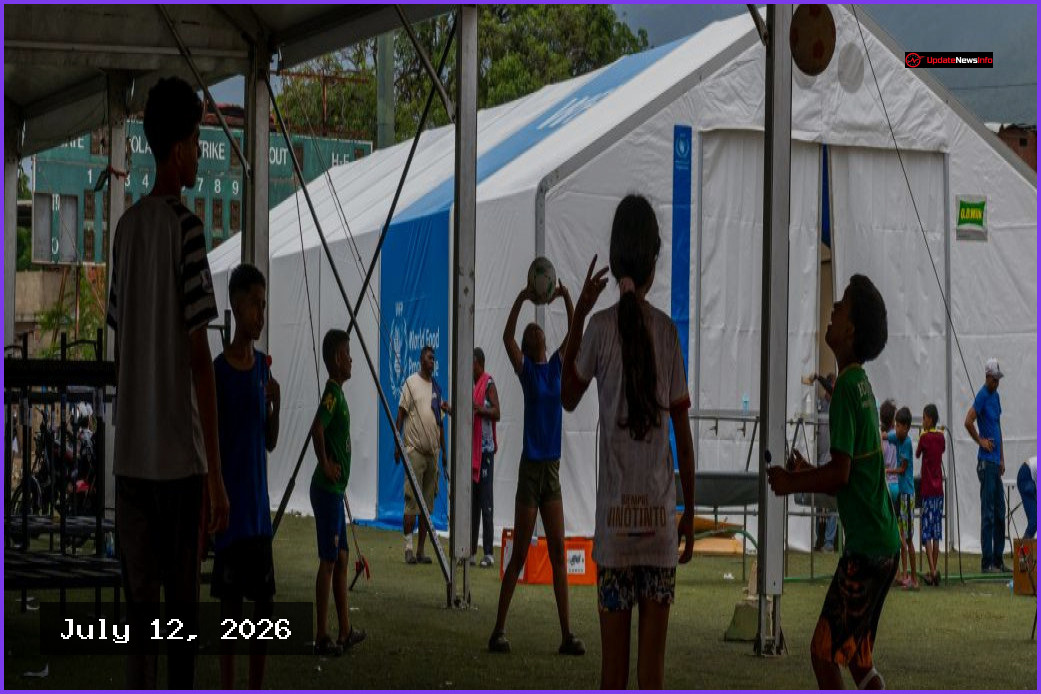
Powerful twin earthquakes that struck Venezuela last month have profoundly altered the lives of thousands of children, leaving many to navigate grief, fear, and uncertainty. Among them are 10-year-old Maria and her 13-year-old brother Damian, who lost their mother and their home in the coastal town of Caraballeda.
Now under the care of their aunt, Mercedes Osul, Maria frequently recounts the moment she lost her mother, a memory that continues to haunt her. Damian, in contrast, has processed the tragedy more silently, finding solace in play. “My nephew hasn’t wanted to talk about it. All he does is play, play,” Osul shared. Damian often spends his days on an improvised soccer field with other children who, like him, are displaced and living in temporary shelters.
While adults like Osul strive to rebuild their lives, children are grappling with the emotional aftermath of the catastrophe. Maria finds comfort in candy, while Damian immerses himself in soccer, innocent coping mechanisms for a tragedy that challenges even adults. Experts emphasize that there is no singular way to process trauma, leading many shelters to establish “Child Friendly Spaces.”
These spaces are designed to support children and teenagers through recreational and group activities, guided play, and counseling, facilitated by psychologists and social workers. World Vision, one of the charities involved, operates eight to ten movable spaces across Caracas and La Guaira, the two most affected areas. Andrea Lasso, World Vision’s Emergency Response Manager in Venezuela, explained that these spaces allow children to engage in board games, card games, arts and crafts, and sports.
“They need some space where they can feel safe again, where they can be protected, where they can play and interact with other children,” Lasso told CNN, highlighting these spaces as critical for recovery and rebuilding lives. This support also extends to the adults caring for them, helping them process their own grief while serving as pillars of strength for the children.
Mercedes Osul herself is mourning her sister, Maria and Damian’s mother, while adapting to caring for her niece and nephew alongside her own two daughters. A shelter psychologist advised Osul not to pressure Damian to discuss his mother’s death, suggesting that soccer could serve as his emotional outlet. “They told me to let him vent, that this is a way to vent,” Osul recalled.
The disaster has upended the daily routines of thousands, with many losing homes, family members, friends, and schools. In temporary shelters, the challenge extends beyond providing food and shelter; it involves helping children regain a sense of safety, play, and learning while their families seek long-term solutions. A critical concern, according to Lasso, is controlling access to shelters to protect children from individuals who might exploit their vulnerability.
UNICEF estimates that approximately 650,000 people, including around 234,000 children, may require assistance following the earthquakes. This includes minors who lost homes or relatives, as well as those affected by disruptions to essential services like drinking water, medical care, and vaccination. Rodríguez Pumarol, a UNICEF representative, stressed, “The earthquake has taken so much from those boys and girls, and our role is to ensure it does not take away their future.”
Part of that future depends on their ability to return to school. The UNICEF representative explains that some temporary camps are currently operating in educational centers, and that efforts are being made to free up those spaces before the start of the next school year. Venezuela’s acting president, Delcy Rodriguez, recently announced initiatives including the Simon Bolivar Orchestra teaching children musical instruments, the distribution of toys, and the Venezuelan Football Federation setting up soccer fields. She also noted that the camps are organized into family units.
Still, regaining their routines does not mean their fears simply disappear. Rodríguez Pumarol observed that many children continue to experience anxiety, staying up late at night out of fear that something might happen while they sleep.
The situation is particularly complex for children separated from parents whose fate remains unknown. Family law specialist Jeslia Vergara explained that the Venezuelan protection system prioritizes finding other relatives, such as grandparents, uncles, or older siblings, to provide temporary care. If it is definitively proven that both parents are deceased and no family can care for the children, the State may declare them adoptable, allowing them to enter a foster family program.
Vergara cautioned that even in emergencies, these processes must not skip steps. Prospective foster families undergo evaluations to ensure they can provide a safe environment, with institutionalization or adoption considered only as a last resort in Venezuela. For Osul, the shelter has been a source of help in the midst of a loss she is still trying to process. There, her niece and nephew have received food, spaces to play, and psychological support. “They give them recreation, take them to psychologists. My daughter loves to draw. Damián is crazy about soccer,” she said.
However, after losing her sister and taking on the responsibility of four children, Osul’s most pressing need remains a permanent home for all of them. “A house. Everything else comes afterward,” she affirmed. Until then, Damian, Maria, and thousands of other children will continue to find comfort in small ways—candy, sports—as they navigate the profound tragedy that has reshaped their young lives.
Scan the QR code to download the CNN app from the Apple Store.