Documentary filmmaker and critic Mark Cousins has returned to the festival circuit at Karlovy Vary, bringing with him the latest installments of his monumental project, The Story of Documentary Film. The series, which spans 16 hour-long chapters, provides a unique, essayistic look at the history of the medium. For the festival, Cousins is presenting chapters eight and nine, which focus exclusively on the 1980s.
The first of these episodes centers on the theme of empathy and the act of surmounting obstacles, drawing its inspiration from a line by Robert Frost: “Something there is that doesn’t love a wall.” Cousins frames this narrative around the Berlin Wall, beginning and ending the chapter at Checkpoint Charlie to explore how documentaries challenged existing political orders and contributed to the eventual collapse of the Soviet-era barriers. The subsequent chapter, titled “detectives,” shifts the focus to investigative filmmaking. This segment highlights the work of directors like Marcel Ophuls, Claude Lanzmann, and Michael Moore, examining how their films demanded accountability for wartime histories.
Cousins laces his analysis with characteristic cinephile humor, such as comparing the investigative techniques of Marcel Ophuls—specifically in his 1988 film Hotel Terminus: The Life and Times of Klaus Barbie—to the methods of the television detective Columbo. He even incorporates a clip from a Columbo episode directed by Steven Spielberg to emphasize the point. The episode also playfully bookends its analysis with the distinct synth-pop sound of Bronski Beat and Jimmy Somerville.
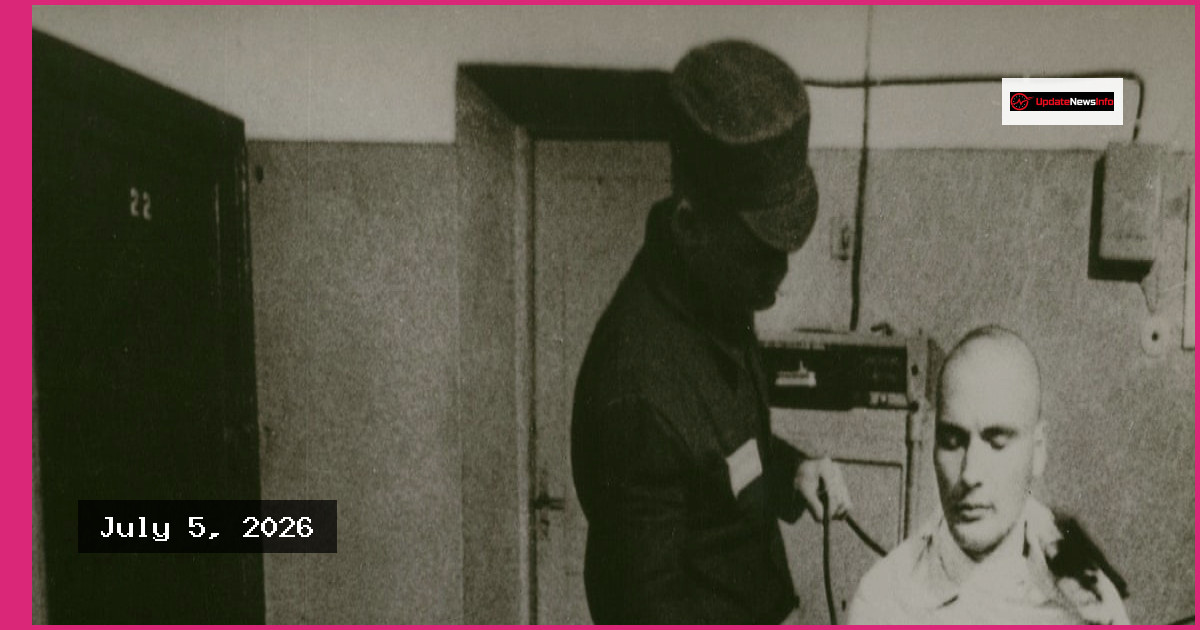
The series serves as a treasure trove of historical footage, highlighting diverse international works. Notable inclusions range from Latvian director Herz Frank’s The Last Judgement (1987), a profound look at a man on death row, to Juris Podnieks’s Is It Easy to Be Young? (1986), which captured the rebellious energy of Soviet youth. In the West, Jan Troell’s Land of Dreams (1988) is featured for its critique of Swedish political complacency. The series also spotlights major campaigning documentaries, including Michael Moore’s Roger and Me (1984), Edouardo Coutinho’s Twenty Years Later (1984) from Brazil, and Kazuo Hara’s The Emperor’s Naked Army Marches On (1987) from Japan.
Amidst these serious subjects, the episodes find room for lighter moments, such as a clip from Iranian director Abbas Kiarostami’s Homework (1989), where a child is asked to choose between schoolwork and the British children’s show The Wombles. While the series offers a rich meditation on the decade, it leaves open questions regarding the original distribution of these films, specifically whether they were primarily intended for television or theatrical release, a distinction that may have impacted the documentary landscape leading into the 2000s.