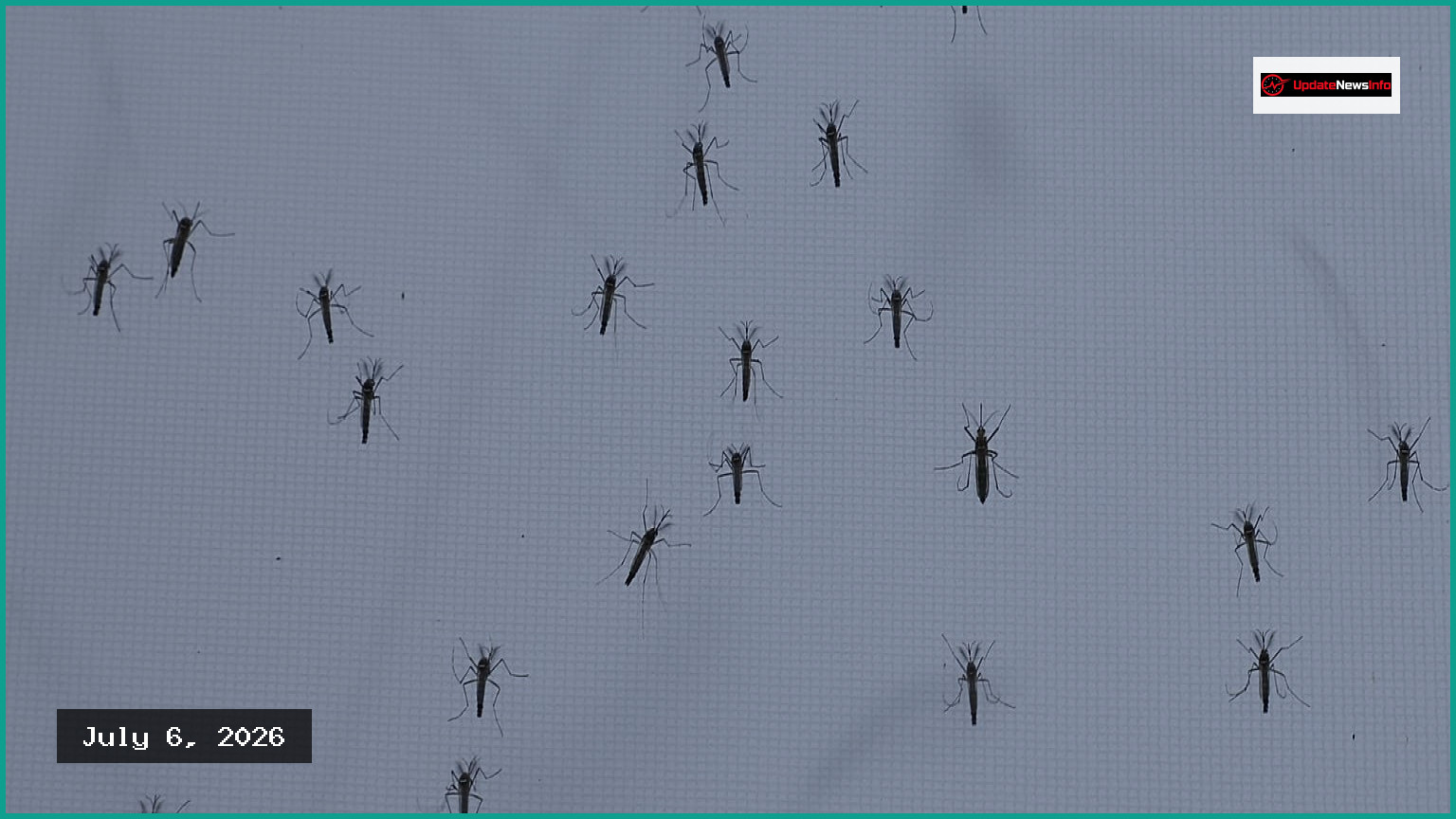
Humid and warm weather conditions are currently providing an ideal environment for mosquitoes across Germany, according to warnings from Doreen Werner, an expert at the Leibniz Centre for Agricultural Landscape Research (ZALF). While native house mosquitoes typically rely on standing water in rain barrels or puddles for breeding, the invasive Asian tiger mosquito proves significantly more adaptable. These insects can exploit even minimal amounts of water found in plant pot saucers or watering cans, facilitating rapid spread even within densely populated urban environments.
Biologists note that the ongoing warm weather allows multiple generations of mosquitoes to develop throughout a single summer, with populations typically reaching their peak by late August, a period that coincides with an increase in reported bites. Conversely, extreme dryness can serve to limit these populations by eliminating necessary breeding sites. Researchers are focusing closely on the Asian tiger mosquito, a tropical species that is increasingly establishing itself in Europe. Although it is highly aggressive and active during the day, and possesses the theoretical capacity to transmit pathogens like dengue or chikungunya viruses, there have been no documented locally acquired transmission chains in Germany to date.
Chikungunya fever, while rarely fatal, can lead to persistent health issues such as severe joint pain, muscle aches, headaches, skin rashes, and high fever. Dengue fever similarly presents with high fever, severe limb and headache pain, and potential for life-threatening complications in extreme cases. Currently, the Asian tiger mosquito is primarily located in south-west Germany, though experts anticipate it will continue to spread northward and establish permanent populations. The species is relatively small, measuring up to 0.9 centimetres, and it differs from native mosquitoes above all through its distinctive black-and-white markings. According to the German Environment Agency, its abdomen and hind legs in particular are strikingly patterned in black and white. Another characteristic feature is a white stripe that starts at the back of the head and runs to the base of the wings.
Many municipalities have implemented online reporting portals to monitor the spread of the tiger mosquito, including cities like Freiburg im Breisgau, Heidelberg, Mannheim, and regions such as Karlsruhe and the Middle Upper Rhine. Beyond this invasive species, the West Nile virus, transmitted by native mosquitoes, has also been circulating in parts of Germany. A study by the Charité hospital suggests the virus is now permanently established in Berlin. Data from the Robert Koch Institute indicates that 14 West Nile cases were recorded in Germany in 2025, following 49 cases in 2024 and 16 in 2023, with figures likely higher due to asymptomatic infections.
Both common and Asian tiger mosquitoes can act as vectors for parasitic roundworms, including Dirofilaria immitis and Dirofilaria repens. The former causes heartworm disease in animals, while the latter affects subcutaneous tissue in humans, who may serve as accidental hosts. Regarding personal protection, while coconut oil is often suggested as a natural repellent due to its lauric acid content, its effectiveness against the Asian tiger mosquito remains unproven, leading experts to recommend products with verified active ingredients.