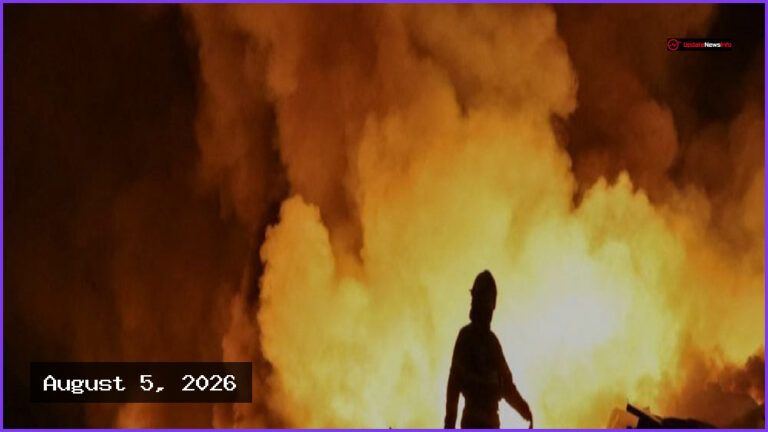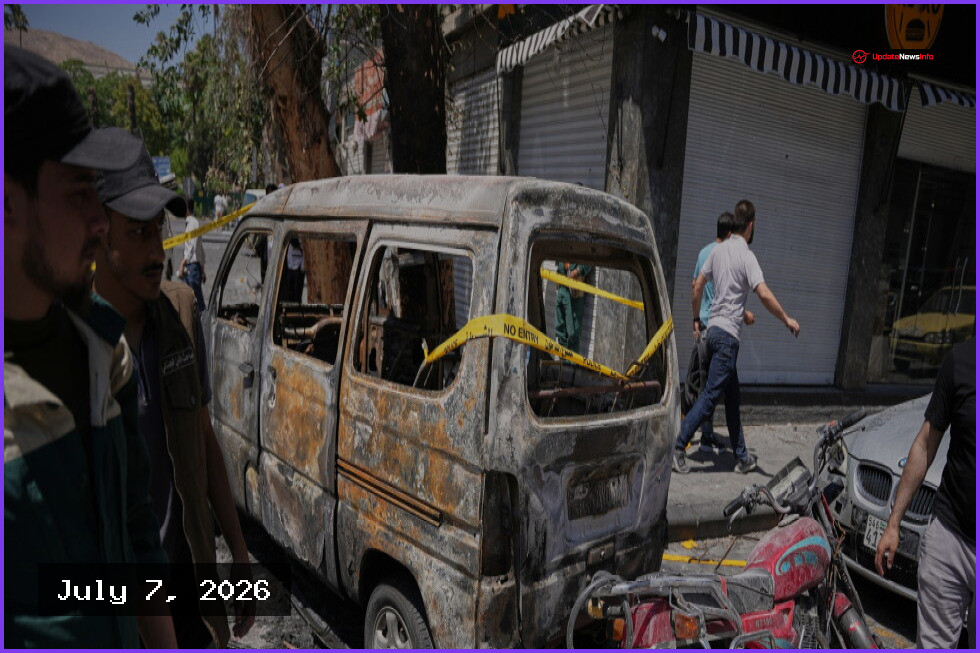
Damascus, Syria – Two explosions struck Syria’s capital on Tuesday, injuring at least 18 people, as French President Emmanuel Macron held a landmark meeting with Syrian counterpart Ahmad al-Sharaa. The blasts, which the Interior Ministry reported were caused by a bomb in a garbage bin and another in a parked car, occurred near the Four Seasons Hotel, the headquarters of the Tourism Ministry, and the Damascus National Museum.
The incident marks the second attack in Damascus within a week, following an explosive device detonation last Thursday in a cafe near the Justice Palace that killed at least 10 people and wounded more than 20. The capital had largely been peaceful since the ouster of longtime dictator Bashar Assad by insurgent groups in late 2024.
French President Emmanuel Macron was inside the presidential palace when the explosions happened. An official from the Elysee Palace confirmed he was safe and that his meeting with President al-Sharaa continued. No group immediately claimed responsibility for Tuesday’s attack.
Macron’s visit is the first by a major Western leader since Assad’s removal, representing a significant moment for President al-Sharaa’s new government. Syria’s Interior Ministry stated that four of the injured were police officers, with no deaths immediately reported from Tuesday’s explosions. Footage on social media showed a van and a motorcycle on fire, alongside bloodstains on a busy street, while a large plume of smoke was visible at the blast site.
The Syrian government views Macron’s visit and the signing of over a dozen agreements with Paris and large French companies as a substantial boost for the country’s new authorities in their bid to rebuild after a 14-year uprising-turned-civil war. These agreements include initiating the return of some 51 million euros ($58.3 million) in illicit assets belonging to Rifaat Assad, Bashar Assad’s late uncle. Other deals focus on rebuilding destroyed water and electricity infrastructure in Homs, providing technical assistance to Syria’s Central Bank for financial reforms, and bolstering cargo infrastructure at the Damascus airport.
President al-Sharaa and Macron announced their agreement to reappoint ambassadors after more than a decade, signaling a major restoration of diplomatic ties. France had closed its embassy in 2012 but symbolically reopened it in early 2025. Al-Sharaa hailed the development, stating, “Our meeting marks a historical milestone.”
Hours after the explosions, Macron posted on X, saying, “Nothing can smother the aspiration of Syrian women and men to live in a fully sovereign, safe, pluralistic, and united Syria. This morning I met Syria in all its diversity. I saw dignity, courage and determination.” Macron, who played a key role in advocating for Europe and the United States to lift most sanctions imposed on Syria under Assad, met with members of Syrian civil society before arriving at the presidential palace. He is scheduled to head to Ankara, Turkey, later Tuesday for a NATO summit.
The explosions pose a challenge for al-Sharaa, who has been working to assert full control over Syria, appeal to minorities skeptical of his Islamist-led rule, and gain the support of Western governments concerned about his past leadership of the formerly al-Qaida-linked Hayat Tahrir al-Sham group. His government has pledged political and economic reform after decades of autocratic rule. A Syrian foreign ministry official, speaking anonymously, emphasized, “The outcome of this visit confirms that Syria is steadily moving toward a new phase of international partnerships based on shared interests and mutual respect. Attempts to destabilize the country will not alter this trajectory.”
Syria, devastated by a conflict that killed nearly half a million people and displaced millions, faces immense reconstruction needs, requiring hundreds of billions of dollars to rebuild infrastructure and lift millions out of poverty.
French President Emmanuel Macron, left, Syrian President Ahmad al-Sharaa, center, and Syrian Foreign Minister Asaad al-Shaibani attend an event at the Economic Forum for Reconstruction in Damascus, Syria, Tuesday, July 7, 2026. (AP Photo/Ghaith Alsayed)
Chehayeb reported from Beirut. Associated Press writers John Leicester and Sylvie Corbet in Paris and Sam McNeil in Brussels contributed.