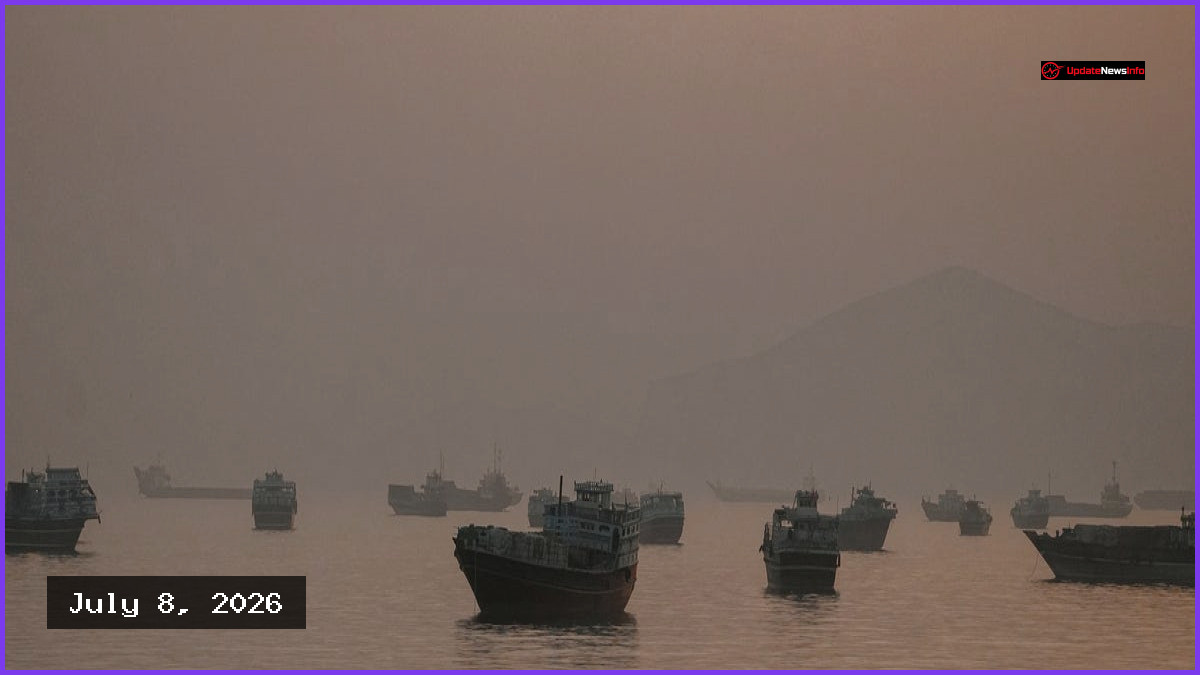
The United States military initiated a new series of strikes against Iran on July 7, responding to what American officials characterized as a clear violation of an existing ceasefire. The military action followed reported attacks on three vessels navigating the Strait of Hormuz. U.S. Central Command (CENTCOM) stated that the operation was intended to impose significant costs on those targeting commercial shipping crews in international waters, labeling the Iranian aggression as both dangerous and unwarranted.
In conjunction with the military response, the United States revoked a license that had previously allowed Iran to sell oil on the global market. While Iran has not claimed responsibility for the vessel attacks, the move marks a significant shift in the Trump administration’s strategy, which is increasingly combining military force with economic pressure. Following the revocation of the oil license, the price of Brent crude oil rose by nearly 6%, reaching approximately $76 per barrel.
The current hostilities threaten to jeopardize ongoing peace negotiations, which had been taking place in Doha, Qatar, through mediators. Last month, U.S. and Iranian officials signed a preliminary peace agreement aimed at ending a war that began on February 28. That memorandum of understanding included provisions for reopening the Strait of Hormuz and initiated discussions regarding Iran’s nuclear program and U.S. sanctions. The revoked oil export waiver had served as a central concession within that agreement.
This latest escalation follows previous U.S. strikes on June 26 and June 27, which targeted Iranian military infrastructure, including drone storage sites and air defense systems. Although CENTCOM did not disclose specific targets for the July 7 operation, President Donald Trump had previously warned Tehran against continuing its ceasefire violations. On June 27, Trump stated via social media that the U.S. might be forced to militarily complete the mission it started if Iran continued its actions, noting that the Islamic Republic could face existential consequences. Despite these tensions, negotiators had reported productive meetings just last week before the recent flare-up.
Contributing: Joey Garrison, Bart Jansen, and Francesca Chambers, USA TODAY; Reuters