U.S. President Donald Trump announced Wednesday that the United States is preparing for another night of strikes against Iran, just hours after declaring the ceasefire between the two nations to be over. Speaking on the sidelines of a two-day NATO summit in Ankara, Turkey, Trump stated, “We hit them very hard last night. We’ll probably hit them hard again tonight.”
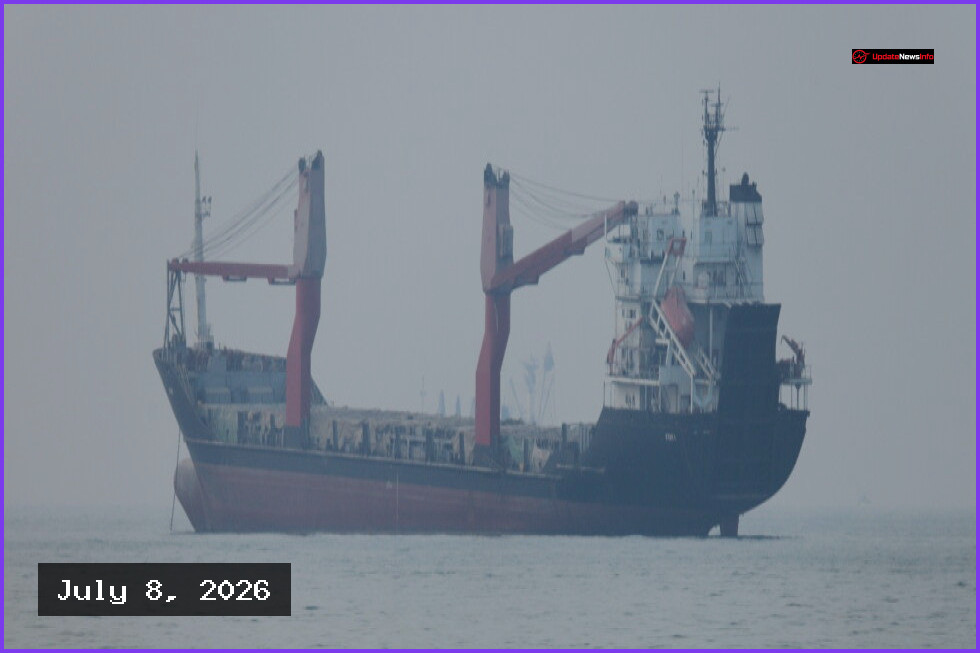
The President’s remarks followed U.S. strikes that were launched in retaliation for Iranian attacks on three commercial ships in the Strait of Hormuz and American military sites in the Gulf. Trump accused Iran of “behaving very badly” by launching drones and a missile at ships. When questioned about the status of negotiations, he expressed skepticism, saying, “For me, I think it’s over,” regarding the ceasefire, and added, “They can talk, but I think they’re wasting their time.” These talks were intended to address critical issues such as fully reopening the Strait and rolling back Tehran’s nuclear program.
In response to the U.S. actions, Iran’s joint military command, Khatam al-Anbiya Central Headquarters, issued a statement aired on Iranian State television Wednesday. It warned regional countries that “providing support” to the U.S. would render them “a legitimate target.” Iranian Parliament Speaker Mohammad Bagher Qalibaf also posted on X, stating, “The era of bullying and extortion is over. It leads nowhere. We don’t fold.”
The U.S. military’s Central Command confirmed that American forces launched strikes “to impose heavy costs for targeting and attacking commercial shipping crewed by innocent civilians in an international waterway.” Targets included Iranian air-defense systems, radars, and over 60 small boats used by Iran’s paramilitary Revolutionary Guard. The U.S. effort also involved revoking Iran’s ability to openly sell crude oil in the world market.
The escalation immediately impacted the region. On Wednesday morning, missile alerts sounded in both Bahrain, home to the U.S. Navy’s 5th Fleet, and Kuwait, where U.S. Army forces are stationed. Kuwait’s air defenses engaged to intercept incoming fire, reporting the interception of two ballistic missiles and 13 drones launched by Iran. The Kuwaiti Electricity Ministry noted that several power lines were out of service due to falling shrapnel. The Revolutionary Guard acknowledged targeting U.S. military installations in both countries. Iranian state media also reported explosions in several locations within Iran, including Bandar Mahshahr, where a Revolutionary Guard member was killed, and Bushehr, home to Iran’s nuclear power plant complex.
A tanker carrying Qatari natural gas was hit and caught fire off the coast of Oman. Majed al-Ansari, a spokesperson for the Qatari Foreign Ministry, condemned it as an “unacceptable attack” on international navigation and global energy security, holding Iran “fully legally responsible.” Two other ships sustained minor damage but continued their journeys without injuries. The U.S. and many Gulf Arab states maintain they will not agree to Iran charging for passage through the Strait of Hormuz, a crucial waterway for global energy shipments.
This latest round of strikes and counter-strikes mirrored a similar spate of attacks that occurred late last month, which also led to Iranian attacks on Bahrain and Kuwait. The renewed conflict has added significant uncertainty, causing oil prices to surge after Trump’s comments and raising fears of a wider Middle East entanglement.
Concurrently, funeral ceremonies for Iran’s late Supreme Leader Ayatollah Ali Khamenei were held Wednesday morning in the Iraqi city of Najaf. Thousands attended, including Iranian President Masoud Pezeshkian and Iraqi Prime Minister Ali Falah al-Zaidi, along with other Iranian and Iraqi officials. Funeral prayers were scheduled later at the Imam Hussein shrine in Karbala, with Khamenei’s body to be returned to Iran for burial Thursday at the Imam Reza shrine in Mashhad, his birthplace.
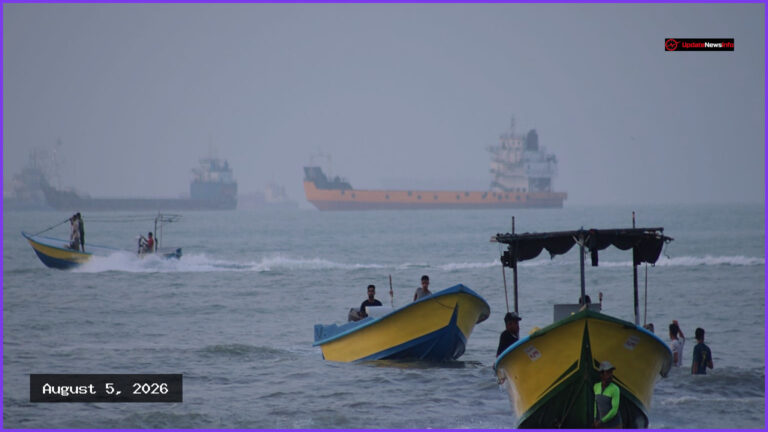
A group of people stands in shallow water as a cargo ship appears anchored in the Strait of Hormuz off Bandar Abbas, Iran, Tuesday, June 30, 2026. (Amirhosein Khorgooi/ISNA via AP)
Kim reported from Ankara, Turkey. Associated Press writers Nasser Karimi in Tehran, Iran; Qassim Abdul-Zahra in Najaf, Iraq; and Collin Binkley in Washington contributed.