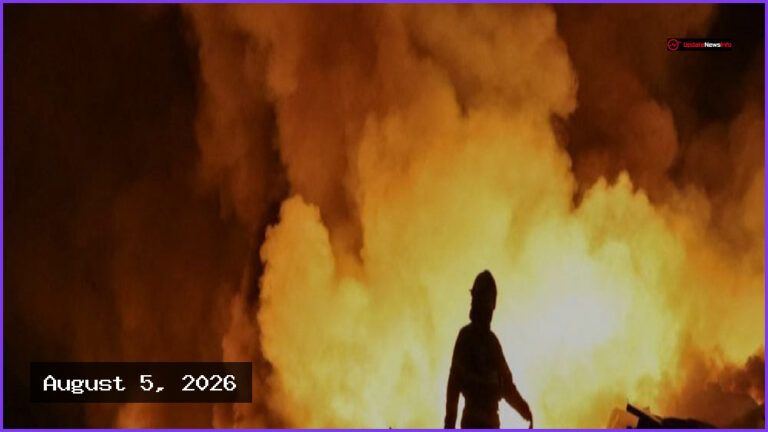
As Europe braces for another summer of extreme heat and heightened wildfire warnings, an Australian import, the eucalyptus tree, is drawing renewed global scrutiny for its role in intensifying devastating blazes. Last year marked the worst wildfire year on record, with over 1 million hectares burned, a significant portion of which occurred on the Iberian Peninsula.
Eucalyptus plantations now span 22 million hectares across more than 90 countries, from Brazil and Chile to California, India, and South Africa. While these fast-growing trees are highly valued by the pulp and timber industries and have become cornerstones of rural economies in many regions, their widespread presence creates landscapes highly vulnerable to extreme wildfires, according to scientists.
Researchers emphasize that eucalyptus trees are not responsible for igniting fires, but they can dramatically intensify them once they start. Tim Curran of Lincoln University in New Zealand highlighted this concern, telling DW, “Eucalypt forests are clearly one of the more flammable forests that we have in the world.” He added that introducing eucalyptus to a new environment is “very likely to change what we call fire regimes,” impacting fire intensity, frequency, and heat.
The trees’ leaves contain highly flammable oils, and their bark strips can ignite into burning embers. Under extreme conditions, these embers can travel vast distances, sparking secondary fires. This phenomenon was observed during Australia’s catastrophic 2009 Black Saturday fires, where embers were reportedly blown more than 30 kilometers ahead of the fire front to start new blazes.
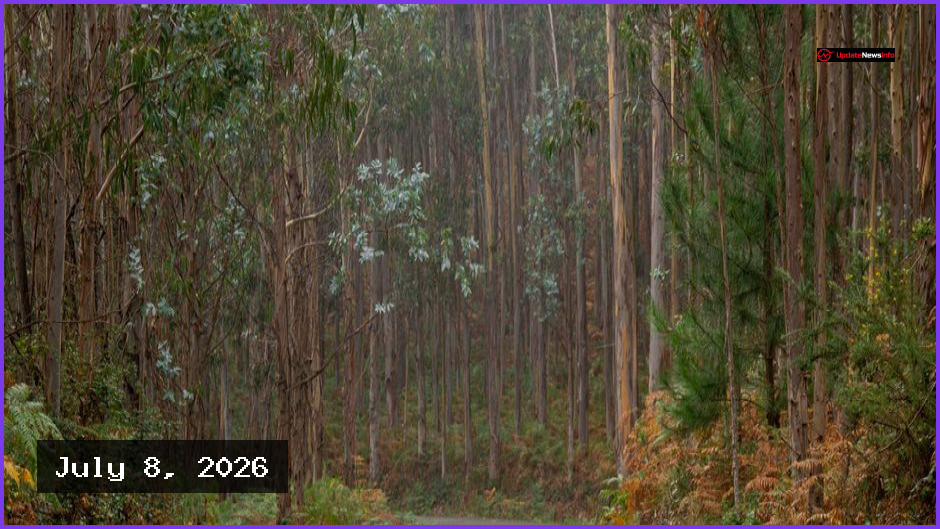
In northwestern Spain, particularly Galicia, the transformation of native woodlands is stark. The misty hills and dense green areas along the Camino de Santiago pilgrim walk, which attracts over 400,000 hikers annually, are increasingly dominated by eucalyptus instead of indigenous oak and chestnut.
This shift is driven by the eucalyptus’s rapid growth; it reaches maturity in just 15 years, compared to over 80 years for native oak and chestnut. This competitive advantage allows eucalyptus to quickly regenerate and expand after fires decimate landscapes, creating a self-reinforcing cycle that further increases wildfire risk and allows monocultures to spread.
Eucalyptus plantations in Galicia, which generate €167 million annually for the pulp and timber industries, date back to the 1970s but saw significant expansion in the 1990s. A 1992 regional forestry plan projected eucalyptus would cover 250,000 hectares by 2030. However, local community leader Joam Evans Pim said, “It’s now around half a million hectares, which is a massive amount of land,” noting that this massive increase occurred while the plan went unupdated for 30 years.
Though the regional government has since introduced a moratorium on new eucalyptus plantations, campaigners say enforcement remains uneven, and illegal planting persists. Evans Pim attributes the rampant growth to a combination of illegal plantations, land abandonment by younger generations moving to urban centers, forest fires, and the invasive nature of the species.
Luisa Piñeiro, director general of forest management for the Galician government, acknowledged past failures, admitting that in the 1990s, there was “probably wasn’t adequate forest management” and “not as much control over the plantations or the species being planted.” Nevertheless, the government does not classify eucalyptus as invasive, and Piñeiro rejects calls for blanket bans. She argues instead for improved management and greater species diversity. “Rather than banning things, we should first have a forest management plan,” she said. “We believe forests should have the species diversity they’re meant to have.”
In Froxán, about 40 kilometers west of Santiago de Compostela, Joam Evans Pim recalls how a large fire in 2006 devastated local woodlands, leading to an invasion of eucalyptus. After another fire struck a decade later, the community took action, forming the De-Eucalyptus Brigades. This volunteer group, which started with 50 people and has grown to 1,500 across Galicia, works to remove eucalyptus and allow native trees to reclaim the land. Their goal is to create “a green fire break” and eventually achieve a self-managing landscape resilient to fires, climate change, and prolonged drought.
The devastating Portugal wildfires of 2017, which tragically claimed lives as people tried to escape in their cars, serve as a stark warning. Experts, forestry groups, and activists increasingly echo the sentiment that unmanaged land is becoming one of the biggest fire dangers globally. Joaquim Sande Silva of the Polytechnic University of Coimbra emphasizes that while there is a place for eucalyptus and the pulp industry, plantations must be managed with strict controls on their implementation and the ecosystems they replace, balancing economic benefits against the escalating wildfire risks.