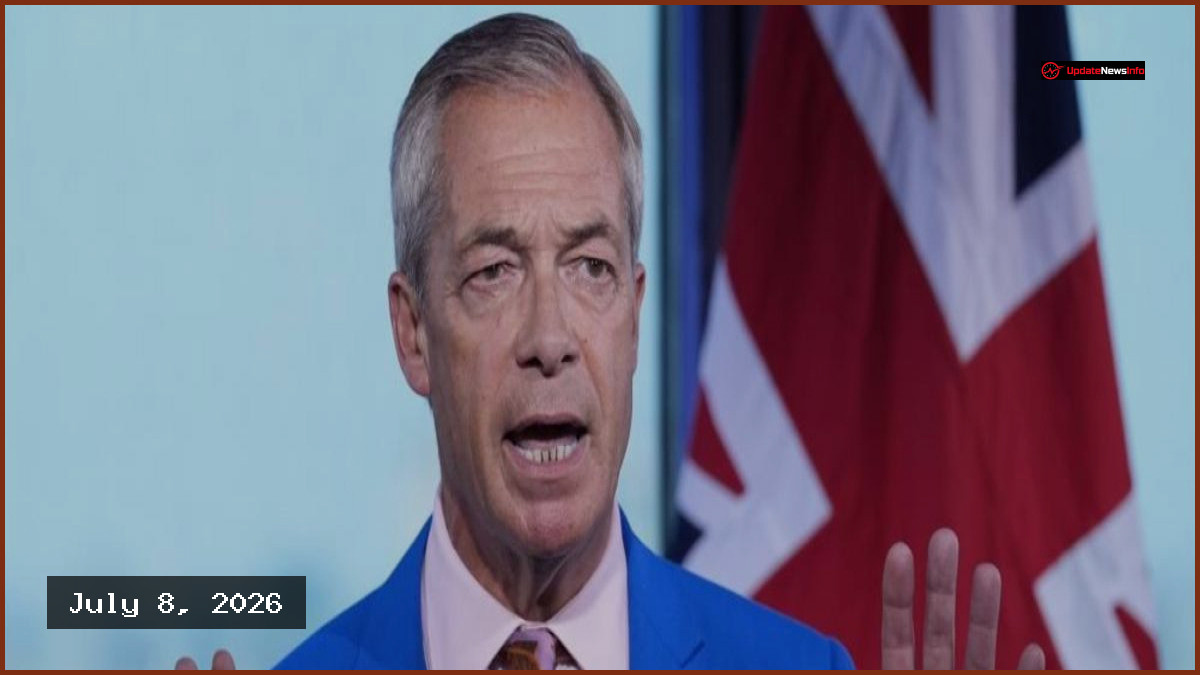
Nigel Farage’s decision to trigger a by-election in his Clacton seat in Essex has set the stage for an unusual contest, with major Westminster parties opting not to field candidates. This move has led to a peculiar situation where one of the few individuals declaring an intention to run against Farage is Count Binface, a figure known for dressing as a bin and claiming to reside on the planet Sigma IX, who recently gave an interview on the BBC’s Today programme.
Reform UK, Farage’s party, stated they had anticipated the main parties – Labour, the Conservatives, the Liberal Democrats, and the Green Party – would decline to participate in the race, which is expected this summer. This collective withdrawal by established parties has shifted journalistic focus towards novelty candidates like Count Binface, prompting scrutiny into the dynamics of the upcoming election.
Amidst these developments, the Liberal Democrats have suggested that the government should delay appointing Farage to one of the traditional Crown roles that departing MPs occupy to leave the House of Commons. Their aim is to postpone the by-election until after the ongoing inquiry into Farage by the Parliamentary Commissioner for Standards is completed. Clearly, the risk for ministers in doing this would be to play into Reform’s argument that what they see as “establishment” parties are blocking their right to a democratic race.
Let’s unpack the pros and cons of this move from Farage’s perspective. Clearly, less than 24 hours on from his announcement, the downside for him is triggering what some will see as a pointless by-election that his main opponents are avoiding. A race predominantly featuring figures like Count Binface and the Monster Raving Loony Party challenges conventional notions of a serious political contender, though it is noted that political conventions have been increasingly disregarded in recent years.
Conversely, the move offers Farage a significant upside. For several months, he has been under intense pressure, facing numerous questions regarding money and transparency. This scrutiny had reportedly “suffocated his capacity” to engage in his preferred activities: constant media appearances, shaping, and often leading national debates. This resignation and by-election challenge could be interpreted as a strategic attempt to reclaim his public platform.
Reform UK’s internal reasoning suggests that if a by-election was a likely outcome anyway due to the standards commissioner’s inquiry, holding it now makes strategic sense. This approach allows them to argue to the voters of Clacton that other parties demonstrate such little concern for their constituency that they are unwilling to even participate in the election. Furthermore, it has been suggested that this initial by-election could serve as a valuable “data collection exercise” for Reform, providing insights should a second by-election become necessary if Farage is later found to have breached parliamentary rules.
Folk on the Essex coast should be prepared for attention, cameras and ballot boxes. Ultimately, it remains uncertain whether the coming weeks and months will strengthen Farage’s position or merely highlight the difficult situation he already finds himself in.