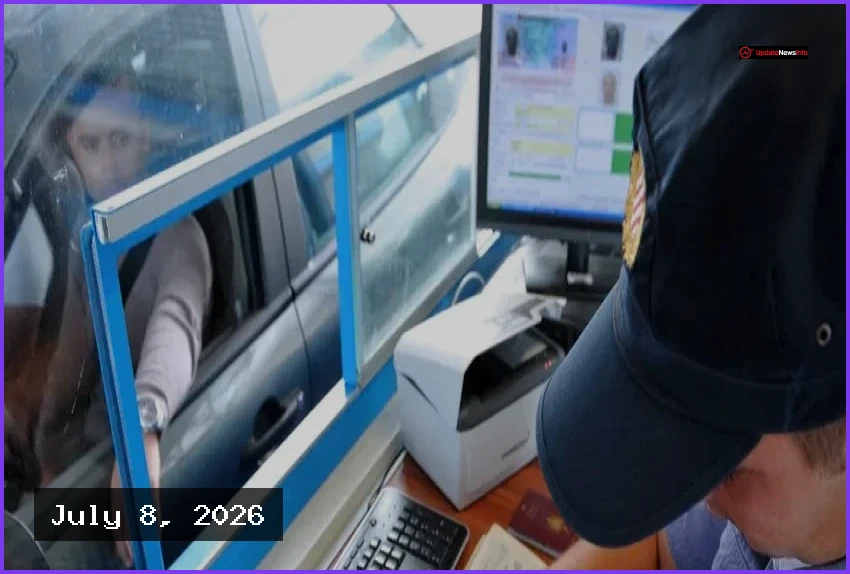
In the initial six months following the implementation of the European Union’s digital Entry-Exit System (EES), authorities have denied entry to more than 8,700 travelers attempting to cross into the border-free Schengen area. These individuals were flagged specifically for exceeding their legally permitted time limits within the territory.
Since the system’s launch last October, the EU has processed over 108.5 million entries and exits by non-EU nationals. In total, 43,728 people were refused entry during this period. According to a document from the European Commission, the reasons for these refusals were varied: 16,383 travelers lacked appropriate justification for their stay, 6,141 did not possess a valid visa or residence permit, 1,524 lacked valid travel documentation, and 1,128 were identified as potential security threats. Additionally, 298 individuals attempted to use counterfeit or false travel documents, while 122 presented fraudulent residence permits.
The 8,739 recorded overstayers represent those who remained in the Schengen area beyond their allowed duration, including those who breached the “90-day rule,” which limits non-EU visitors to a maximum of 90 days of stay within any 180-day period. While the Commission has not provided a granular breakdown of these cases, penalties for such violations can range from monetary fines to formal bans on future entry into the EU.
The EES was designed to bolster security at EU and Schengen borders by replacing manual passport stamping with a digital registry that tracks when and where non-EU nationals cross borders in real time. The report noted that the option to suspend EES operations was utilized only on a limited number of occasions. Despite its security functions, the system has faced scrutiny, with the travel industry and airports expressing concerns regarding potential delays and advocating for flexibility during peak travel seasons.
The system also assists in the automated tracking of the 90-day rule for citizens from countries such as the UK, USA, Canada, Australia, and New Zealand. This has sparked friction in some regions; for example, drivers in the Western Balkans and UK transport organizations have warned that strict enforcement could disrupt supply chains and create labor shortages. In response to these pressures, the European Commission indicated in January that it would examine potential adjustments to allow certain non-EU professionals to extend their stays beyond the standard 90/180-day limit.
Looking ahead, the Commission is prioritizing the upcoming European Travel Information and Authorisation System (ETIAS), expected by the end of 2026, which will mandate registration for short-term visitors. The Commission highlighted that in 2025, the Schengen area remained the world’s most popular destination, hosting over 790 million travelers.
READ ALSO: 'Trend will continue' – Number of people refused entry to Europe sees sharp rise
“Preparations are progressing, with coordinated efforts underway at EU and national levels to ensure ETIAS’ effective roll-out. Early involvement of travel industry stakeholders is crucial for the success of this endeavour,” the report says.