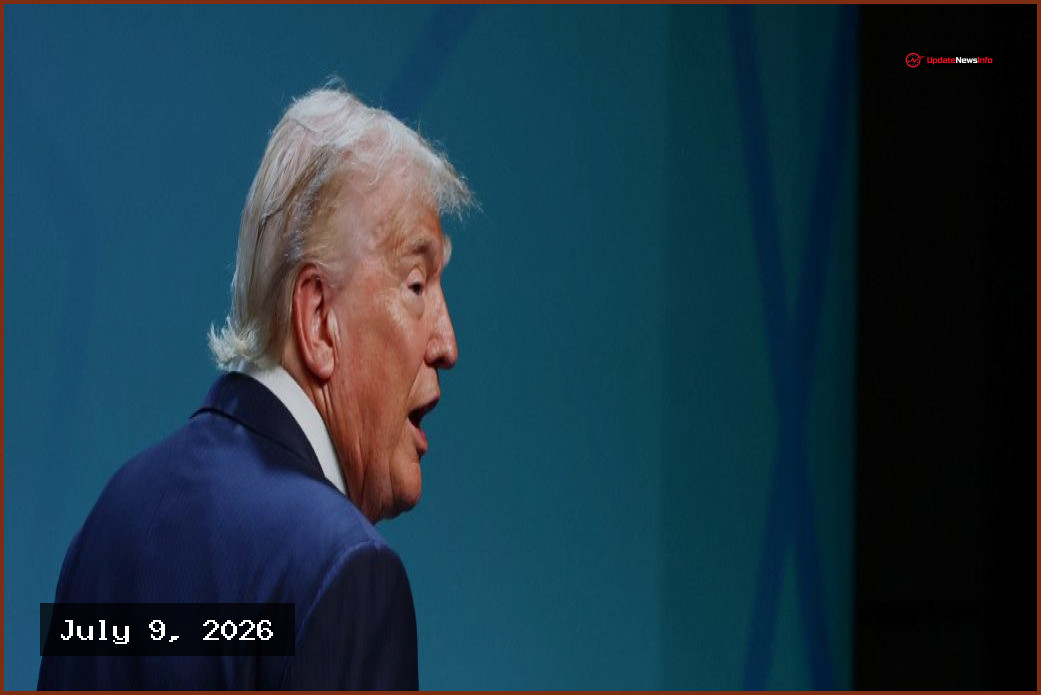
President Donald Trump arrived at the NATO summit in Ankara with a storm of grievances, publicly lambasting allies over issues ranging from Greenland's refusal to be acquired by the US to Spain's unwillingness to allow its bases for a potential Iran war—a conflict he also threatened to reignite. European leaders, bracing for a harsh rebuke and even fearing a US withdrawal from the defense alliance, were met with a surprisingly different tone once the closed-door sessions began.
While Trump had expressed his anger to reporters just outside the conference hall, his demeanor shifted significantly behind the scenes. During the circular table discussions, he notably refrained from mentioning Greenland or Spain, according to individuals familiar with his remarks. He did, however, voice complaints that allied nations had not adequately supported him against Iran and lamented the perceived collapse of an agreement with Tehran he had signed just three weeks prior, particularly after Iran's recent strikes on multiple ships in the Strait of Hormuz. Among the president’s few complaints: the press wasn’t allowed in to witness the session.
Crucially, the US President did not threaten to pull the United States out of NATO, a move that, while technically not unilateral, had been a serious concern for European officials. Instead, he appeared impressed by leaders' descriptions of their increased investments in defense, a development NATO chief Mark Rutte repeatedly credited to Trump's persistent pressure over the years.
As the day concluded, Trump recounted the session positively, stating, “They like the job I’m doing. They said, ‘We love, sir, we love you.’ These are grown people saying that. Isn’t that nice?” He even acknowledged the possibility that leaders might have been trying to flatter him, shrugging, “Maybe they were trying to get to me. And, in a way, they did.” This apparent success was largely attributed to Rutte, known for his ability to manage Trump, whose lavish praise seemed to work, despite some officials privately viewing Europe’s dignity as a casualty of the approach.
A few hours later, sitting alongside Ukrainian President Volodymyr Zelensky, Trump even indicated he was preparing to allow Kyiv to manufacture its own Patriot missile interceptors. This marked a significant diplomatic victory for Zelensky, who had faced strong criticism from Trump in the Oval Office just 16 months prior. Before departing the summit, Trump reiterated, “I just want to say there was tremendous love in that room.”
The longevity of this goodwill remains uncertain. Just three weeks earlier, Trump had championed the Iran agreement at a G7 summit in France, an accord he now declares dead, illustrating the often-fleeting nature of diplomatic outcomes. Nevertheless, even if these positive sentiments only last long enough to make Trump reconsider earlier threats—such as privately floating a one-third cut to US forces in Europe—it would still be considered a win, and the best outcome Rutte could have hoped for after a year of careful diplomatic engineering.
Rutte's efforts were bolstered by an unexpected ally, Turkish President Recep Tayyip Erdoğan, who hosted the summit. Trump, who considers Erdoğan a good friend, repeatedly stated his participation was solely due to Erdoğan's hosting. The US president's begrudging attendance had not initially promised a warm gathering, nor did his recent feuds, including one with Italian Prime Minister Giorgia Meloni, whose photo he posted on social media before the summit with the caption: “RESTRAINING ORDER NEEDED.”
The tension between Trump and Meloni had not dissipated by a Tuesday evening dinner where they shared Turkish specialties. It remains unclear if they reconciled, though Meloni described her relationship with Trump as “Cordial” upon returning to her hotel. Erdoğan, an autocrat known for cracking down on dissent, is familiar with Trump-style flattery, with banners featuring his face adorning buildings in Ankara, much like in Washington.
Trump's arrival in Ankara on Tuesday was met with a lavish ceremonial welcome, including an honor guard, horseback riders accompanying him to Erdoğan’s palace, and jets soaring overhead, expelling red, white, and blue smoke over a turquoise welcome carpet. Trump appeared particularly impressed by Ankara’s infrastructure, repeatedly praising the capital’s airport and roads, exclaiming, “Everything was beautiful.” He also signaled a significant gift for his host: strong indications he planned to allow Turkey back into the F-35 fighter jet program, a request Erdoğan had made to four successive American administrations, though a congressional ban could still impede these plans.
Ultimately, Trump’s presence in Ankara demonstrated a master class in managing a mercurial president and minimizing potential damage. This lesson, however, seemed lost on Iran. After weeks of calling Iran’s leaders “rational” and “smart,” Trump abruptly reversed course, describing them as “scum” and “cuckoo” following their repeated attacks on commercial vessels in the Strait of Hormuz. Trump's official explanation cited these attacks, but he also repeatedly mentioned his status as Iran’s “number one” assassination target, a reality underscored by chants for his death at funeral ceremonies for the slain Supreme Leader Ali Khamenei over the weekend.
The proximity of Ankara, about 1,000 miles from the Iranian border, may have heightened his focus on this perceived threat.
Upon departure, Trump flew out of Turkey aboard an older version of Air Force One instead of the new Qatari-donated plane, prompting questions about a potential threat. Reporters on board were instructed to lower their window shades during takeoff. When asked about the change during his concluding press conference, Trump avoided linking it to any threat, stating the swap was merely to showcase the new model to troops at a British air base. Yet, as he prepared to board the old plane, he lingered on the looming peril: “I’m number one on the kill list for Iran. They’re lovely people,” he said, before shrugging it off, “I don’t really care, because I’m doing my job.”
That may be an exaggeration of how the Europeans actually spoke to him behind closed doors. And Trump, in a moment of acute self-awareness, seemed to acknowledge the leaders may have been trying to butter him up.
That, in the end, was about the best Rutte could have hoped for, even if the summit got off on a sour note. It was also the outcome he’d spent the last year trying to engineer, ever since Trump departed the 2025 summit in the Netherlands sounding uncharacteristically friendly about the alliance.