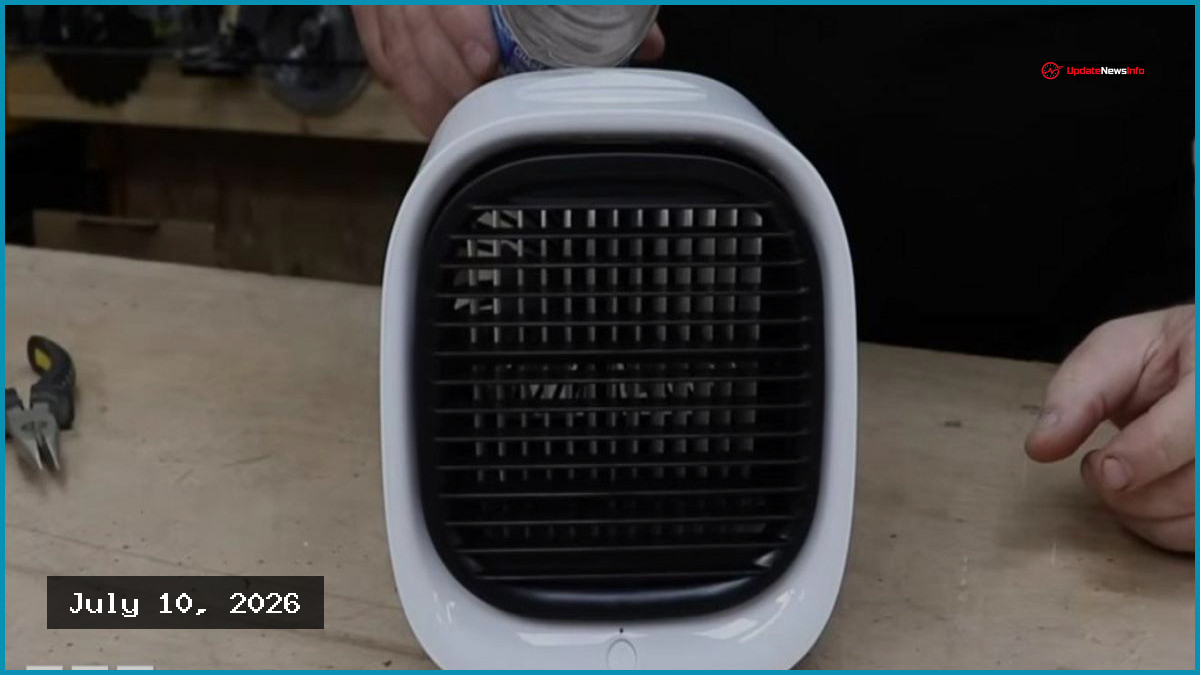
With warmer weather approaching, the Advertising Standards Agency (ASA) has issued a warning regarding a surge of online advertisements for portable air conditioners. These promotions, appearing on platforms such as Facebook and YouTube, frequently claim that the devices were designed by former Nasa engineers and possess the capability to cool an entire room in just 90 seconds. The watchdog has cautioned that such claims are often too good to be true.
YouTuber Stuart Matthews, who operates the Proper DIY channel, purchased several of these units to test their performance. Despite spending £70 on a device, Matthews discovered it was merely a basic fan worth only a few pounds. He noted that the products rely on flawed science, with one unit described as a “reverse-engineered aircon” actually containing only cardboard fins that dampen as water passes through them. These “swamp coolers” differ significantly from conventional air conditioning units, which function by venting heat outdoors via an exhaust hose. While evaporative coolers can function in dry climates, they often increase humidity, making them ineffective in the UK.
The ASA reported that these adverts often feature exaggerated claims, including assertions that small devices can cool entire homes with minimal electricity. Investigations also revealed that many of these promotions use AI-generated visuals, such as metallic boxes and copper coils, to create an impression of technical sophistication. Furthermore, the watchdog highlighted the frequent use of fake testimonials that describe dramatic temperature drops or perfect performance to entice shoppers into buying devices typically priced between £70 and £120.
To protect consumers, the ASA has outlined several red flags to identify misleading adverts, including promises that seem implausible, dramatic backstories about “secret inventions,” poor grammar, and overly perfect customer reviews. The agency advises buyers to verify retailers by checking for genuine contact information and business addresses, and to seek independent reviews rather than relying on testimonials provided on a seller’s website.
While the ASA cannot issue fines, it is actively monitoring websites to identify deceptive advertising and is issuing enforcement notices to ensure compliance. The watchdog also encourages consumers to report suspicious adverts directly through its website. The BBC has approached both Meta and YouTube for comment regarding the adverts appearing on their platforms.
No air con? Here's how to get the most out of your electric fan