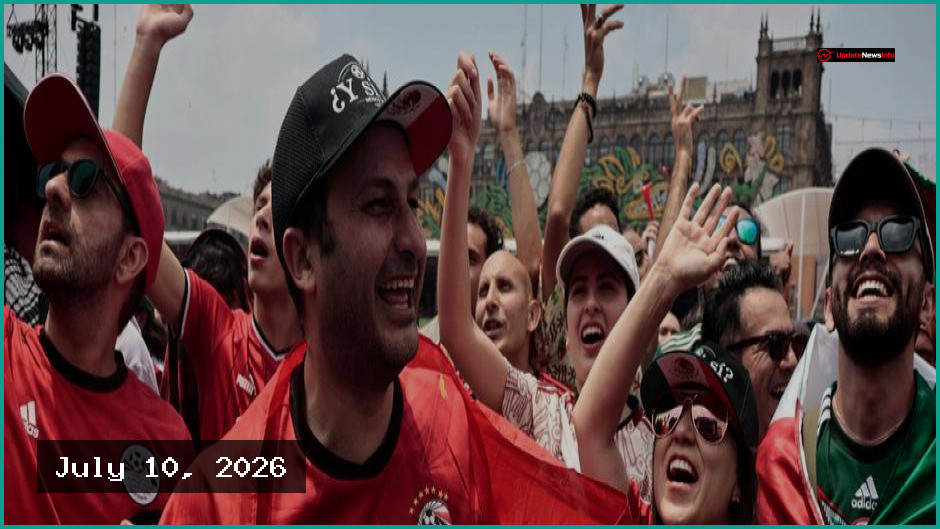
It’s the kind of thing many football fans experience during World Cup watch parties: The “home” team scores a goal and fans in a beer garden or pub cheer as one – and may even embrace in celebration – even though they had been complete strangers just moments earlier. According to Katie Wood, a clinical psychologist at Swinburne University in Melbourne, these moments of collective celebration are more than just fun; they actively support mental health.
Wood emphasizes that the primary protective factor for mental health is human connectedness—to oneself, others, the community, and culture. In her view, sports are an ideal vehicle for this because they bring diverse groups of people together. This feeling of being part of something larger than oneself is a hallmark of the World Cup, as fans from various nations swap jerseys and support the same teams, regardless of their background.
Real-world examples of this phenomenon have been plentiful. In Lawrence, Kansas, locals spontaneously transformed the city center into a green-and-white fan zone to support Algeria, with many residents wearing team jerseys and face paint. Similarly, after a Round-of-16 match in Vancouver, fans were seen exchanging jerseys as mementos. In Seattle, a Belgium supporter was even spotted offering comfort to an American fan following the USA’s elimination from the tournament. A visitor in San Francisco described a poignant encounter where a complete stranger hugged him simply because he was wearing a jersey, noting that the shared goal of supporting a team bridges the gap between vastly different lives. “You can come from vastly different walks of life. But the moment you support the same team, a collective experience with a shared goal emerges.”
This collective experience taps into a fundamental human need to belong. Whether a fan has followed the sport for decades or is watching their first game, the shared tension before a kickoff, the roar of a goal, and the mutual frustration of a loss create a unique emotional bond. “No one knows what we go through as human beings day in and day out,” a visitor at a fan zone told DW. “That’s why moments like these are so special.”
Even those who do not have a specific favorite team find value in the atmosphere. “I’m just happy,” a visitor in Philadelphia told DW. “I don’t even have a team, but I’ve come to love watching the games.” Wood explains that in a world where so much is happening, people naturally seek ways to escape their daily routines, and engaging with the excitement of the World Cup alongside others is a very healthy way to do so. While the football matches remain the focus, for many fans, the most lasting memories are the human connections formed on the fringes of the tournament.
This article was originally published in German.