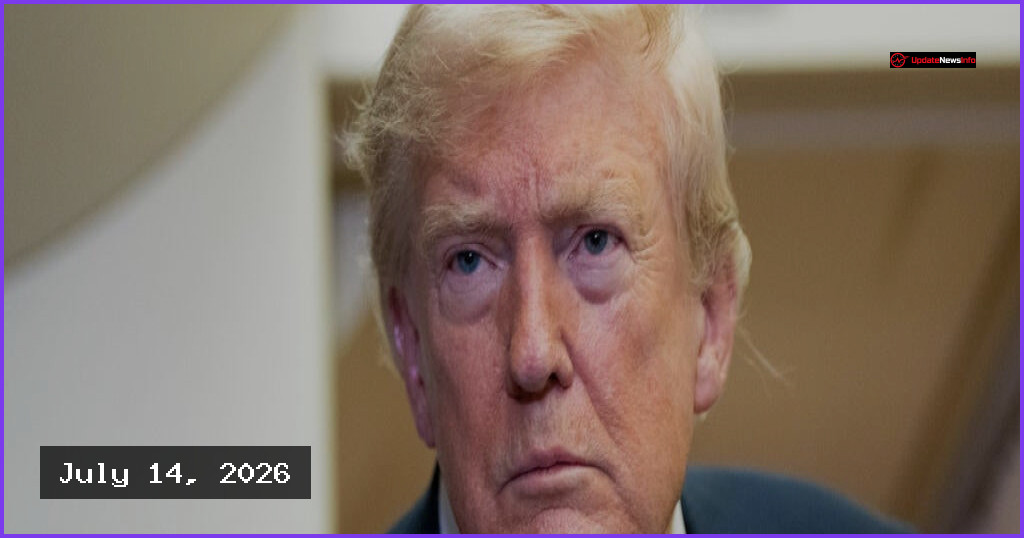
President Trump has formally notified Congress that military action against Iran restarted last week, marking the end of a ceasefire that had been in place for several months. In a message dated July 10 and addressed to Republican Senator Chuck Grassley of Iowa, the president confirmed that the military operations commenced on July 7.
The notification followed Mr. Trump’s declaration that the U.S.-Iran ceasefire was over. This decision came after the administration ordered several rounds of strikes on Iranian targets, a move described as a response to Iranian attacks on commercial vessels in the Strait of Hormuz. Iranian authorities have maintained that ships must use Iranian-approved routes and obtain permission before transit. In retaliation for the U.S. strikes, Iran launched missiles and drones at U.S.-allied Gulf states.
The administration’s letter to Congress characterized the recent military strikes as limited, measured, and planned to minimize civilian casualties. According to the president, the objective is to target Iranian military sites that threaten U.S. forces and commercial shipping interests. The letter further stated that U.S. Armed Forces remain postured to take additional action as necessary to address threats to the United States and its allies, with the ultimate goal of ensuring Iran ceases its hostile activities.
The notification arrives amid ongoing debate regarding the War Powers Resolution of 1973. Under this post-Vietnam War law, the president is required to notify Congress within 48 hours of initiating military hostilities. While the White House had sent a notification when the conflict began in late February, the administration previously argued that hostilities had terminated after a ceasefire was signed in early April. The War Powers Resolution generally limits military hostilities to 60 days unless Congress provides authorization, though the Trump administration has consistently argued this provision is unconstitutional.
Democratic Senator Adam Schiff of California challenged the administration's stance on Monday, stating that any assertion that the president is entitled to another 60 days without congressional approval has no foundation in law. Schiff announced the introduction of a new war powers resolution, which directs the removal of U.S. forces from hostilities with Iran and rejects the claim that the 60-day clock was reset by the April ceasefire agreement. Similarly, Republican Representative Thomas Massie, a critic of the conflict, argued that the war never actually stopped and accused the administration of attempting to circumvent the law by treating the conflict as a series of stop-start events.
Previously, both the House and Senate passed resolutions aiming to limit the president's ability to engage in further military action without authorization. While the Senate later rejected a similar measure due to some Republicans favoring continued diplomatic efforts, the resumption of strikes and the president's expressed pessimism regarding negotiations have left the legislative response uncertain.