The United States launched military strikes on Iran early Tuesday, hours after President Donald Trump announced Washington was “reinstating” a blockade on Iran in the vital Strait of Hormuz. Tehran swiftly retaliated with attacks targeting U.S. allies and commercial shipping across the Middle East, raising fears of a return to all-out war.
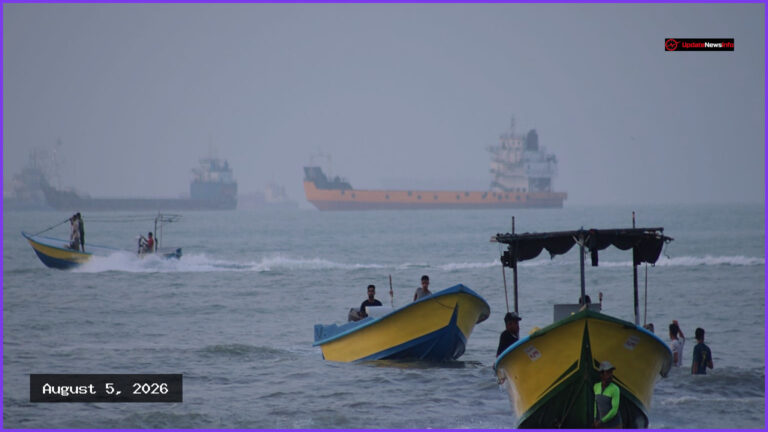
President Trump had stated on Monday that the war with Iran was moving “very fast” as U.S. forces prepared for strikes aimed at Iran’s military capabilities. He added that Washington intended to control the Strait of Hormuz, a critical waterway through which a fifth of all traded crude oil and natural gas passed in peacetime.
The U.S. military’s Central Command confirmed it struck several areas within Iran, specifically targeting “coastal defense systems, missile and drone sites and maritime capabilities.” The military asserted that “These strikes will continue imposing a heavy cost on Iranian forces and degrade their ability to attack innocent civilians and commercial shipping in the Strait of Hormuz.” Iran acknowledged the strikes but did not immediately provide assessments of casualties or damage.
In response, Iran launched attacks against Bahrain, Jordan, and three tankers traversing the Strait of Hormuz. Two of the targeted ships, the Mombasa and Al Bahiyah, were associated with the United Arab Emirates and were set ablaze for a period. The Emirati Defense Ministry reported that one mariner was killed and eight others were wounded in the attack on these tankers, prompting the Emirates to threaten retaliation. Dutch shipping firm Stolt Tankers also reported that its vessel, the Stolt Magnesium, came under attack off Oman, sparking a fire in the engine room. However, the company confirmed all mariners aboard were safe. Iran’s paramilitary Revolutionary Guard claimed the Mombasa and Al Bahiyah “ignored repeated warnings,” noting that Iran has targeted ships using a route through the strait that passes near Oman, outside of its territorial waters.
Hours after the U.S. announced the conclusion of its strike campaign, the Iranian city of Bushehr on the Persian Gulf was hit in at least four locations, according to the state-run IRNA news agency. This incident raised the possibility that Gulf Arab states were conducting retaliatory attacks against Iran.
Regional tensions were further underscored by events in Bahrain, home to the U.S. Navy’s 5th Fleet, where missile alert sirens sounded three times early Tuesday. Jordan’s military reported intercepting four missiles from Iran. Jordan, which hosts U.S. forces, has been subjected to attacks by Tehran in recent days.
The European Union Aviation Safety Agency (EASA) issued a warning to airlines, advising against operating in the airspace of Bahrain, Kuwait, Qatar, and the United Arab Emirates, as well as over the Gulf of Oman. An EASA bulletin stated that “unpredictable military developments, combined with the possible use of missiles, drones, combat aircraft and air-defense systems, create a high risk to civil flights.”
President Trump had announced the blockade on social media Monday, stating, “We are reinstating the THE IRANIAN BLOCKADE.” He also declared that the U.S. would impose a fee for protecting other ships, amounting to 20% of the value of cargo, to help cover “any and all costs necessary to do the job of providing safety and security.” This policy represents a significant departure from longstanding U.S. policy, which has championed freedom of navigation since the Barbary Wars in the early 19th century and the War of 1812. It also contradicts recent assurances from U.S. Secretary of State Marco Rubio, who had promised the strait would remain open to all without tolls during a trip to the region. Experts warn that any attempt by the U.S. or Iran to levy fees would violate global norms on freedom of navigation, escalate tensions, and likely cause widespread economic disruption.
The price of Brent crude oil, the international benchmark, rose to a one-month high of over $87 in trading Tuesday. While still below the nearly $120 reached at the height of the war, the increase threatens to raise costs globally. Experts suggest that reopening the Strait of Hormuz by force would necessitate a much larger armada, potentially tens of thousands of American ground troops, though they also note Trump has previously backed down from such threats.
Amid the escalating conflict, regional mediators are working to de-escalate the situation. Two regional officials, speaking anonymously due to the sensitive diplomatic process, confirmed that Pakistan-led mediation efforts were ongoing around the clock to reactivate a ceasefire. Separately, Lebanese and Israeli delegations were expected to meet in Rome on Tuesday for U.S.-mediated negotiations. The broader conflict began on February 28 when the U.S. and Israel launched the war, leading to the Lebanese militant group Hezbollah joining in support of its ally, Iran, and attacking Israel. Israel responded with a ground invasion of Lebanon. Last month, Lebanon and Israel announced a “framework agreement” for the withdrawal of Israeli forces from southern Lebanon in exchange for Hezbollah’s disarmament, but its implementation has stalled.