Thousands of people who travel daily between the southern tip of Spain and the British territory of Gibraltar are no longer required to cross a physical border as of Wednesday, July 15, 2026. The removal of the border fence, which was completed in time for the official opening at midnight on Tuesday, marks a significant shift in the region, allowing for a new era of freedom of movement under a historic treaty between the European Union and the United Kingdom. This development follows years of complex post-Brexit negotiations aimed at resolving the status of the relationship between the territory and the bloc.
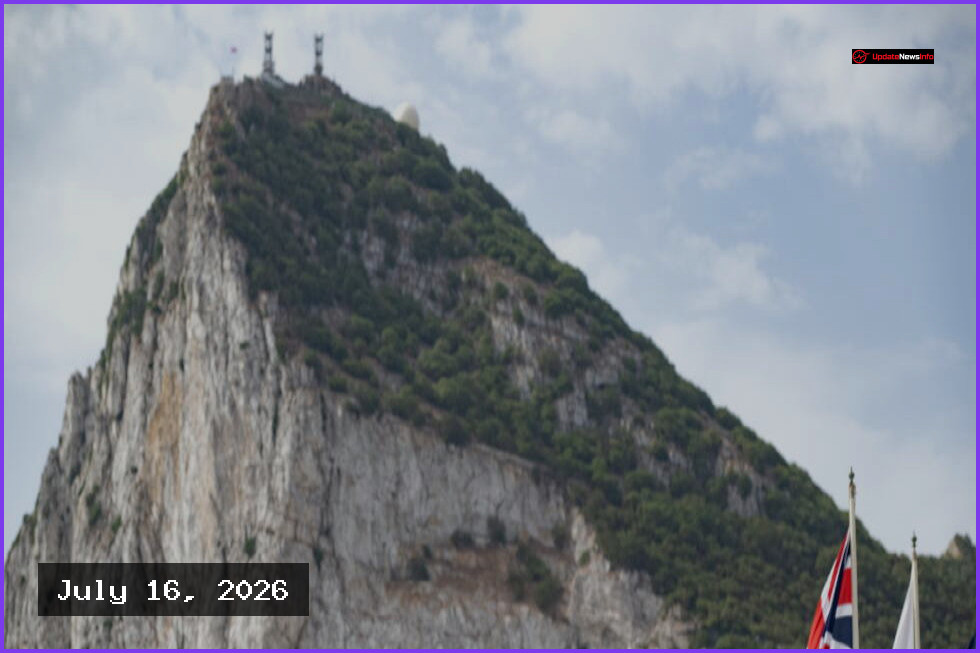
The contested British overseas territory, home to 38,000 people, is situated at the southern end of the Iberian Peninsula in a strategic location where the Mediterranean Sea meets the Atlantic Ocean, just miles from Morocco. Shortly after the midnight opening, crowds began moving freely in both directions between La Línea de la Concepción in Spain and Gibraltar. The atmosphere was notably celebratory, with many individuals wearing Spanish soccer jerseys to mark Spain’s victory over France in the World Cup semifinal held on Tuesday.
Gibraltar’s Chief Minister, Fabian Picardo, expressed his optimism regarding the change, telling the Spanish broadcaster RTVE that the atmosphere reflected a sense of brotherhood between the two populations. The agreement is expected to significantly impact the daily lives of residents, including those visiting family members, children attending extracurricular activities or football matches, and workers who commute across the frontier. Picardo noted that these individuals will no longer have to contend with the long-standing issue of frontier queues.
For many, the transition represents a major change in routine. Mendez Segura, a 51-year-old home care worker who has spent his entire career crossing into Gibraltar for employment, remarked on the shift. While he noted that he is accustomed to using his identity card for entry, he acknowledged the significance of the newfound freedom of movement. The treaty itself, however, does not resolve the long-standing sovereignty dispute over the territory, which has been held by Britain since 1713 and remains a point of contention with Spain.
Officials from both the U.K. and the EU have lauded the agreement. U.K. Foreign Office Minister Stephen Doughty stated on Tuesday that the deal successfully secures Gibraltar’s long-term economic future and interests. Maroš Šefčovič, the EU’s trade representative, also praised the outcome, noting that it took four years of patient and complex negotiation to reach this point. He remarked that it was a very special feeling to witness the physical fence finally coming down.
Despite the removal of the physical barrier, security remains a priority. Travelers arriving in Gibraltar from countries outside the Schengen Area, including the United Kingdom, will still be subject to the EU Entry-Exit System (EES). This system, which was implemented across Europe in April, replaces traditional passport stamps with the collection of biometric data, including digital fingerprints and photographs. To manage this transition, Gibraltar has installed live facial recognition cameras at entry points and throughout the territory. Chief Minister Picardo confirmed that the government has increased its police presence and expanded resources for customs and coast guard agencies, describing the territory’s evolution by stating that the "fortress has become a digital fortress now."
When Britain left the EU in 2020, the relationship between Gibraltar and the bloc had been left unresolved.
In Britain’s 2016 Brexit referendum, 96% of voters in the Rock, as the territory is popularly known in English, supported remaining in the EU.