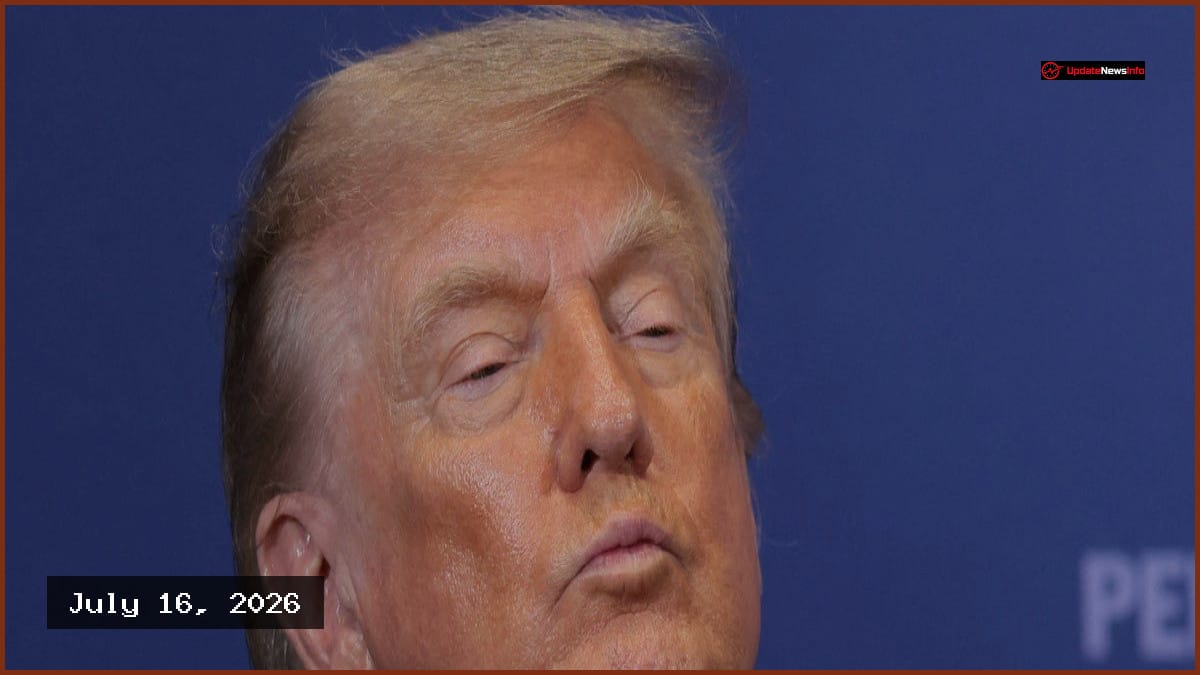
President Donald Trump has voiced strong opposition to a new policy in New York that halts the development of data centers. On July 15, the President took to Truth Social to defend these facilities as essential economic drivers, labeling them as "big, strong, bold, and Money Machines" for the states where they are established. Trump characterized the move by New York Governor Kathy Hochul, a Democrat, as a "terrible decision" and accused her of enacting the pause for political reasons, demanding that the state reverse its policy immediately.
On July 14, Governor Hochul signed an executive order establishing a one-year moratorium on the construction of new data centers, making New York the first state to implement such a freeze. The pause is intended to allow the state time to develop new standards for the facilities. These centers, which house the servers and networks necessary for digital services and artificial intelligence, are increasingly vital as technology expands globally.
However, the rapid growth of these facilities has sparked controversy across the country. Residents in numerous communities have protested their construction, citing concerns over their enormous physical footprint, aesthetic impact, and high demand for water and electricity. Critics also point to noise pollution and the limited direct benefits these facilities offer to local neighborhoods. Some opponents have further argued that data centers are disproportionately placed in low-income areas.
Trump argued that the facilities are highly sought after by "red states" such as Alabama, Florida, and Texas, where they are viewed as assets that provide tax revenue and jobs. He claimed that states welcoming these centers benefit from "liquid gold" in the form of income and economic growth. Despite this, tensions over data center projects have surfaced in both Democratic and Republican-leaning areas, ranging from Nashville and New Jersey to the Virginia suburbs of Washington, D.C., and rural Utah. Even in Palm Beach, Florida—the location of Trump's Mar-a-Lago resort—the prospect of a new AI data center has triggered fierce debate.
Beyond the local economic impact, Trump expressed concern that such state-level barriers could impede the advancement of AI technology, potentially hindering the United States in its global competition with China. This stance follows an executive order signed by Trump in June, which encouraged AI developers to voluntarily submit their models for federal review regarding security risks, though it stopped short of mandating government-led safety and cybersecurity testing for advanced AI products.