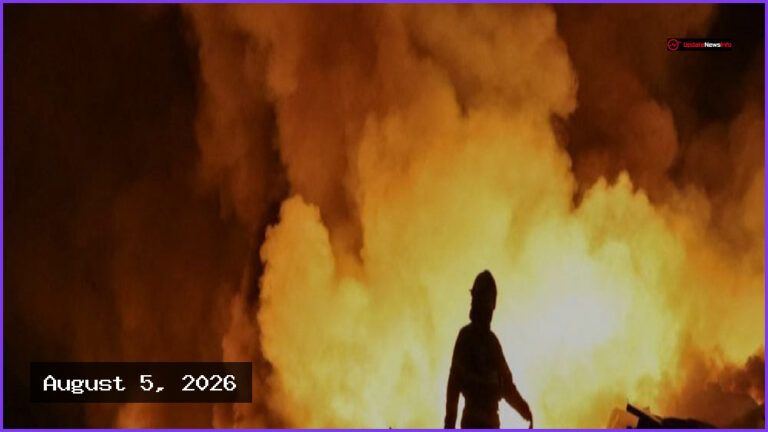
The United States intensified its military campaign against Iran early Thursday, launching strikes further north into the country and disabling a ship accused of attempting to break a U.S. naval blockade. The U.S. military's Central Command reported that the strikes targeted areas around Tehran and Semnan province, the latter being a hub for Iran's ballistic missile production and space program. These actions followed another wave of U.S. strikes on Wednesday, which lasted seven hours and hit dozens of targets.
During daylight hours on Wednesday, an attack targeted Iranian defense and missile sites on Greater Tunb Island, a strategic point in the Strait of Hormuz. In a separate incident, U.S. forces fired on the Curacao-flagged oil tanker Belma, which was sailing toward Kharg Island, Iran's main oil export terminal in the Persian Gulf. The U.S. military stated the vessel was disabled after ignoring multiple warnings, with a missile fired into the ship's smokestack.
Iranian state media reported that strikes on Thursday morning also affected provinces including Hamedan, Hormozgan, Khuzestan, Lorestan, Markazi, and Sistan and Baluchistan. On Wednesday, an attack on a barracks for Iran's 388th Mechanized Infantry Brigade in Sistan and Baluchestan province reportedly involved at least 13 missiles, resulting in seven deaths, including conscripts and career soldiers, and wounding several others.
Iran retaliated early Thursday with missile and drone attacks targeting Bahrain, Jordan, and Kuwait, countries that host U.S. forces. Authorities in these nations confirmed the attacks, though immediate reports of damage or casualties were not available. Separately, Iraqi Prime Minister Ali al-Zaidi condemned an overnight drone attack on Irbil, the capital of Iraq's semiautonomous northern Kurdish region. The drone was intercepted, and the attack occurred during al-Zaidi's trip to the U.S., where he pledged to work on disarming non-state armed groups, including those backed by Iran.
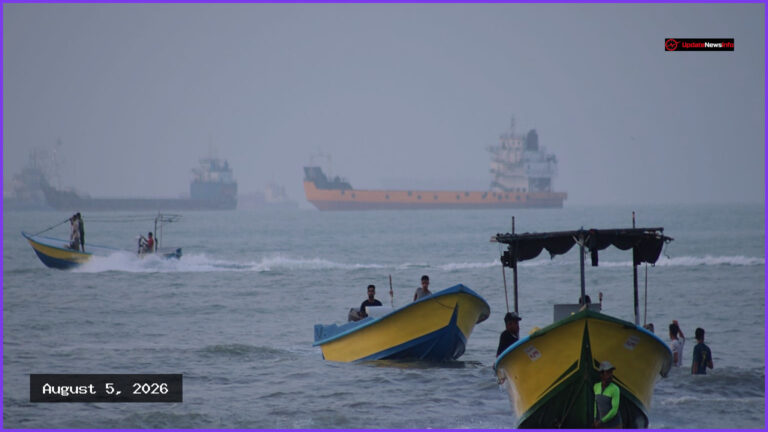
The U.S. reimposed a naval blockade on Wednesday, a move that has significantly impacted global trade. When the U.S. and Israel initiated the war on Iran on February 28, Tehran effectively closed the Strait of Hormuz to shipping traffic, a move that sent the price of oil, fertilizer, and many other goods soaring far beyond the region and gave Iran major leverage in negotiations. The U.S. has threatened to reopen the strait by force, though experts suggest this would require a much bigger armada if not tens of thousands of ground troops.
Col. Ebrahim Zolfaghari, a spokesperson for the Iranian military’s Khatam al-Anbiya Central Headquarters, issued a warning that Iran could launch widespread attacks on regional infrastructure if the U.S. follows through on President Donald Trump's repeated warnings that America could hit Iranian bridges and power plants. "All the infrastructure in the region will be crushed under the steel blows of the powerful armed forces of the Islamic Republic of Iran," Zolfaghari stated. He added that Iran would not allow American interference in the Strait of Hormuz, calling it "Iran’s invincible red line."
The conflict's economic impact continues to be felt. The price for Brent crude oil traded above $85 a barrel on Thursday, more than 15% higher than the price before the war, but still well below the nearly $120 reached at the height of the conflict. Rising prices pose a particular challenge to Trump and his Republican Party, which hopes to retain control of Congress in elections in November. Mediators have sought to calm the tensions, but so far have been unsuccessful.
President Trump separately said on social media that Tehran made a goodwill gesture by releasing an American citizen wrongly detained in Iran since 2024. Human rights lawyer Jared Genser released a statement identifying the detainee as his client Dena Karari, a U.S.-Iranian citizen who runs a nonprofit and was charged with espionage. Iran did not immediately acknowledge the release, and her case was not publicly known, as is sometimes the case with detentions in the Islamic Republic.