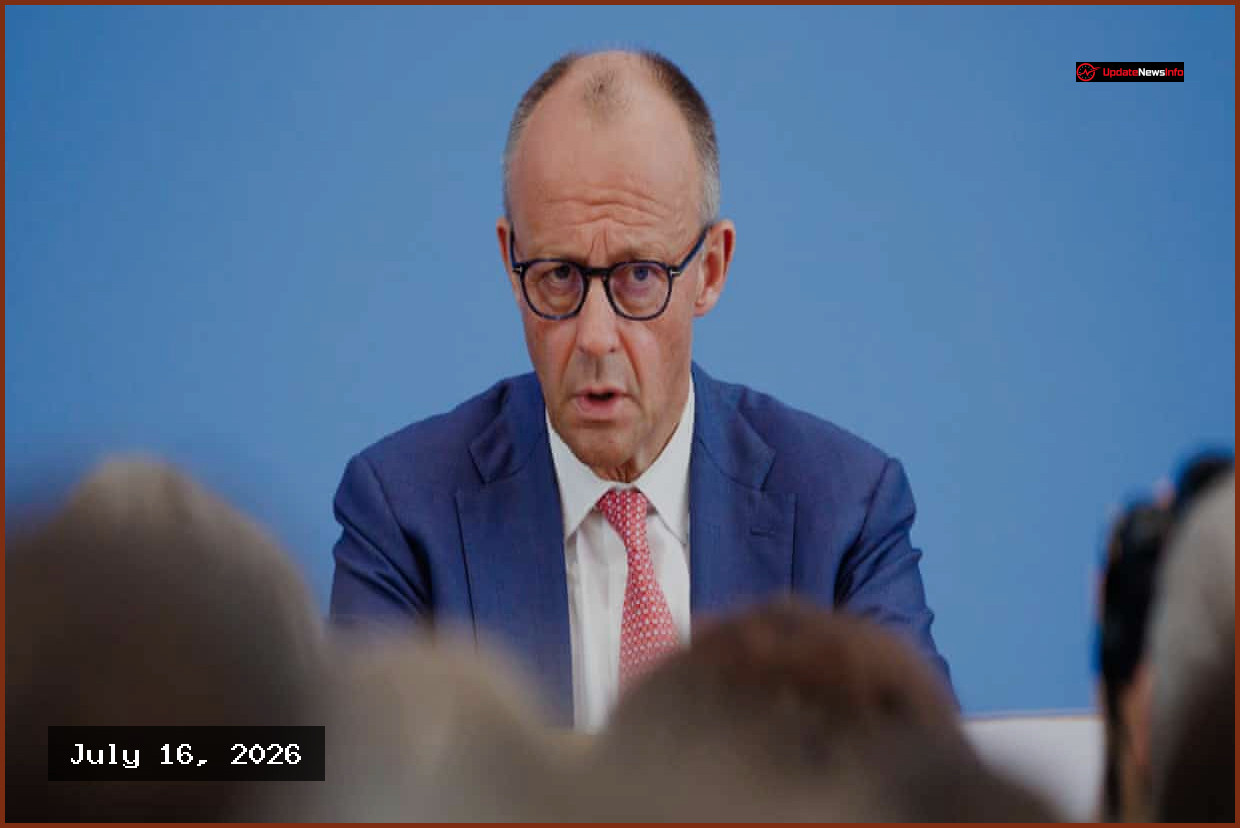
German Chancellor Friedrich Merz has officially warned the administration of Donald Trump against interfering in German elections. This diplomatic caution follows the recent announcement by the US State Department of a new initiative offering grants of up to $3m to European charities, thinktanks, and individuals. The funding is intended to support groups that address issues such as national sovereignty, migration, censorship, and lawfare, under the premise of aligning with a shared western civilizational heritage.
Addressing the press on Wednesday, Merz emphasized the importance of non-interference, stating that Germany does not involve itself in American elections and expects the same in return from the US government or its associated institutions. The Chancellor’s remarks come amid growing concerns that the US is attempting to exert direct influence over European political landscapes. Merz also noted that financing political parties from abroad is illegal under German law.
Critics, including former State Department officials, have suggested the grant program is part of a broader, months-long effort to repurpose US funds to support rightwing groups and potentially political parties across Europe. One former official expressed concern that the State Department is attempting to tilt the scales in European elections by providing resources to rightwing entities that would otherwise be unavailable. The eligibility criteria for these grants remain somewhat ambiguous, as the announcement mentions both "individuals" and "governmental institution" without further clarification.
The initiative arrives during a period of heightened tensions, following critical remarks from US figures like Vice-President JD Vance regarding European policies on migration, abortion, and online safety. Furthermore, a US national security strategy document released in December referenced the potential for "civilisational erasure" in Europe and praised "patriotic European parties." Tensions were also recently highlighted when the UK government rejected claims from a senior State Department official, Sarah B. Rogers, who alleged that British police were conducting thousands of "freedom of speech arrests. Rogers, who has become a prominent face of US criticism toward European liberal democracies, previously pledged $500,000 to promote "digital freedom" in Ireland earlier this year.
The grants are being administered by the State Department's Bureau of Democracy, Human Rights, and Labor. While the bureau was established during the Cold War to challenge authoritarian regimes, it has been repurposed under the current administration. A State Department spokesperson defended the program, insisting that the funds are intended to support human rights and are not available to political parties, maintaining that the objective is to assist European allies in defending their sovereignty and principles.
The German chancellor was responding to a new US initiative offering grants of up to $3m (£2.2m) for European charities, thinktanks and individuals.