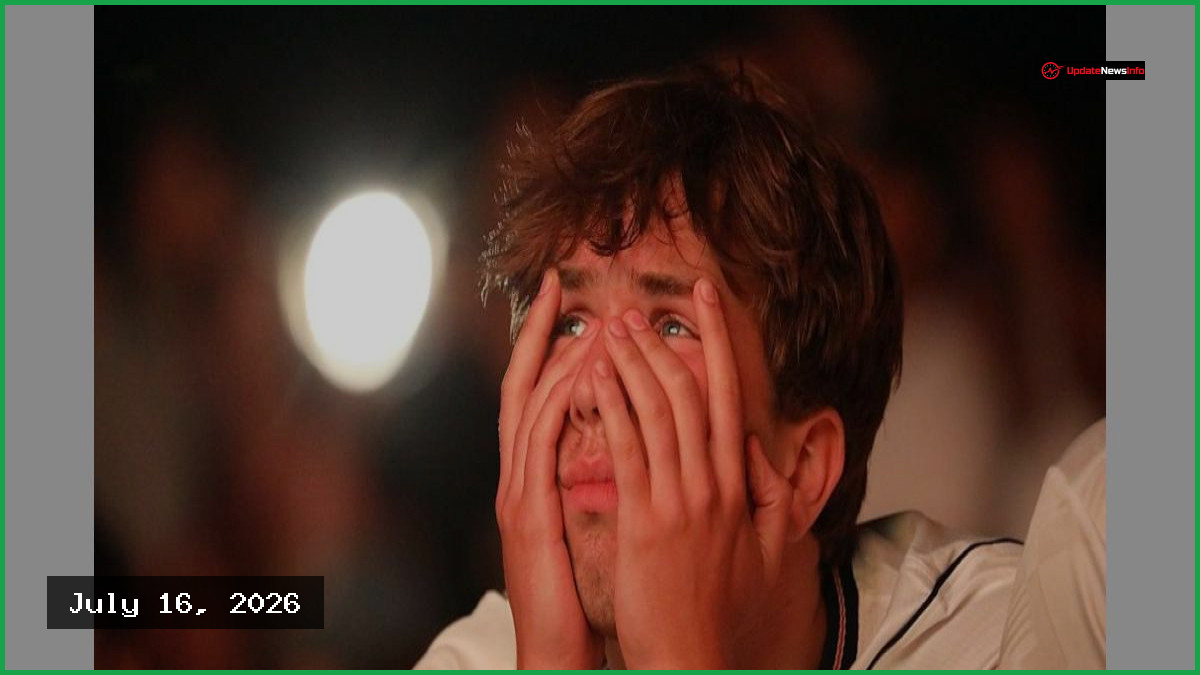
England's journey in the World Cup has concluded following a dramatic 2-1 semi-final defeat at the hands of Argentina. Although Harry Kane and the squad secured an early lead during the second half in Atlanta, they were unable to maintain their advantage, leaving supporters to grapple with the sudden end of their tournament hopes. For many, the emotional impact of such a loss is profound, with fans often experiencing the sting of defeat more acutely than the joy of a victory.
Dr. Martha Newson, a behavioural scientist from the University of Greenwich, explains that football is distinct from other sports because fans often internalize the performance of the national team as if it were their own. Unlike the reaction to other sporting events, such as Wimbledon, the emotional investment in football is deeply personal. For 27-year-old supporter Oli Portlock, an England loss feels like a "national funeral," creating a "big grey cloud over the nation." He recalls the "absolute heartbreak" of the Euro 2020 final defeat to Italy at Wembley, noting that the disappointment was significant enough to affect his work for the following week.
Dr. David Crepaz-Keay from the Mental Health Foundation emphasizes that while the pain is real, it is important to recognize that this emotional dip typically fades within a few hours. He advises fans to ride out the misery, acknowledging it as a natural part of the process. For those struggling, reflecting on positive memories from the tournament can be a helpful strategy. Oli, who followed the team from his hometown of Preston to the United States, suggests focusing on the highlights, such as Harry Kane’s comeback against DR Congo or Jude Bellingham’s two goals in 98 seconds against Mexico to reach the quarter-finals.
Other fans might find comfort in remembering the shared experiences of the tournament, such as crowding into pubs during a record-breaking heatwave or staying up for a 02:00 BST kick-off following severe storms.
Music can also play a role in shifting the mood. Oli suggests listening to songs that evoke success, such as "Wonderwall" or "Sweet Caroline," rather than dwelling on the loss. Jayne Howells, 54, cautions against the temptation to assign blame or criticize the players in anger. She notes that the players are likely just as gutted as the fans, and that supporting them is essential for building a stronger team. Dr. Crepaz-Keay agrees, encouraging fans to see the funny side where possible and to remember the moments that went well. He warns that while the first few hours after a loss are the most difficult, taking that frustration out on others is not the right approach.
Sharing the disappointment is widely considered one of the most effective ways to process the hurt. Dr. Crepaz-Keay and Dr. Newson both suggest that talking through the frustration with friends or family is vital. Oli agrees, noting that "talking with mates down the pub" helps fans realize they are on the same page, which helps to get the frustration out of their system. For those who find themselves reaching for comfort food, Dr. Newson explains that this is not necessarily a lack of willpower, but perhaps an unconscious, evolutionary response to protect oneself after a loss.
Staying active is another recommended strategy. Dr. Crepaz-Keay suggests that getting outside or even singing on the way home from a match can help expend energy. For 38-year-old Andy Taylor, who followed England to New York and Boston, returning to a normal routine—such as walking the dog or going for a run—is key to boosting his mood. While Andy admits that football heartache can take days or even weeks to overcome, he maintains a balanced perspective: "Football isn't life or death." Reflecting on his first tournament experience at Euro 1996, where Germany defeated England in a tense semi-final, he notes that while the experience was devastating, he could always look forward to the future.
"England football will always be there," he says, adding that even without a win, the amazing memories of the journey are something he will never get over.
"A lot of these players… they're going to be gutted as well. It's not about knocking them down, but saying they actually did really well. That's how you make a stronger team."
Everyone has different ways of coping, she says, but the important thing is to "trust your instincts" – and being with others, resting, and opening up tend to be the best options.