Record temperatures are increasingly leaving German tenants struggling with sweltering indoor conditions, prompting calls for amendments to building laws to ensure adequate heat protection in rental properties. The issue highlights a growing challenge as heat waves become longer, hotter, and more frequent.
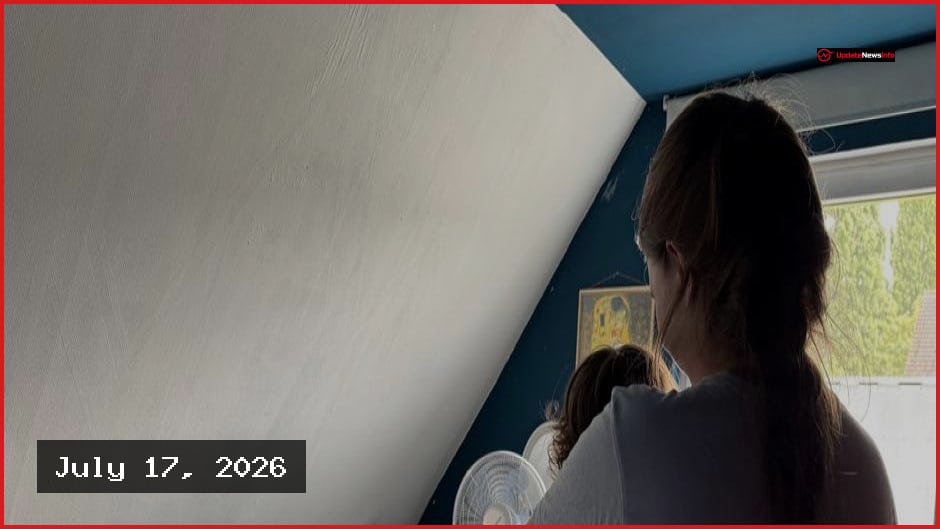
Darya, a tenant in Bochum, described her attic apartment as a "thermos" during a recent heat wave, with indoor temperatures reaching 31°C (87.8°F) while outside temperatures soared to 39°C. Her south-facing apartment lacks external blinds and air conditioning, forcing her to purchase blackout curtains and rely on a fan that she found only circulated hot air. The dark walls of her bedroom made it the hottest part of the flat, exacerbating the discomfort for her family, including their one-year-old daughter.
While the apartment's triple-glazed windows and insulated facade provide excellent protection against cold in winter, these features become a liability during extreme heat. "This flat turns into a thermos over the summer," Darya stated, recalling how her holiday plans to Turkey coincided with the start of the heat wave, only to return to conditions hotter than the Turkish seaside.
Trinidad Fernandez, head of the Climate Transition Strategies Unit at the Fraunhofer Institute for Industrial Engineering (IAO), emphasized that protection from extreme heat should be considered a health measure. "We need to treat heat resilience as a core requirement of good housing and also good urban planning," she said, advocating for heat resilience to be a fundamental aspect of housing and urban development.
In Germany, where over half of residents rent their homes—the highest proportion in the EU—tenancy agreements typically specify minimum winter temperatures, such as 21°C, but lack provisions for summer temperature limits. Michael Selk, a lawyer specializing in rental law, explained that while tenants have a right to sufficiently warm rooms in winter (ranging from 20–24°C depending on the room), there is no corresponding legal right to cooling. He suggested this absence is likely due to Germany's historical temperature expectations.
Current building regulations under the Building Energy Act (GEG) require new buildings to be designed to limit overheating in summer. However, a 2023 study by the Working Group for Contemporary Building e.V. indicated that 75% of Germany's housing stock was built before 1990. This means many existing buildings do not meet today's heat protection standards, and landlords are generally not obligated to upgrade older properties to modern standards. They are typically only required to adhere to the standards applicable at the time of construction. "The tenant has no right to modernization," Selk noted, citing case law rulings from the Federal Court of Justice regarding property defects.
While tenants can sometimes win property defect cases in lower courts if their apartments regularly overheat, particularly in buildings that failed to meet construction-era heat protection standards or in extreme cases of general uninhabitability, Selk expressed doubt that German tenancy law will change soon to adequately address summer overheating. He believes a significant shift would require a case to reach the Federal Court of Justice, where the court might create an exception based on health protection, similar to past rulings on issues like PCP toxins or lead pipes by the Federal Constitutional Court in 1998. Such an exception would compel landlords to comply with modern standards rather than those from the building's construction date.
Selk also pointed out that in commercial leases, courts sometimes draw on occupational health and safety rules, which generally treat 26°C as a threshold for workplaces, above which steps to limit heat exposure should be considered. "In my personal opinion, there is certainly a right to have a temperature limit upheld. What applies to commercial leases, must apply even more so to residential tenancies," he stated, adding that German Basic Law explicitly guarantees every person's right to physical integrity. However, he noted that even if such a right were established, it would likely be up to the landlord to decide how to ensure cooling.
Fernandez advocates for a systematic approach to summer overheating, urging a move from typical emergency responses to "prevention by design." This involves incorporating active and passive cooling strategies into the design of buildings and neighborhoods based on their specific needs. She also called for clearer government temperature standards for both future and existing buildings to protect against overheating and for the provision of financial means to facilitate necessary upgrades.
Financing is a primary concern for Haus & Grund, Germany's largest real estate association representing landlords. Inka-Marie Storm, the association's chief legal counsel, stressed the need for "reliable economic conditions," including investment-friendly subsidy programs, tax incentives, and tenancy laws that make it reasonably feasible to finance necessary modernizations. Storm noted that summer heat protection is usually integrated into larger modernization plans and that support for such investments would benefit both landlords and tenants.
Chancellor Friedrich Merz acknowledged the growing challenge during his summer press conference in Berlin on July 15. He stated, "We cannot stop climate change from within Europe, and that is why a second major challenge will be to live with climate change — and this must be reflected in building codes, in healthcare and in the protection of particularly vulnerable groups." He specifically highlighted that "small children 'have it the worst,'" as they struggle to cope with the heat.
The intense heat forced Darya's family to seek refuge in a hotel with air conditioning, a decision made by many others in Germany as evidenced by social media videos and local reports. However, relying on hotels is not a sustainable long-term solution. As heat waves become more frequent and last longer, such temporary escapes are likely to become less affordable and less accessible, underscoring the urgent need for systemic changes in building standards and tenant protections.