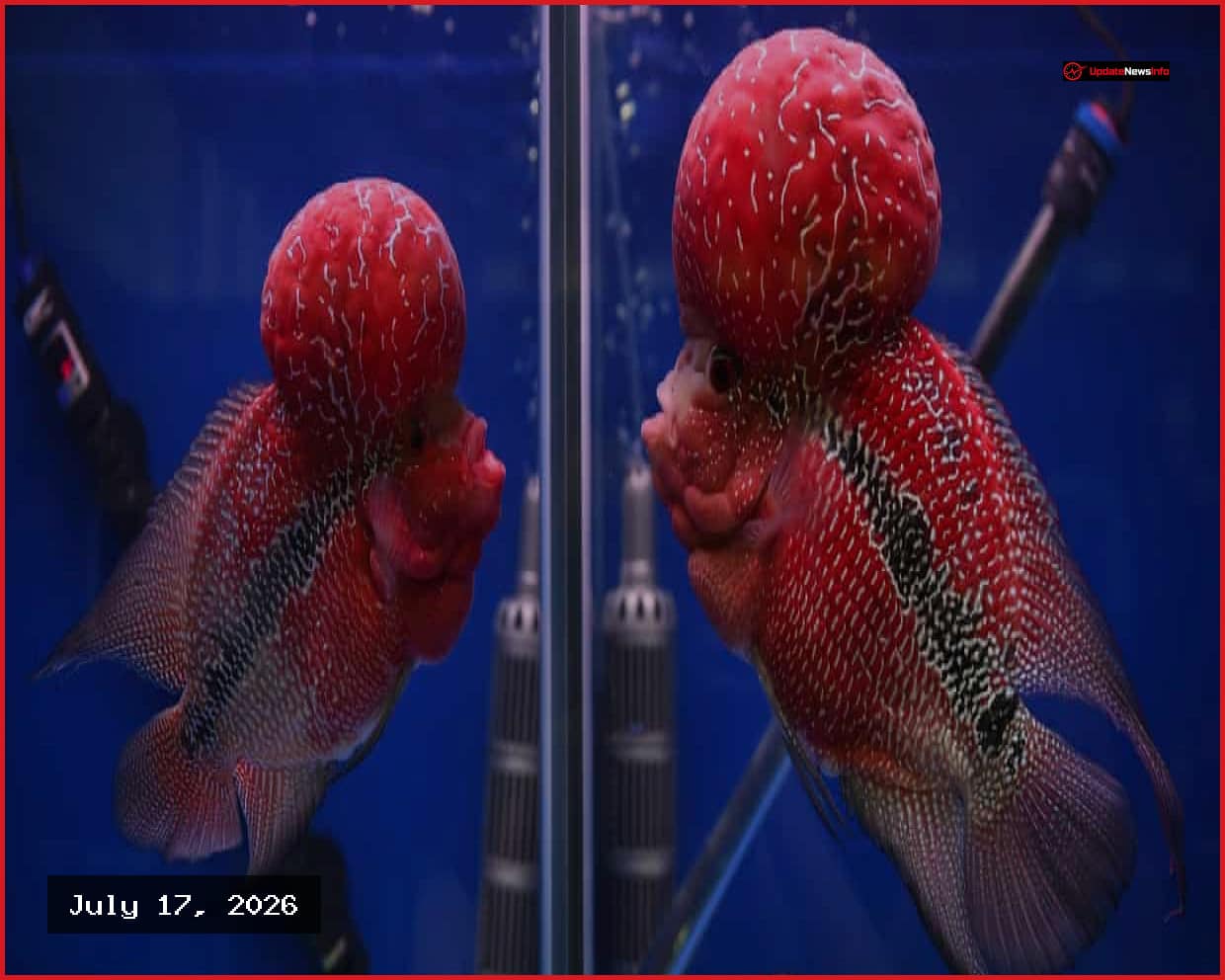
Flowerhorn cichlids, a hybrid fish species bred for their vibrant gold coloration and distinct head humps, have infiltrated the ecosystem of Lake Sampaloc in the Philippines. Scientists believe the fish escaped from breeding facilities into the 104-hectare, 260-acre volcanic crater lake during a typhoon. These fish are now integrating into the local aquaculture system, where they compete with tilapia for food, shelter, and breeding grounds.
Research conducted by Hannah Nicole C. Gasmen and Dr. Janice A. Ragaza of Ateneo de Manila University highlights that the lake is already under significant environmental pressure from household runoff, sewage, plastic waste, and aquaculture nutrients. This degradation has left the habitat vulnerable to invasive species. The native ayungin, or silver perch, has seen a population decline and is now classified as endangered by the International Union for Conservation of Nature.
Rupert Collins, a senior curator of fish at London’s Natural History Museum, noted that cichlids are highly successful at adapting to human-degraded habitats. He emphasized that the introduction of species outside their natural ranges is a primary driver of global biodiversity loss. Dr. Noël Juvigny-Khenafou of the University of Stirling added that climate change could further exacerbate these issues by shifting where aquaculture occurs and which species are raised in specific regions.
Beyond ecological disruption, there are concerns regarding public health. While not detected in Lake Sampaloc populations, some captive flowerhorns carry Paracapillaria philippinensis, a roundworm that can infect humans. Researchers strongly advise against consuming the fish, as some locals have been observed catching them for food. Experts suggest that to mitigate these risks, stakeholders should implement stricter measures, including the use of finer mesh on pens, overflow barriers, routine inspections, and community-led monitoring. Gasmen emphasized that addressing these challenges requires a collaborative approach between policymakers, research institutions, and local communities. The researchers also proposed that harvested invasive fish could potentially be repurposed for aquafeed, provided they undergo rigorous screening for pathogens, microplastics, and heavy metals.