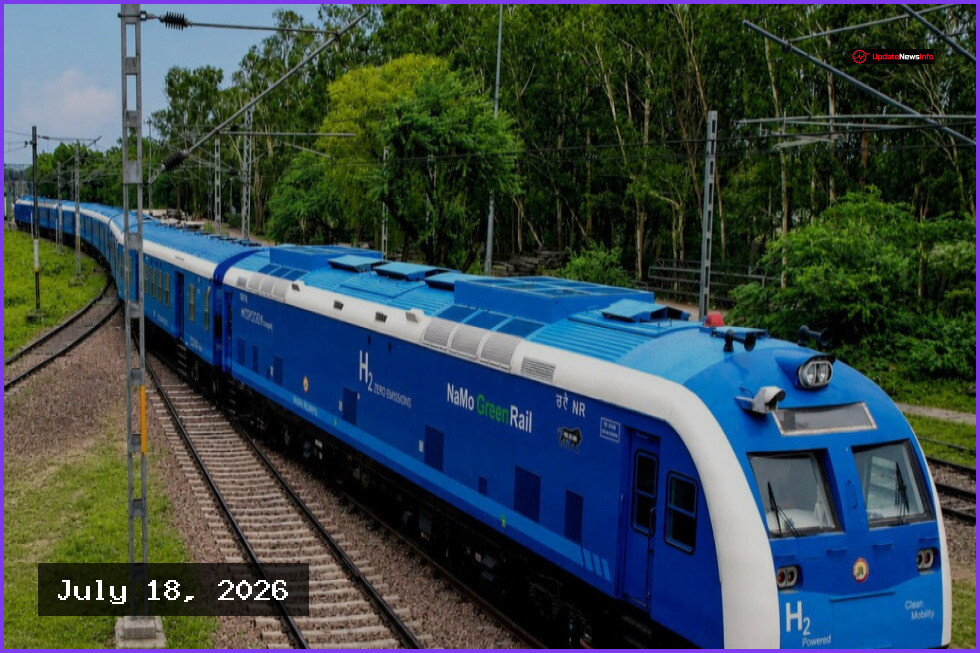
India has officially inaugurated its first indigenously built, hydrogen-powered train as part of a national push to integrate clean energy into its massive railway network. Prime Minister Narendra Modi flagged off the train, officially named the “NaMo Green Rail,” at a ceremony held on Friday, July 17, 2026, at the Jind railway station in the northern state of Haryana.
Describing the launch as a pivotal moment for sustainable development and the nation's self-reliance, the Prime Minister shared his remarks on the social media platform X. The train is designed to serve routes in Haryana and consists of two hydrogen-powered driving cars alongside eight passenger coaches. According to railway officials, the vessel is capable of reaching speeds up to 75 kph (47 mph) and has the capacity to transport approximately 2,600 passengers.
This initiative serves as a pilot project intended to evaluate the viability of hydrogen technology within the Indian rail system. The project includes the construction of dedicated hydrogen storage and refueling infrastructure to support operations. Hydrogen fuel cells function by combining hydrogen and oxygen to generate electricity, with water vapor serving as the only direct emission from the process. This technology is being explored by Indian Railways as a cleaner alternative to diesel, particularly for rail lines that have not yet undergone full electrification.
The deployment of the NaMo Green Rail aligns with India's broader environmental goals, which include a commitment to achieving net-zero emissions by 2070. By investing in green hydrogen infrastructure, the government aims to reduce its overall carbon footprint, following the lead of several other nations that have already begun transitioning to hydrogen-powered alternatives for non-electrified rail routes.