Heatstroke presents as a dangerous medical emergency, beginning with dizziness, headaches, and a loss of awareness. As the body’s internal regulation mechanism falters, internal temperatures climb to life-threatening levels, potentially leading to multiple organ failure and death. Despite these risks, deaths directly attributed to heat are rarely documented. According to data from Germany’s Federal Statistical Office, an average of only 21 such cases were officially recorded annually between 2004 and 2014.
Epidemiologist Alexandra Schneider views current estimates as plausible, noting that while she previously criticized the methodology used by the Robert Koch Institute (RKI)—specifically the use of weekly averages which can smooth out extreme temperature spikes—the consistent heat patterns observed recently make the figures more reliable. Schneider emphasizes that focusing exclusively on heatstroke as the primary cause of death vastly underestimates the broader impact of extreme temperatures. Instead, statistical methods are increasingly used to reveal links between heat and chronic conditions.
Research has established strong associations between heat and health crises, including heart attacks, while nighttime temperatures are known to increase the risk of strokes. Schneider explains that although cold-associated mortality currently remains higher than heat-associated mortality in Europe, a slow shift is occurring. Modeling different scenarios regarding climate change and milder winters, researchers have concluded that the net effect will be an increase in total deaths, as the rise in heat-related fatalities cannot be offset by a decline in cold-related ones.
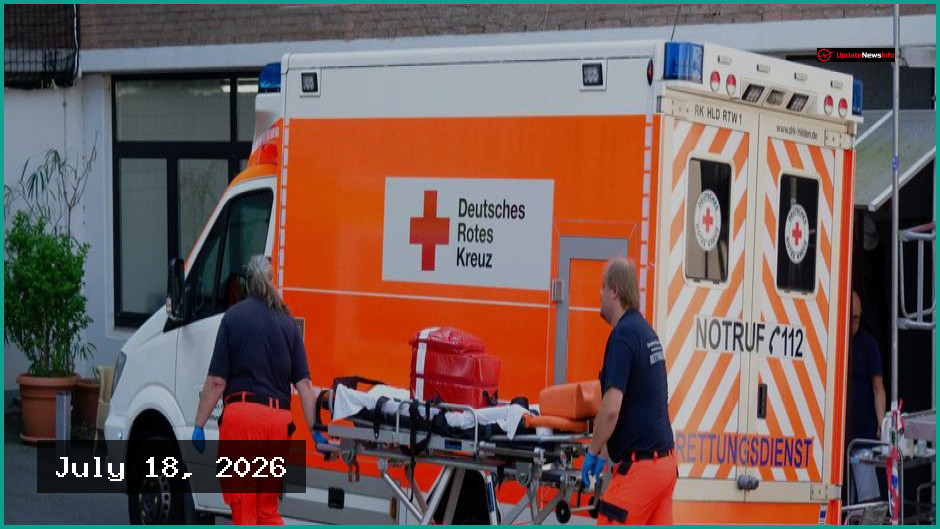
The physical toll of these conditions is felt acutely on the front lines. Jonas Sonnenstuhl, a paramedic based in Teltow, Brandenburg, notes that conditions like heart attacks and strokes are becoming more frequent and life-threatening during heatwaves. He recounts treating a 17-year-old patient with a congenital heart defect whose body reached its limit during a recent heatwave, manifesting in shortness of breath and impaired consciousness.
Emergency responders face immense physical pressure during these events. On June 28, during a 24-hour shift, Sonnenstuhl recorded temperatures inside his ambulance exceeding 30 degrees Celsius. The burden is exacerbated by heavy protective gear, steel-toe boots, and the intense nature of the work. Furthermore, many hospital emergency departments and emergency stations lack air conditioning, leaving both medical staff and patients vulnerable. For those tasked with saving lives, maintaining a cool environment is essential, yet often difficult to achieve under current conditions.
To view this video please enable JavaScript, and consider upgrading to a web browser that supports HTML5 video
Regardless of how favorable the scenarios are, Schneider says, they all point to the same conclusion: "the net effect — meaning the total number of deaths — increases." This is because the rise in deaths attributed to heat is so significant that it can't be offset by the decline in cold-associated deaths.