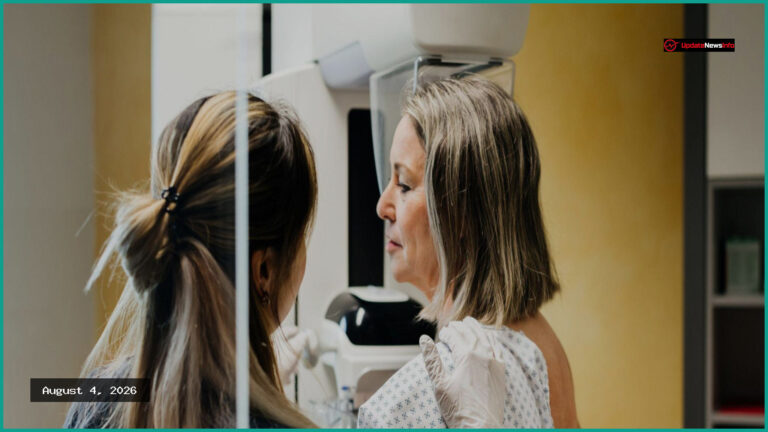
Germany's laws on reproductive medicine are being described as "shockingly unjust" by patients and advocacy groups, citing significant barriers to accessing fertility treatments, particularly for single women. Surrogacy and egg donation are currently banned in the country.
Mariette, who chose to withhold her last name to protect her privacy, recounted the emotional toll of being told she would likely not conceive without medical intervention. "I sat on the floor and cried for six hours in my best friends' apartment with them and their baby," she said, describing one of the most difficult moments of her life.
After undergoing surgery in her early thirties to remove cysts from both ovaries, which unknowingly depleted her egg reserve, Mariette was diagnosed with premature ovarian insufficiency and perimenopause at age 36. As a newly single woman, she found her fight to conceive in Germany to be a "shockingly unjust" battle. The cost of infertility treatment is only covered for married couples, who receive 50% of the costs for a maximum of three treatment rounds from health insurers.
"My first fertility doctor told me to just go out and sleep with lots of people," Mariette explained. "It just feels very unjust. I can't believe that after paying health insurance and taxes here for 18 years, for my health care problem, the solution depends on whether I'm married or not."
Since starting fertility treatment two years ago, Mariette has personally funded every aspect, including injections, medications, ultrasounds, blood tests, and even postage for clinic correspondence. She recalled one incident where an anesthesiologist presented her with a credit card machine alongside a syringe of anesthetic, even accepting cash, which she found unbelievable.
The experience has been grueling. Suffering from burnout after working three jobs and repeated failed attempts to conceive, Mariette was eventually forced to take time off work and reevaluate her options. "Those last six months basically broke me," she stated. "I had nothing to show for all this pain, anguish and hard work. Not only have I got nothing to show for it, I'm in €13,000 ($14,000) of debt and now on antidepressants."
According to Fertility Europe, a pan-European NGO representing infertility patient associations, Germany possesses one of Europe's oldest and most outdated fertility laws. Klaudija Kordic, chair of Fertility Europe, noted that less than 3% of babies in Germany are born through assisted fertility treatments, compared to 5% in Croatia and 10% in Denmark. "What you are doing here is stopping potential parents from having children because they can't afford it, or they feel embarrassed because it's not paid for them, there must be something wrong," Kordic told DW.
In Fertility Europe's 2021 atlas ranking of fertility treatment policies, Germany scored a "medium" 69%, similar to Austria, Bulgaria, Italy, Latvia, and North Macedonia. Only Belgium, France, Israel, and the Netherlands achieved an "excellent" ranking.
Anita Fincham, head of advocacy at Fertility Europe, commented on the lack of long-term planning to support individuals wanting children, stating, "Many countries in Europe complain about the low birth rates, but there isn't enough long-term planning to support the people who want to have children." She described Germany's regulations as discriminatory, leading those who can afford it to seek treatment abroad, while others resort to unsafe practices without medical supervision.
"I'm kind of surprised but also not surprised that people still go to Ukraine where there is a war, but you can still get surrogacy there," Fincham said. "People who really want to have children and are deprived of publicly funded support can resort to risky behaviors, like casual sex or trying to inseminate themselves with a syringe filled with sperm, because it's too expensive to do it in a clinic or not even allowed."
Recently, Jens Spahn, a prominent member of the ruling Christian Democratic Union (CDU) parliamentary group, and his husband announced they had become parents via a surrogate mother in the US, despite the practice being banned in Germany. The CDU, along with its sister party the Christian Social Union (CSU) and the center-left Social Democrats (SPD), strongly opposes legalizing surrogacy in Germany. In February, the CDU reaffirmed its stance at a federal party convention, stating that surrogacy, including altruistic models, must remain prohibited to prevent abuse, exploitation, and health risks.
After a considerable backlash from members of his own party, Spahn resigned his leadership post on Saturday, July 18, 2026. He stated in a letter to colleagues that his personal happiness in starting a family with his husband was incompatible with his political office.
Jochen Taupitz, an expert on health law and medical ethics at the University of Mannheim, called Germany's law "archaic," noting it prevents access to reproductive medicine widely available elsewhere. "Behind [the current regulations] there's also an outdated image of the family, namely the classic heterosexual, married couple, even though in Germany we now have same-sex marriage," Taupitz told DW in 2024. He also highlighted a lack of political will to drive change, adding, "Until now, I haven't heard any concrete plans from the government to take any measures to address the issue of funding for infertility treatment or to change the current situation. It's obviously not on their list of priorities at the moment."
Mariette stated that if finances were not an issue, she would continue trying to retrieve her own eggs. However, the uncertainty and financial strain make this impossible. She also found adoption to be a difficult path, with long waiting lists and a bureaucratic system that almost always favors married couples with two incomes. She has since opted to seek treatment at a fertility clinic in Denmark, where she is on the waiting list for a donor egg. Mariette recently launched a crowdfunding campaign, receiving over €10,000 in donations to help pay for her treatment.
Despite all the pain and anguish, she is finally feeling upbeat and positive about her chances of having a child. Nonetheless, the journey to reach this point has been agonizing. "I'm choosing to do this ethically and it feels like I'm being punished for that," she said. "I just want the same thing that is afforded to married couples to be afforded to single women. Women's health is always just ignored. It's just mind-blowing that it's still like this."
When she was in her early 30s, Marriette had an operation to remove cysts on both her ovaries. Unbeknown to her at the time, this resulted in a depleted egg reserve. Newly single after a breakup, at the age of 36 Marriette started having hot flashes and was diagnosed with premature ovarian insufficiency and already in perimenopause.
"My first fertility doctor told me to just go out and sleep with lots of people," explained Marriette. "It just feels very unjust. I can't believe that after paying health insurance and taxes here for 18 years, for my health care problem, the solution depends on whether I'm married or not."