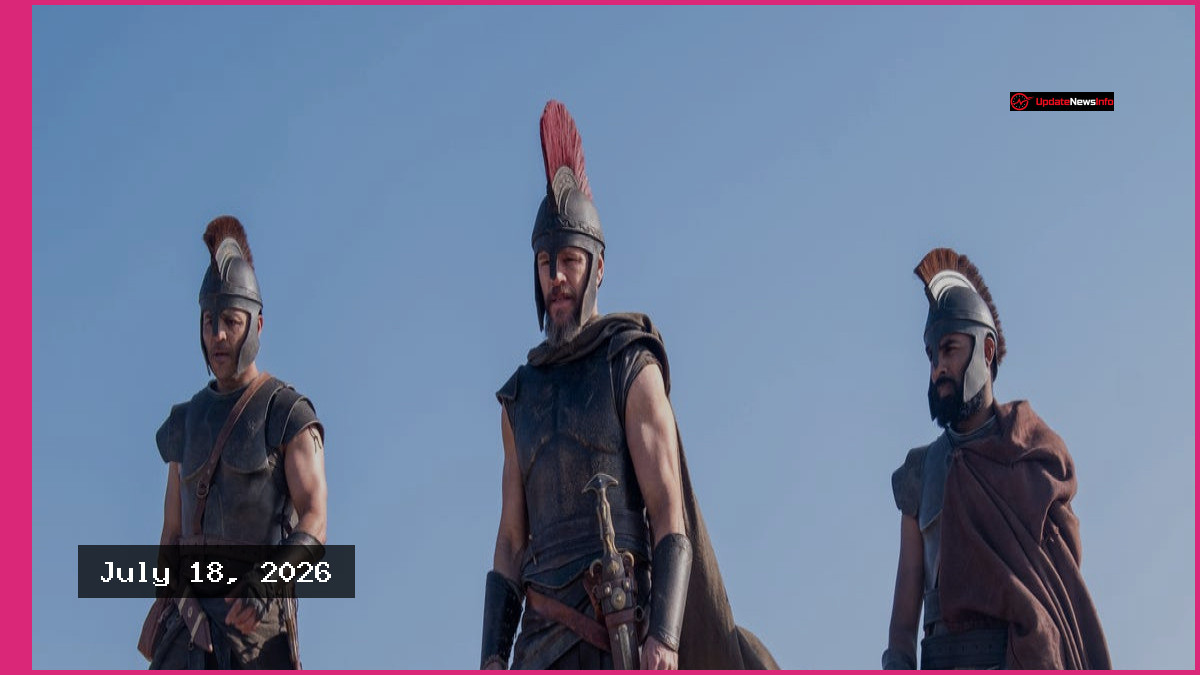
Christopher Nolan's new film adaptation of Homer's epic poem 'The Odyssey' has sparked renewed interest in the ancient text, driving significant sales increases across all translations, with Emily Wilson's 2017 modern translation leading the pack.
Sales of all versions of 'The Odyssey' have seen a year-to-date increase of 76%, according to Circana BookScan. E-book checkouts via Libby have surged by 217% compared to the same period last year. The film, which features a star-studded cast and has been lauded by critics, has inspired audiences to revisit the 3,000-year-old poem.
Emily Wilson's translation, noted for its accessible language and modern phrasing, has become the top-selling edition of the year. Domestic sales of her translation have already surpassed one million copies, according to W.W. Norton publicist Emmy Wenstrup. The increase in sales for Wilson's edition began after the film's announcement in December 2024.
The demand for Wilson's translation is also evident in public libraries. Connor Goodwin, senior manager of public relations at the New York Public Library, reported that Wilson's edition accounts for 90% of print holds and 57% of e-book and audiobook holds within the NYPL system, one of the largest in the nation.
Wilson's translation has been praised for its contemporary approach, incorporating words like "daddy," "crazy," and "tote bag." This modern sensibility aligns with elements of the film adaptation, such as the use of "dad" by Tom Holland's character, Telemachus, which generated discussion. Both Holland and Nolan defended the choice, arguing that "father" is not necessarily more accurate to the ancient Greek source material.
Wilson herself commented on the challenges of achieving authenticity in translation, stating, "English – all registers of English, all dialects – is a modern language; authenticity on that level is impossible unless you’re going to compose a script entirely in Homeric Greek – which would be very fun but unlikely to do well at the box office."
The translation has also been recognized as a feminist interpretation. In a 2017 essay for The New Yorker, Wilson explained her decision to translate Penelope's grief in a way that avoids trivialization. She also noted her choice to use the term "girls" instead of more misogynistic descriptors for the female slaves killed by Odysseus and Telemachus. Wilson criticized how contemporary translations often present this massacre as ordinary and justified, using terms like "disobedient maids," "sluts," or "whores," which she argues have no equivalent in the original Greek text.
Other editions, including Gareth Hinds' graphic novel, have also seen increased popularity, and audiobook listens on Spotify have risen by over 300%.