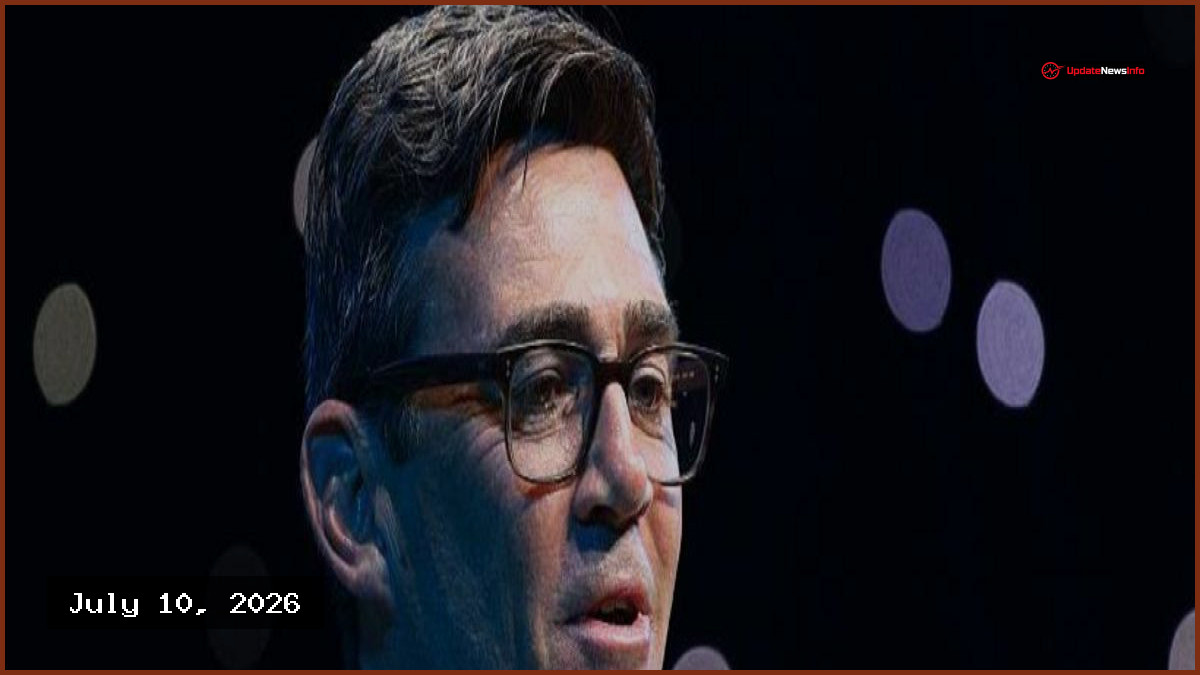
Andy Burnham has moved significantly closer to becoming the next Labour leader and Prime Minister, having received nominations from the vast majority of Labour MPs. With 322 MPs backing his bid, he remains the only declared candidate since nominations opened on Thursday.
Burnham is now just one nomination shy of the 323 required to make it mathematically impossible for any rival to contest the leadership. While some MPs were unable to vote on Thursday, they have indicated their intention to support Burnham once they return to Parliament. If no other candidate enters the race, as widely anticipated, Burnham is expected to be declared Labour leader next week and take office as Prime Minister on July 20.
This rapid ascent marks an extraordinary rise for the former Greater Manchester mayor, who secured a by-election victory in Makerfield just weeks ago. In a statement, Burnham expressed his profound gratitude to the Labour MPs who nominated him, noting that the support spanned the entire party and reflected a “shared belief that Britain needs a new approach to politics.” He added, “That is the circuit breaker I am offering: power out of Westminster, an economy rewired for ordinary people, and good growth in every postcode.”
Burnham’s by-election win, coupled with significant Labour losses in May’s local elections, had intensified calls from within the party for Sir Keir Starmer to step aside. Sir Keir subsequently resigned as Labour leader on the same day Burnham was sworn in as an MP, stating in his resignation speech that he had heard the answer to the question of whether he was “best placed to lead us into the next general election.”
Prospective candidates have until next Wednesday to gather the necessary backing of 81 Labour MPs to participate in the leadership contest. Beyond reaching the 323 MP nominations, Burnham would also need to secure nominations from at least three of the 31 socialist societies and trade unions affiliated with the party, a step widely expected to be a formality. Should he remain unopposed, Burnham would become Labour leader and move into Downing Street without the need for a summer vote among party members and affiliated trade union supporters.
The path for Burnham to run unopposed was solidified on Wednesday evening when former defence minister Al Carns, who had previously considered entering the race, ruled himself out. Dozens of MPs had already confirmed their nominations for the former mayor on social media, with Burnham himself jokingly remarking that it would be “hopefully third time lucky” after his two previous unsuccessful leadership bids in 2010 and 2015.
Despite the apparent lack of a contest, some within Labour have called for Burnham to provide more detailed policy proposals. Having left Westminster in 2017, he has had limited opportunities to build strong relationships with many of the newer Labour MPs who now form the bulk of the party’s contingent in the House of Commons. He is currently scheduled to be the sole participant in an official parliamentary hustings next Monday, where he will field questions from fellow Labour MPs regarding his plans. “Access talks” concerning his policy proposals are ongoing with civil servants, overseen by Cabinet Secretary Antonia Romeo, the UK’s most senior official.
As Labour leadership nominations formally commenced on Thursday, Sir Keir Starmer publicly endorsed Burnham, stating, “I have known him a long time, I’ve worked with him when I first came to Parliament, in his team directly,” and added that Burnham would make a good Prime Minister.
Burnham offered some insights into his policy blueprint during a speech in Manchester last week, including a proposal to establish a new No 10 unit in the city. This unit would be tasked with granting local government greater control in areas such as housing and transport. A central tenet of his policy platform is a commitment to give all parts of the UK “greater public control” over the water and energy sectors, though specific details on its practical implementation are yet to be fully outlined.
In a video posted to X earlier, Burnham apologised for Labour’s initial response to Israel’s military action in Gaza, acknowledging that the party “didn’t get it right” and needs to improve under his leadership. Furthermore, in a Times article published on Thursday, he confirmed his intention to retain Sir Keir’s national security adviser, Jonathan Powell, a former aide to Tony Blair. He also advocated for a “sustained increase” in defence investment, without committing to a specific target, while pledging to be “more open with the public” about cost overruns or delays in military procurement. This follows one of Sir Keir’s final decisions as Prime Minister, which was a plan to boost military spending by £15 billion over the next four years by redirecting funds from other government departments, leaving the specifics to his successor. According to a key ally, Burnham has been planning for No 10 for at least a year.
Later on Thursday, Burnham light-heartedly commented on Reform UK leader Nigel Farage’s decision to trigger a by-election in his own constituency, Clacton, where he will stand again. While Labour and other main parties are boycotting the vote, serial comedian candidate Count Binface is among those standing. Speaking at the Silver Clef music awards at the Royal Albert Hall in London, where he presented the Legend Award to Manchester indie band James, Burnham quipped, “The legends that we’re here to honour have not shied away from politics in their career, but I promise you, I am not going to talk politics to you tonight… Except to say this, ‘Count Binface, you are carrying the hopes of the nation. Don’t let us down.'”