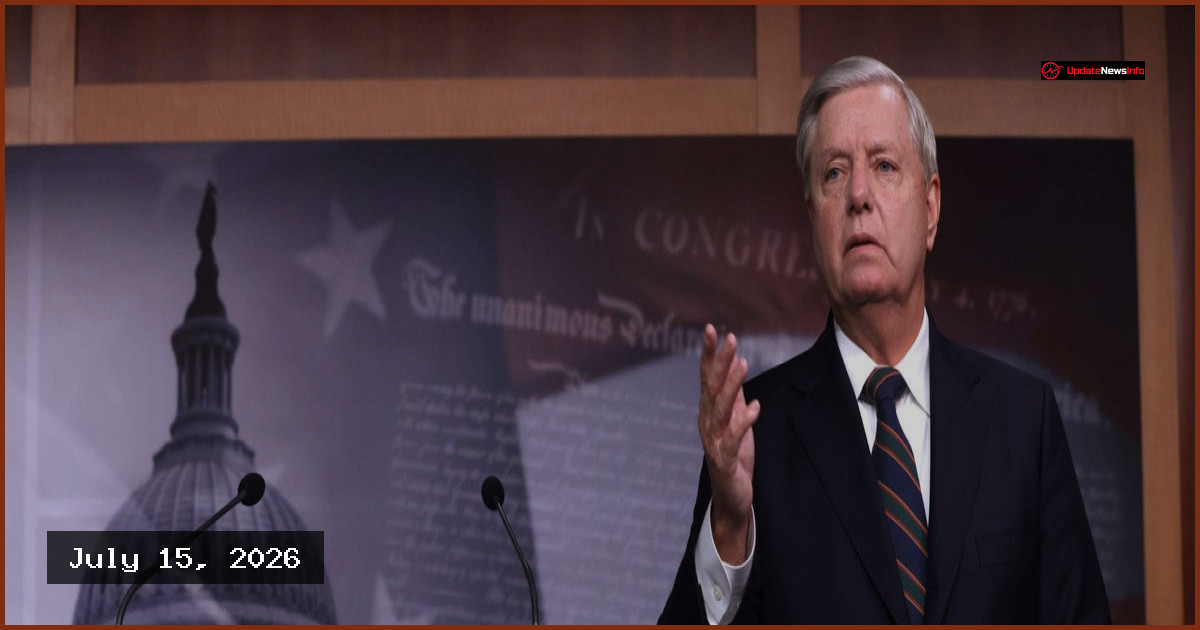
A bipartisan group of senators has officially introduced the Sanctioning Russia Act of 2026, a legislative package championed by the late Senator Lindsey Graham. The bill is designed to intensify financial pressure on Russian leadership in an ongoing effort to bring an end to the Kremlin's four-year war in Ukraine. The White House has previously signaled its support for the measure.
According to a Senate aide, the text of the bill was finalized prior to Senator Graham's meeting with Ukrainian President Volodymyr Zelenskyy in Kyiv last week. Senator Graham passed away suddenly on Saturday shortly after his return to the United States. Following his death, colleagues have expressed a desire to pass the legislation as a tribute to his legacy.
The proposed act would mandate sanctions on a wide range of Russian targets, including President Vladimir Putin, his top deputies, the Russian military, major banks, energy companies, and foreign entities conducting business with Russia. It would also target Russia's so-called shadow fleet of oil tankers and prohibit Americans from purchasing Russian debt or engaging in business transactions with the Russian government and energy sector.
A core component of the bill involves imposing tariffs of up to 100% on the top five purchasers of Russian oil and natural gas. Currently, the top five oil buyers identified are China, India, Slovakia, Hungary, and Azerbaijan, while the top five natural gas purchasers include China, France, Belgium, Japan, and Hungary. Countries whose natural gas imports account for less than 15% of Russia's total exports would be exempt from these specific tariffs. The legislation requires the U.S. to reevaluate these lists every 180 days, with the intent of encouraging nations to shift toward alternative energy sources. The president would retain the flexibility to exempt specific entities if they provide formal justification to Congress.
Support for the bill is growing, with 26 cosponsors recorded by 1:00 p.m. Tuesday. Democratic Senator Richard Blumenthal of Connecticut described the legislation as a fitting tribute to Senator Graham, while Republican Senator Katie Britt of Alabama noted that Graham viewed the bill as potentially the most consequential achievement of his career. In the House of Representatives, Republican Congressman Michael McCaul has announced plans to introduce a corresponding version of the legislation this week, urging his colleagues to pass it in honor of Senator Graham.
By 1 p.m. Tuesday, 26 cosponsors supported the bill, and that number was expected to grow, Senate aides said.