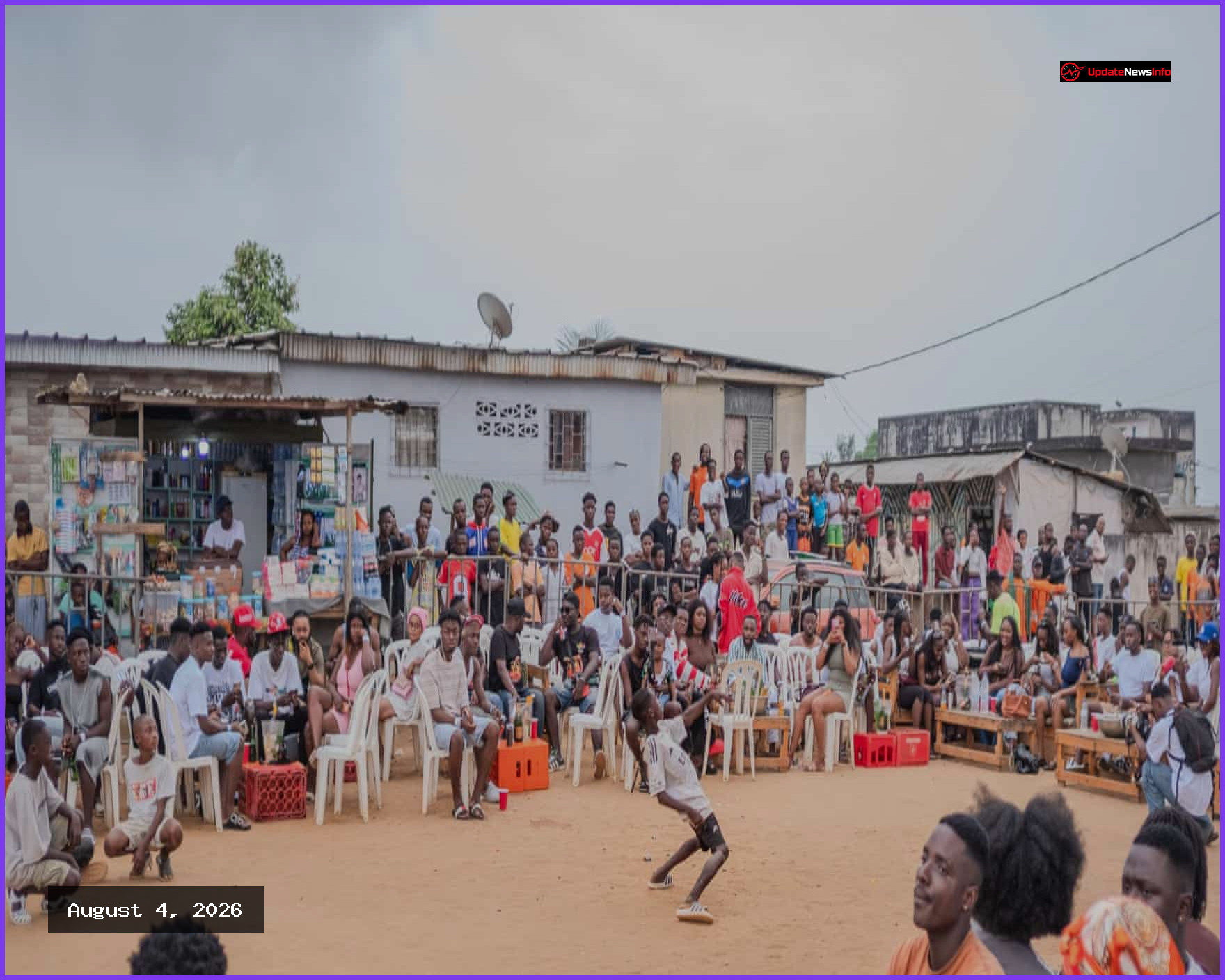
In the Yopougon-Selmer neighbourhood of Abidjan, a crowd of 400 people gathered on plastic chairs and wooden benches to watch a display of biama, a high-speed, acrobatic dance style that is rapidly becoming a cornerstone of Ivorian pop culture. The event, which began six hours after its scheduled midday start, featured performers ranging from five-year-olds to young adults under 25. Attendees, some eating skewered meat and drinking from beer bottles, frequently joined in as competitors showcased intricate footwork and dramatic chest pops.
Biama emerged as a cultural force following the coronavirus pandemic, gaining massive popularity as young people used TikTok to share and respond to challenges that pushed their bodies to the limit with a mix of acrobatics and goofiness. Cédric Kouamé, a music producer and chief archivist at the Baoulecore Archive Center in Abidjan’s Angrè district, describes the genre as "coupé-décalé 2.0, like at 200% speed." Like the local hip-hop fusion known as maïmouna, biama traces its roots to Yopougon, a working-class district that has dictated the cultural zeitgeist of Abidjan and Côte d’Ivoire for decades.
The district’s influence dates back to the early 2000s, when Stéphane Doukouré, known as Douk Saga, founded the coupé-décalé genre after returning from Paris. His movement championed "sagacité," the shrewdness needed to outwit authority, and "farotement," a flamboyant display of wealth that provided escapism during the country’s civil war. Following Douk Saga’s death from lung disease in 2006 at age 32, the genre was propelled to new heights by Ange Didier Houon, known as DJ Arafat. Arafat, who grew up in Yopougon, increased the tempo of his music to match the high-energy, acrobatic "roukaskas" routines performed by his dancers. After Arafat died in a 2019 motorbike collision, many feared the genre was in decline, but a new generation of artists, including rappers Didi B and Himra, is now vying for the spotlight.
Kouamé notes that dance has always been inseparable from Ivorian music, citing the 1970s superstar Ernesto Djédjé, who created the "ziglibithy" style, as an example of an artist who developed music and dance moves in tandem. This tradition continues with modern performers like Kehou Mousso, a biama dancer and one of the genre’s few female musicians. Known to her 2.6 million TikTok followers as the "queen of coupé-décalé," Mousso performed at the Yopougon event in a green frilled outfit and orange wig, emphasizing that the choreography requires constant improvisation. While some cultural observers dismiss the genre as "street music," dancers like Sauce Graine remain optimistic. "Since many people aren’t very familiar with the dance yet, they think it’s just a neighbourhood thing," Sauce Graine said. "All we have to do is create the dance so that more people can see it and love it."
A neighbourhood square in Yopougon-Selmer had been transformed into a dance arena for the event, which got under way about six hours after its advertised midday start. The performers were all under 25, with some as young as five. Audience members, some munching on skewered meat or drinking from beer bottles or plastic cups, periodically joined in as one competitor after another showcased intricate footwork and dramatic chest pops.