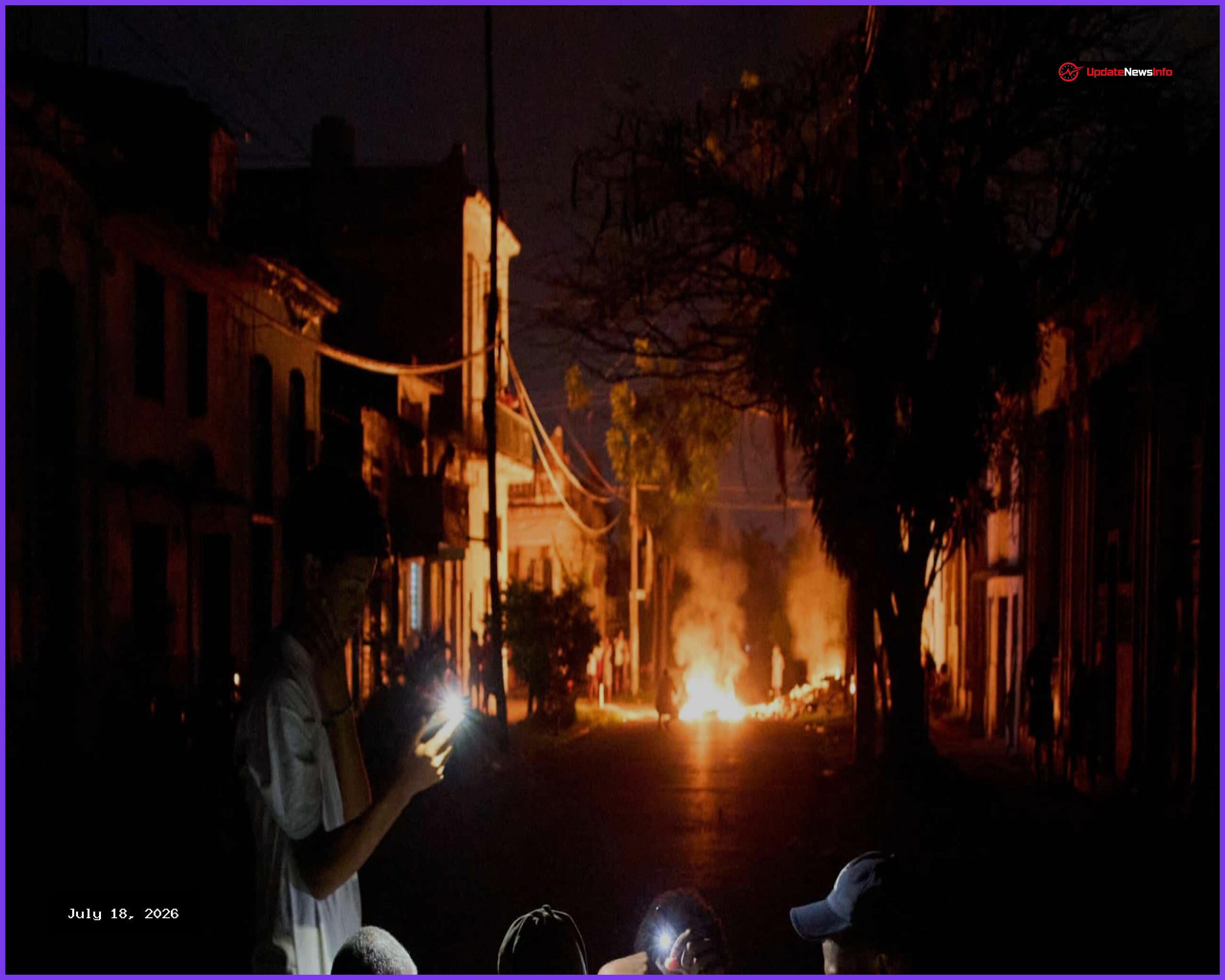
The 777-mile Caribbean island, home to 9.5 million people, is currently grappling with a severe infrastructure crisis as its national electricity grid faces frequent, debilitating failures. The country has experienced three nationwide blackouts in just 10 days, with the most recent occurrence on Tuesday. Experts, including Jorge Piñon from the University of Texas, attribute these collapses to an aging and poorly maintained thermoelectric system that has been pushed beyond its limits.
The island is currently suffering under a six-month oil blockade imposed by the United States, a central component of a pressure campaign aimed at destabilizing the communist government. Certainly, having gone into a lull during the World Cup, war drums are once again banging in the US, 90 miles to the north. This energy scarcity is compounded by a lack of access to essential spare parts for the country’s power plants. Vicente de la O Levy, the minister of energy, confirmed that the government currently has few options due to the total absence of fuel and the inability to procure necessary components for repairs.
As summer temperatures reach the mid-30s with 80% humidity, public frustration is mounting. The sound of "cacerolazos"—the rhythmic drumming of pots and pans—has become a frequent protest against the misery of constant power cuts, spoiled food, and sleep deprivation. Residents in neighborhoods like Havana’s 10 de Octubre have expressed urgent demands for government action, noting that sporadic electricity is insufficient for basic needs like pumping water or charging communication devices.
The political environment remains volatile following the January 3 abduction of Venezuelan President Nicolás Maduro by the US military. In March, Donald Trump asserted his intent to exert control over the island, and Washington has since utilized sanctions to drive out foreign businesses, including hotel operators, airlines, and shipping companies. Additionally, a Florida court recently charged 95-year-old Raúl Castro with murder in connection with the 1996 shooting of small planes from Miami, further complicating the diplomatic landscape.
Economic instability has also led to a rise in crime, with reports of street fights, burglaries, and muggings increasing in what was previously considered one of Latin America's safest nations. According to the Madrid-based group Prisoners Defenders, the number of political prisoners has reached 1,306, including those detained for protesting against local blackouts and water shortages.
Internal controversy recently erupted after Alejandro Rodríguez Castro, the 42-year-old grandson of the former leader, appeared in a USA Today interview displaying luxury items. His comments, which suggested he might "step up" if the revolution needed him, sparked widespread outrage from academics, musicians, and even government-aligned figures like Michel Torres Corona, who questioned his authority to act as a public spokesperson. Michael Bustamante of the University of Miami suggested this interview might signal a collapse in potential negotiations between the US and the Cuban government.
Despite Cuban efforts to introduce 176 new economic measures to expand the private sector, the US State Department has dismissed these moves as superficial. Meanwhile, tensions remain high as former Florida governor Jeb Bush recently claimed, without providing evidence, that Cuba has purchased 300 Iranian attack drones, a claim echoed by Donald Trump. The grid was reconnected at 7am on Wednesday, but citizens remain deeply skeptical about the future. Laura Garcia, an illustrator from Havana, noted that she had just gone 72 hours without power, describing a state of desperation that precludes long-term planning.
“We have seven containers in Kingston and another 40 in China, but we have no idea when, or if, they will arrive,” said an electric car importer.
The resulting uproar took in musicians, academics, former diplomats, and just people on the street outraged by such a display from someone who is, in the words of respected academic Julio César Guanche, “without recognised institutional public functions”.