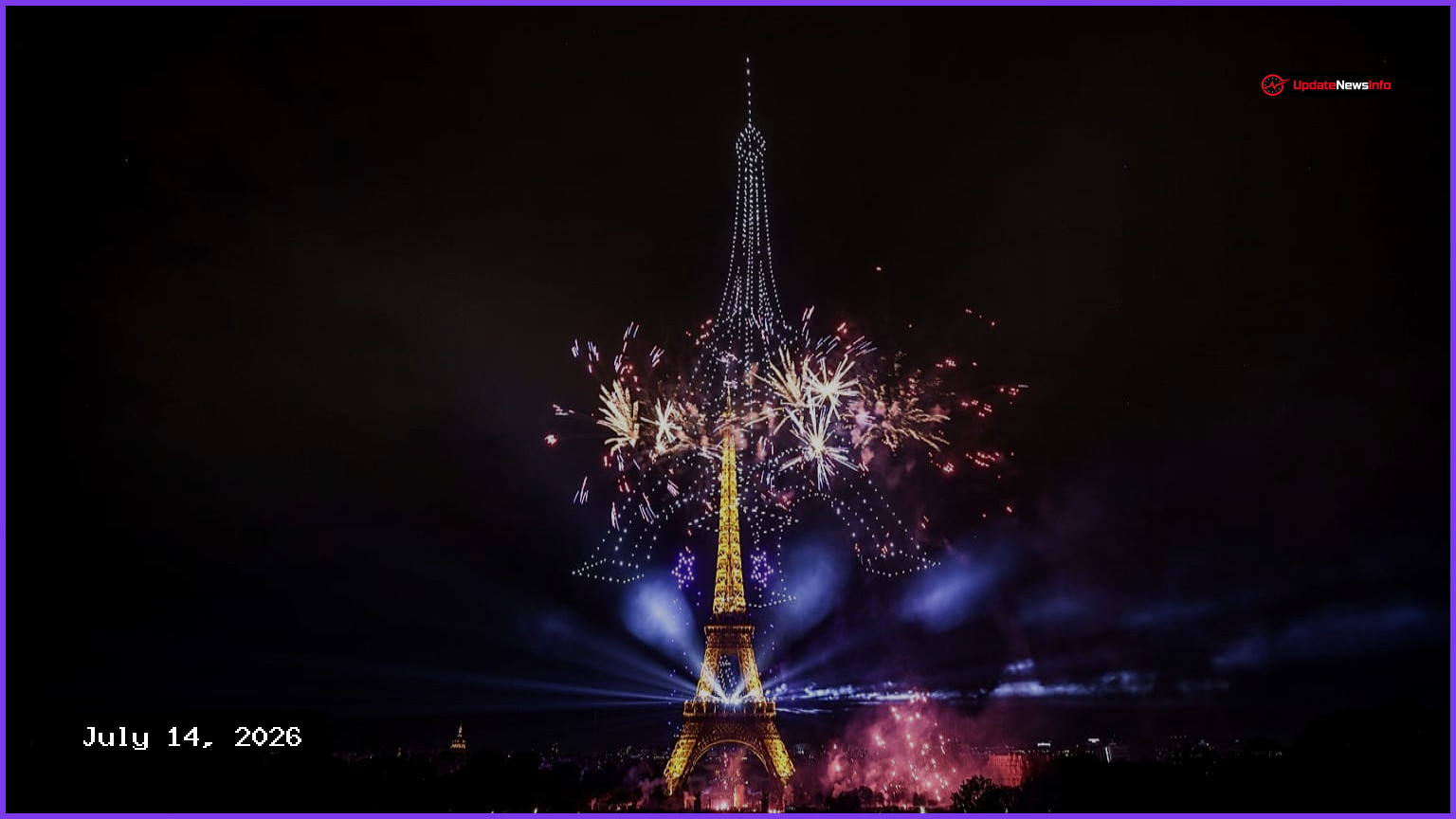
President Emmanuel Macron will oversee his 10th and final national day parade as president on Tuesday, with his Ukrainian counterpart Volodymyr Zelenskyy standing beside him. The event marks the 14 July 1789 storming of the Bastille fortress in Paris during the French Revolution.
This year, the celebration carries significant weight as it occurs ten years after deadly jihadist attacks struck the nation.
The annual military procession along the Champs Élysées is scheduled to begin at approximately 10:00 am. It will feature 500 soldiers from the "Coalition of the Willing," which supports Kyiv against Moscow. Following these troops, 25 Ukrainian soldiers will participate in the march. This display of unity comes as Russia’s full-scale invasion of Ukraine is well into its fifth year.
France and the United Kingdom have spearheaded this coalition since last year, which includes nations prepared to participate in a European-led multinational force on the ground in Ukraine following any agreed-upon ceasefire.
Addressing the armed forces on Monday, Macron emphasized the nation's commitment to stability. "The message we send to the world is this: Yes, peace is our goal," he stated. "Yes, we cherish freedom and the rule of law. And yes, we stand ready to fight to defend them.
Always, and at the cost of blood if necessary." A representative from his office noted that the parade serves as a powerful symbol of a Europe that is becoming increasingly aware of global dangers and the necessity of taking its destiny into its own hands.
Despite a scorching heatwave that has caused forest blazes outside the capital and led to fireworks bans across much of the country, tens of thousands of people are expected to attend the celebrations in central Paris. The day also serves as a somber anniversary.
Macron has confirmed that the evening's World Cup semi-final football match between France and Spain, set for 9:00 pm, will be preceded by a minute of silence to honor the victims of the 2016 Nice attack.
On 14 July 2016, a 31-year-old Tunisian man named Mohamed Lahouaiej-Bouhlel drove a truck into crowds leaving a fireworks display, killing 86 people and wounding over 400 before being shot dead by police. The Islamic State terror group claimed the attacker as a follower. This tragedy followed the 13 November 2015 attacks in and around Paris, which killed 130 people.
This year’s parade is the final one for Macron before he steps down next year following two consecutive terms. The political landscape is already shifting, with the far right seeking to seize power in the upcoming April elections. Far-right leader Marine Le Pen is moving forward with her fourth presidential bid despite an embezzlement conviction.
The event contrasts with Macron's first months in office, when he used the 2017 Bastille Day parade to host then-US President Donald Trump during his first term.