President Donald Trump has cautioned that the United States might be compelled to return to war as a cycle of reciprocal military strikes between the U.S. and Iran persisted through Sunday, putting recent peace efforts between the two nations in jeopardy. The latest developments saw Bahrain and Kuwait come under fresh Iranian fire early Sunday, occurring hours after U.S. Central Command confirmed it had struck various targets inside Iran as a reaction to persistent aggression against commercial shipping within the Strait of Hormuz.
Writing on Truth Social on Saturday, President Trump stated that U.S. aircraft had targeted Iranian missile and drone storage facilities along with coastal radar sites due to repeated violations of the Cease Fire Agreement. Trump added that it is quite possible the Iranian side will never learn, noting that there could be a moment where the U.S. can no longer remain reasonable and may be forced to militarily complete the mission. He concluded that if that occurs, the Islamic Republic of Iran would cease to exist.
According to a statement released Saturday by CENTCOM, American fighter jets successfully hit 10 Iranian military locations. The command noted that while Iran was provided an opportunity to respect the ceasefire, it chose otherwise by launching a one-way attack drone, an action linked to a strike on a Panama-flagged vessel on Saturday. Simultaneously, the Islamic Revolutionary Guard Corps announced via state media that it had fired missiles and drones at U.S. military infrastructure situated in Kuwait and Bahrain. An IRGC Navy command representative, as quoted by the Fars news agency, warned that American bases should prepare for intense retaliation in the coming days.
Officials in Bahrain, which serves as home to the U.S. Navy’s 5th Fleet, reported Sunday that a residential structure sustained damage during the overnight barrage, though no lives were lost. The Bahraini Ministry of Foreign Affairs condemned the actions, highlighting their right to self-defense and describing the strikes as a systematic pattern of aggression against the nation’s sovereignty. Meanwhile, the Kuwaiti military confirmed that its air defenses intercepted two ballistic missiles fired by Iran, with no resulting damage reported.
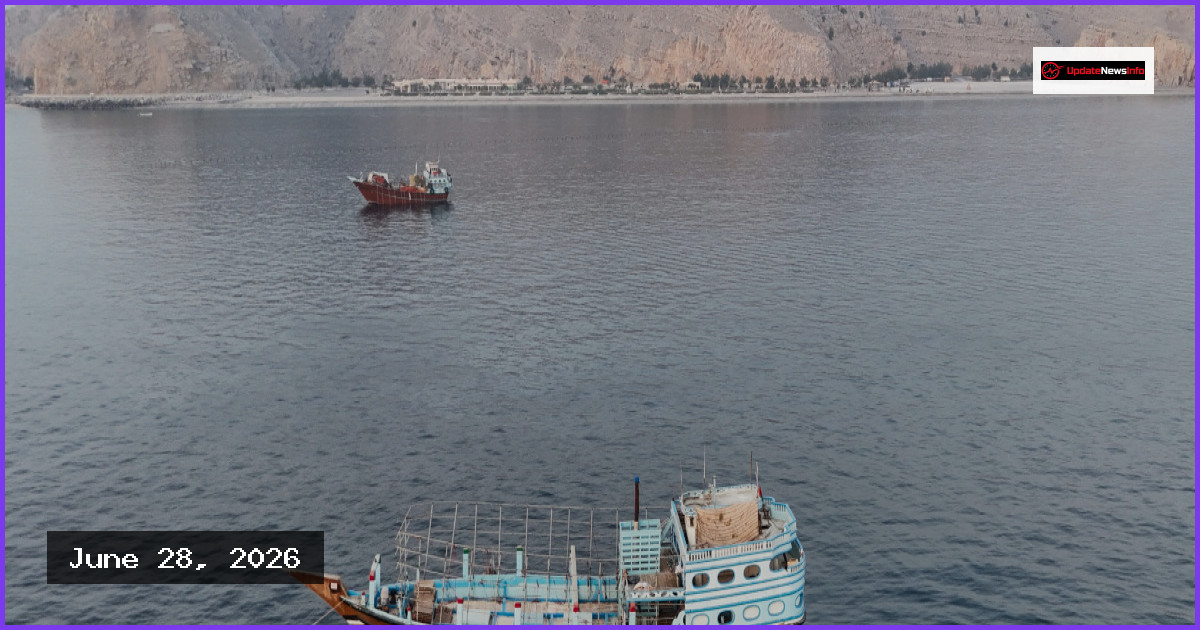
The current cycle of violence originated earlier this week regarding navigation in the Strait of Hormuz. Although Tehran had agreed to reopen the waterway, a dispute arose when vessels chose to sail through waters near the UAE and Oman instead of following a route closer to the Iranian coastline. Following threats and an attack on a Singapore-flagged ship last Thursday, the U.S. responded with strikes on Iranian military assets, triggering the subsequent escalation. IRGC spokesperson Hossein Mohebi warned Sunday that any future breach of the ceasefire would be met with even harsher consequences.
Despite these tensions, Vice President JD Vance had previously stated that violence would be met with violence, while emphasizing that diplomatic channels remain open for those with concerns about the recent memorandum of understanding. Signed less than two weeks ago, that agreement was designed to ensure the safe passage of commercial vessels through the Strait of Hormuz for 60 days. In response to the latest violence, Gulf allies including Jordan and Qatar have issued calls for restraint, urging both parties to return to the path of diplomacy.