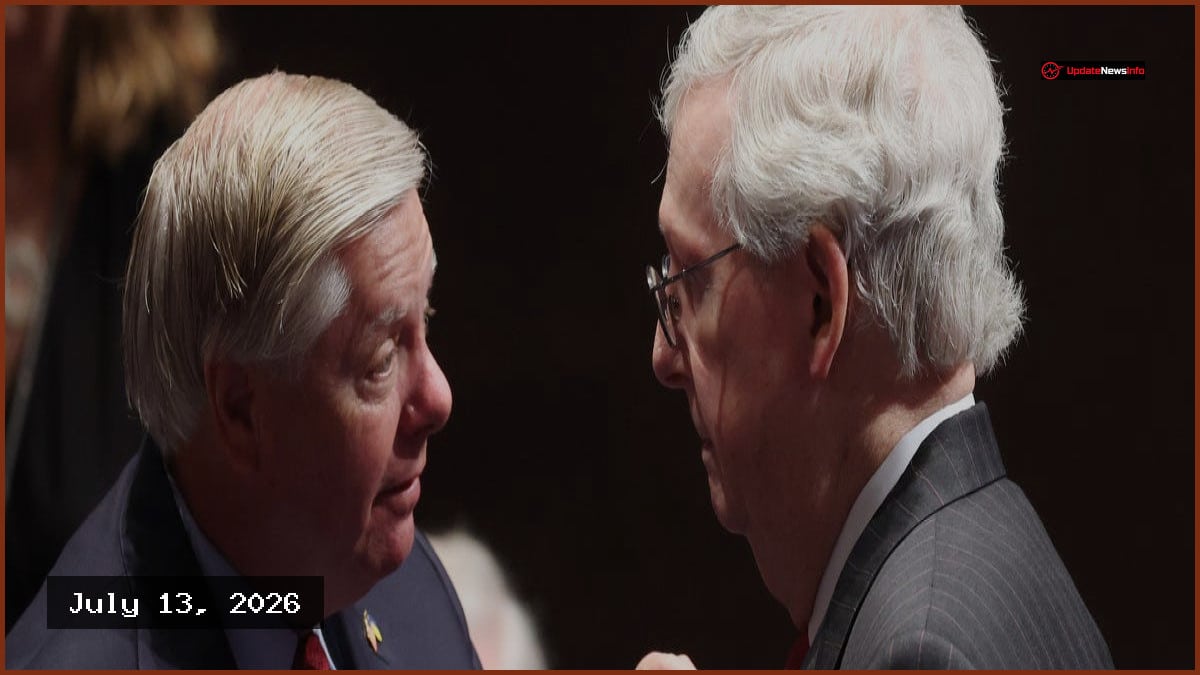
The sudden passing of Senator Lindsey Graham over the weekend has intensified pressure on Senate leadership as Republicans navigate an increasingly slim voting majority. Graham, 71, died on Saturday, July 11, following what his office described as a brief and sudden illness. According to a preliminary medical examiner’s report provided by his office, the senator died due to an aortic dissection, a tear in his heart.
Public safety radio feeds reviewed by USA TODAY indicated that emergency responders were performing CPR on a man in cardiac arrest at a location identified as Graham’s Washington, D.C. residence. South Carolina’s governor is expected to move quickly to appoint an interim replacement to serve until January, but in the interim, the party faces a significant legislative hurdle.
This vacancy arrives at a precarious moment for the GOP, which is already operating without Senator Mitch McConnell. The 84-year-old Kentucky senator has been hospitalized since June 14 following a fall and a subsequent diagnosis of a mild case of pneumonia. While his office confirmed that he has transitioned to a rehabilitation center, he has not provided a definitive date for his return to the Senate floor.
In a statement released Sunday evening, McConnell acknowledged the frustration surrounding his recovery timeline. He noted that he is following medical advice and is not yet able to return to cast votes. His office has offered limited details regarding his condition, though they stated he is improving and has been in contact with colleagues, including Senate Majority Leader John Thune. Thune had previously expressed hope in mid-June that McConnell would return within a week, a timeline that has now stretched to a month.
The current situation highlights the fragile nature of the Senate’s power dynamics. With two key members absent, Republican lawmakers may struggle to advance legislative priorities or block Democratic bills. As midterm elections approach, the narrow margins in Congress grant individual members outsized influence over the legislative agenda, making every vote critical for leadership in both the Senate and the House of Representatives. Contributing: Chris Cann, USA TODAY
An initial, publicly available dispatch call from the day McConnell was hospitalized indicated someone at the scene was unconscious. Another call, made several minutes later, indicated someone was in cardiac arrest.
Zachary Schermele is the congressional correspondent for USA TODAY. You can reach him by email at zschermele@usatoday.com. Follow him on X at @ZachSchermele and Bluesky at @zachschermele.bsky.social.