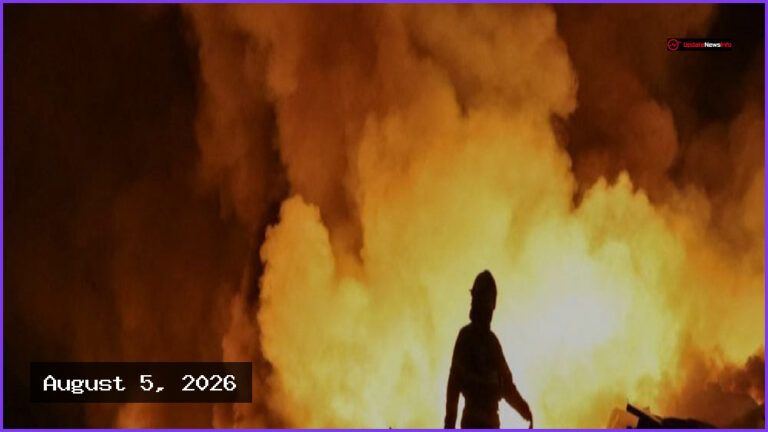
The United States launched airstrikes against Iran early Sunday morning, targeting approximately 140 sites in retaliation for an Iranian strike on a vessel in the Strait of Hormuz. The Iranian attack set the container ship ablaze and forced its crew to abandon it. In response, Iran launched attacks targeting several countries in the Gulf region, including Bahrain, Kuwait, Qatar, and Oman.
The U.S. military’s Central Command stated that Sunday’s strikes hit missile and drone launch sites, ammunition dumps, communication equipment, and other locations, aiming to diminish Iran’s capacity to threaten civilian shipping. U.S. Defense Secretary Pete Hegseth commented, “Iran made a poor choice. Now they pay.”
This marks the third round of U.S. airstrikes against Iran in the past week, initiated over Iranian attacks on ships transiting the Strait of Hormuz, a crucial route for oil and natural gas. Iran has insisted on its sole control over the strait and has retaliated by targeting regional nations hosting U.S. military forces.
Missile alerts were heard across several Gulf Arab nations early Sunday. Qatar’s military reported intercepting incoming Iranian fire, with explosions observed in the United Arab Emirates. Qatar’s Interior Ministry stated that three people, including a child, were injured by falling shrapnel from intercepted attacks. Bahrain also experienced missile alerts for the third time on Sunday, while Kuwait’s military confirmed it was intercepting incoming fire.
Oman’s state news agency reported that drones struck sites in northeastern Oman, an area adjacent to the Strait of Hormuz. This attack occurred after discussions between Oman and Iran on Saturday. Sirens were also heard in the United Arab Emirates, though the government confirmed no missiles crossed into its borders. The UAE has not been targeted in the latest Iranian attacks.
In the Strait of Hormuz incident, the Cyprus-flagged container ship sustained “significant engineroom damage,” and one civilian crew member was reported missing. All crew members were Indian nationals, according to India’s Ministry of External Affairs, which condemned the attack and called for unimpeded navigation. The United Kingdom Maritime Trade Operations center noted the ship was traveling on a route hugging Oman’s shoreline to avoid Iranian territorial waters.
Iran’s paramilitary Revolutionary Guard claimed multiple vessels disregarded warnings and instructions. They stated one ship “was struck by a warning shot and brought to a stop.” Iran declared the strait would remain closed “until further notice” and warned of targeting “additional enemy bases in the region” if further attacks occurred.
Iranian state media reported U.S. strikes across various parts of the country, including southern Iran near the Strait of Hormuz and military sites near Tehran. The recent strikes in Iran over the past week have resulted in at least 17 deaths and 115 injuries, according to Iranian Health Ministry spokesperson Hossein Kermanpour.
The new supreme leader of Iran, in his first statement since the war began, vowed that Iranians would avenge the killing of his father, the late Supreme Leader Ayatollah Ali Khamenei, in the war’s opening strikes on February 28. He stated that such revenge “is the will of our nation and must certainly be carried out.”
A man holds a poster of the late Iranian Supreme Leader Ayatollah Ali Khamenei in a gathering commemorating him at a square in Tehran, Saturday, July 11, 2026. (AP Photo/Vahid Salemi)
Meanwhile, missile alerts sounded for the third time on Sunday in Bahrain, an island kingdom in the Persian Gulf home to the U.S. Navy’s 5th Fleet. Kuwait’s military also said it was intercepting incoming fire.