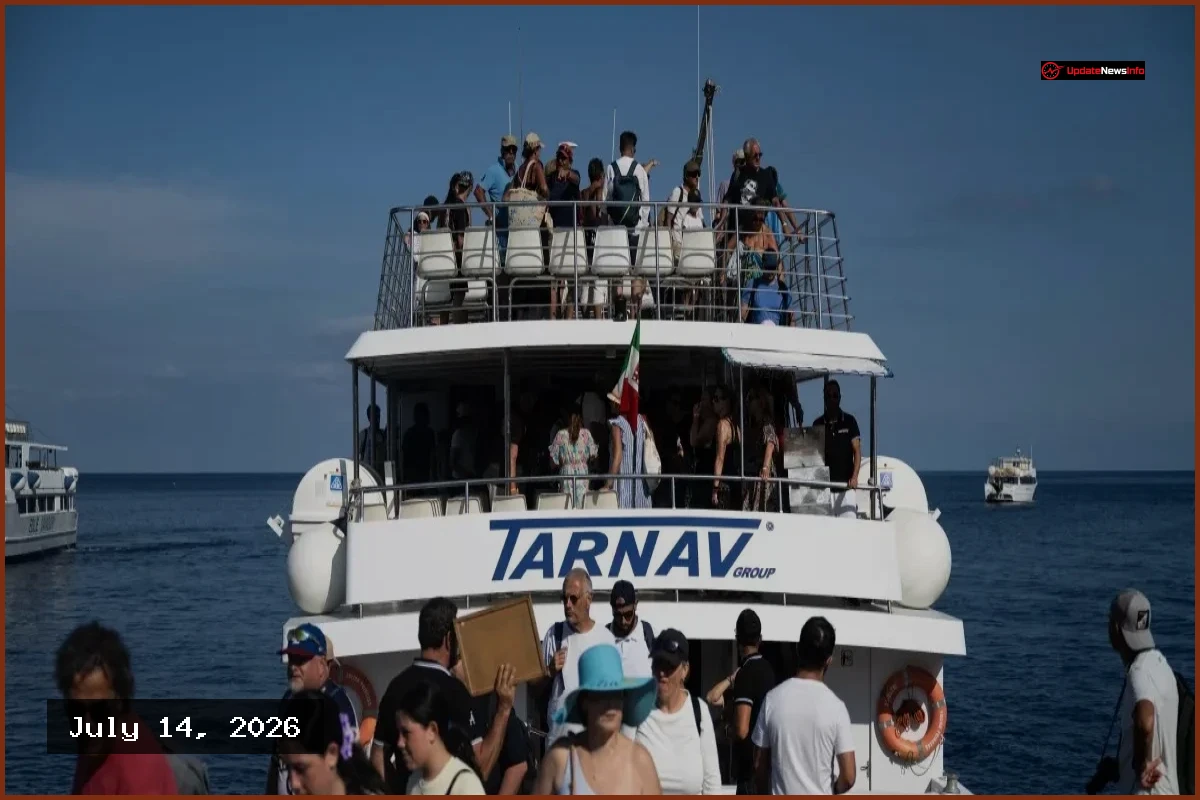
Residents of Italy’s Aeolian Islands are currently grappling with how to secure a reliable drinking water supply as the archipelago faces the pressure of a growing tourism industry. While Vulcano island has achieved autonomy through an existing desalination plant, other islands like Stromboli remain dependent on water delivered by ships.
Restaurant owner Angelo Mirabito, 66, noted that when bad weather prevents ships from docking, the island is left without water, describing the resource as being "almost like gold."
The islands, which host only 15,000 year-round residents, saw 146,000 tourist arrivals in 2024. This massive seasonal influx significantly strains local resources. Currently, water produced by the Vulcano desalination plant costs approximately two euros per cubic metre, whereas water transported by ship costs roughly 14 euros per cubic metre, with the defense ministry covering the expense of the shipping routes.
Fabio Pupillo, an engineer at Sopes, the company managing the Vulcano facility, stated that the plant has maintained a steady production of 300,000 cubic metres of water annually for the past decade.
Italy is currently the second-largest producer of desalinated water in the European Union, trailing only Spain. According to data from The European House — Ambrosetti, the country operates 341 plants, producing more than 657,000 cubic metres of desalinated water daily, which accounts for about 7.6 percent of the total daily EU production.
Despite these figures, a proposal by the local municipality to construct four additional desalination plants on Alicudi, Filicudi, Panarea, and Stromboli is meeting significant resistance. Critics and local resident associations argue that there is insufficient data regarding the environmental impact on the islands' fragile ecosystems.
Giuseppe Amato, a water issues campaigner for the environmental NGO Legambiente, acknowledged that desalination is a necessary response to hydrological crises exacerbated by climate change, but he emphasized that such projects must be planned wisely.
He questioned whether a plant proposed for Filicudi should be sized for the 250 permanent residents or to accommodate the peak number of tourists.
The environmental foundation Marevivo has formally requested that the authorization process for these plants be suspended. The foundation advocates for exploring alternative solutions, such as rainwater collection, water recycling, and improved management of tourist demand.
Local boat trip organizer Eugenio Vodini echoed these sentiments, suggesting that while residents are adept at managing water, the infrastructure debate remains a critical point of contention for the archipelago's future.
READ ALSO: How drones are helping predict Sicily's volcanic eruptions
In a letter last month to the municipality of Lipari and the Sicily region, the environmental foundation Marevivo called the authorisation procedure for the desalination plants to be suspended.