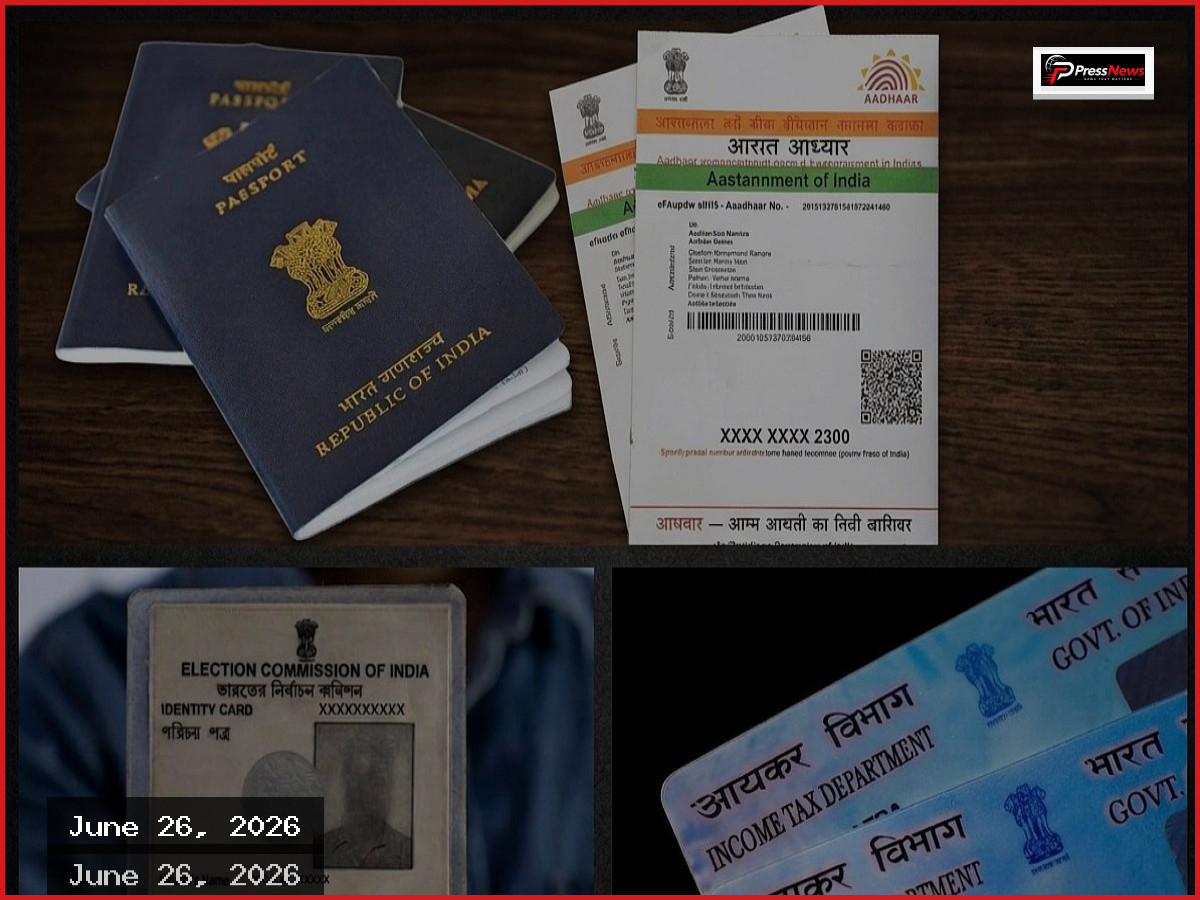
India’s citizenship framework often creates confusion because widely used identity documents are frequently mistaken for definitive proof of nationality. However, under Indian law, none of these documents—passport, Aadhaar, voter ID, or PAN—independently establish citizenship. The distinction between identity and citizenship has become a focal point following a clarification from the Ministry of External Affairs that a passport is essentially a travel document, not a certificate of citizenship.
India does not issue a single, universal citizenship card. Instead, nationality is determined through legal records, historical documentation, and specific eligibility criteria as outlined under the Citizenship Act, 1955. Citizenship is a legal status defining the bond between an individual and the state, shaped by birth, parentage, residency, and official records. Government sources have emphasized there is no policy change, noting that while passports are issued after verifying citizenship, they remain travel documents rather than citizenship certificates.
A passport acts as strong evidence of nationality due to the verification process required for its issuance. However, under the Passports Act, it can occasionally be issued in the public interest, meaning it is not conclusive proof. It is primarily used for international travel, relies on underlying records, and can be cancelled if an individual’s eligibility is questioned. Similarly, the Supreme Court has reaffirmed that Aadhaar is proof of identity and residence, not nationality. Since it is issued to residents rather than just citizens, and is based on biometric data, it cannot establish citizenship. Even foreign nationals residing in India can obtain Aadhaar.
A PAN card, issued by the Income Tax Department, is strictly for financial and tax-related transactions and can be held by foreign nationals who are earning or investing in India, making it unrelated to citizenship status. Likewise, being listed on a voter list does not automatically confirm citizenship; election authorities have clarified that while registering to vote requires a declaration of citizenship, it is not definitive legal proof in disputes. Judicial rulings have consistently underscored that citizenship must meet legal criteria rather than relying on a single document.
In landmark rulings, such as the 2005 case of Sarbananda Sonowal v. Union of India, the court placed the burden of proof firmly on the individual. India does not issue a universal citizenship card for all citizens. Only those who acquire citizenship through registration or naturalisation receive formal certificates, whereas citizens by birth typically do not receive a standalone document. Consequently, citizenship is inferred through various records.
Under the Citizenship Act, 1955, citizenship can be acquired by birth, which depends on the year and parental citizenship status, with stricter rules for those born after 2004. Other routes include descent for children born abroad to Indian parents, registration for eligible residents or persons of Indian origin, and naturalisation. The latter requires long-term residency, specifically 11 years of stay in the last 14 years and 12 months of continuous residence immediately before applying. Exceptional cases may allow for relaxation based on contributions to fields like science, art, or public service. Ultimately, while identity documents provide support, citizenship is legally defined by the state through complex legal requirements rather than any single piece of identification.