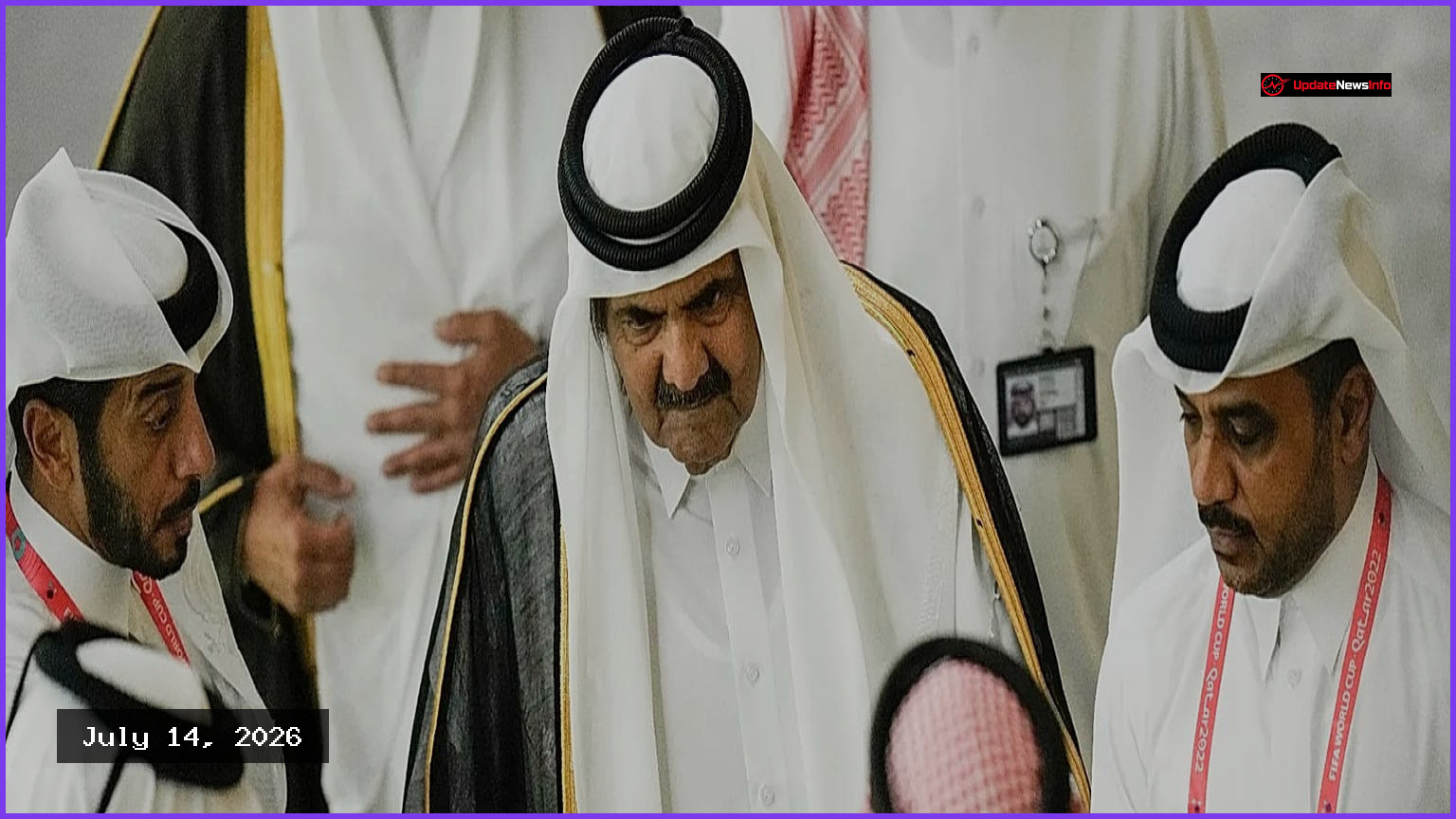
A steady stream of international leaders has arrived in Doha to pay their respects to the late Father Emir Sheikh Hamad, who died on Sunday at the age of 74. The Gulf nation is currently observing a four-day period of national mourning to honor the man widely recognized as the architect of modern Qatar.
Among the first European heads of government to visit was Italian Prime Minister Giorgia Meloni, who met with Sheikh Tamim at Lusail Palace to convey her condolences. Regional representation was significant, with Egyptian President Abdel Fattah el-Sisi, Syrian President Ahmed al-Sharaa, Moroccan Prime Minister Aziz Akhannouch, and both Lebanese President Joseph Aoun and Prime Minister Nawaf Salam arriving to offer their sympathies.
The international presence extended beyond the region, with Rwandan President Paul Kagame traveling to Doha to honor the former leader. Kagame praised Sheikh Hamad as a visionary who transformed Qatar, stating that his legacy of service and his commitment to international cooperation will endure for generations. Similarly, Kazakh President Kassym-Jomart Tokayev paid tribute to the former emir, describing him as an outstanding statesman whose leadership was instrumental in the nation's development.
FIFA President Gianni Infantino also visited Lusail Palace to pay his respects. Reflecting on his personal connection to the country, which he has often referred to as his second home, Infantino noted on social media that the former emir taught him that bravery involves embracing change and constant progress. He characterized Sheikh Hamad as the man who shaped Qatar into a great nation.
Sheikh Hamad’s tenure, which lasted from 1995 until 2013, was marked by rapid economic, diplomatic, and cultural growth that elevated Qatar’s status on the global stage. His administration was responsible for establishing one of the world's largest liquefied natural gas industries, strengthening the country's role as a key international mediator, and securing the rights to host the 2022 FIFA World Cup. In 2013, he voluntarily transferred power to his son, becoming one of the few Gulf leaders to oversee a peaceful transition of power during his lifetime.