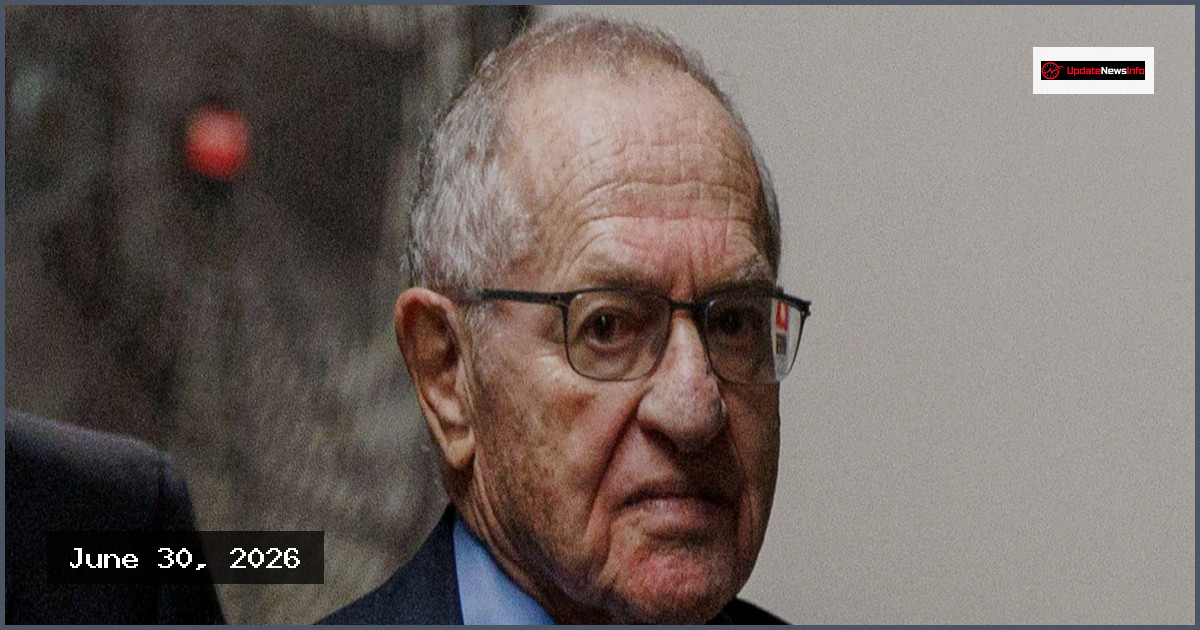
On Monday, the Supreme Court opted not to hear a defamation claim filed by prominent attorney and law professor Alan Dershowitz against CNN. This decision effectively maintains the long-established protections that news organizations enjoy when providing coverage of public figures. Having faced defeats in lower courts, Dershowitz had petitioned the justices to re-examine the landmark 1964 New York Times v. Sullivan ruling. That decision established that public figures must provide evidence of “actual malice” by a news entity to successfully pursue a defamation claim.
While the court declined the case, conservative Justices Clarence Thomas and Neil Gorsuch expressed their disagreement with the decision. In a brief dissent, Thomas argued that the burden of proving actual malice is far too demanding. He noted that the standard bears no relation to the text, history, or structure of the Constitution. A representative for CNN declined to provide a comment regarding the court’s action.
In an email to NBC News, Dershowitz stated that the core issue was whether proving malice by clear and convincing evidence is a nearly impossible burden, adding his belief that the court would eventually move to alter that standard. The lawsuit stems from his legal representation of President Donald Trump during the first of two impeachment trials in 2020, following the House’s impeachment of Trump over his pressure on Ukraine regarding Joe Biden and his son, Hunter. Dershowitz claimed CNN misreported his comments regarding the specific grounds for presidential impeachment.
The case provided the justices an opportunity to challenge or weaken the Sullivan ruling, which some members of the court have criticized in the past. Such a reversal would have significantly impacted media outlets, increasing their vulnerability to expensive litigation from wealthy public figures, including business moguls, celebrities, and politicians. The Sullivan ruling requires that plaintiffs prove a false statement was made with knowledge of its falsity or with reckless disregard for the truth.
In his $300 million lawsuit, Dershowitz’s legal team contended that CNN commentators falsely asserted he claimed a president could not be impeached even for committing a criminal act. His lawyers maintained that he actually argued purely corrupt acts to benefit a president personally remain impeachable. CNN’s legal counsel countered that the network aired his full remarks and invited him on the air twice to explain his perspective after he raised objections. Both a federal judge in Florida and the Atlanta-based 11th U.S. Circuit Court of Appeals ruled against Dershowitz, finding that the actual malice standard was not met.