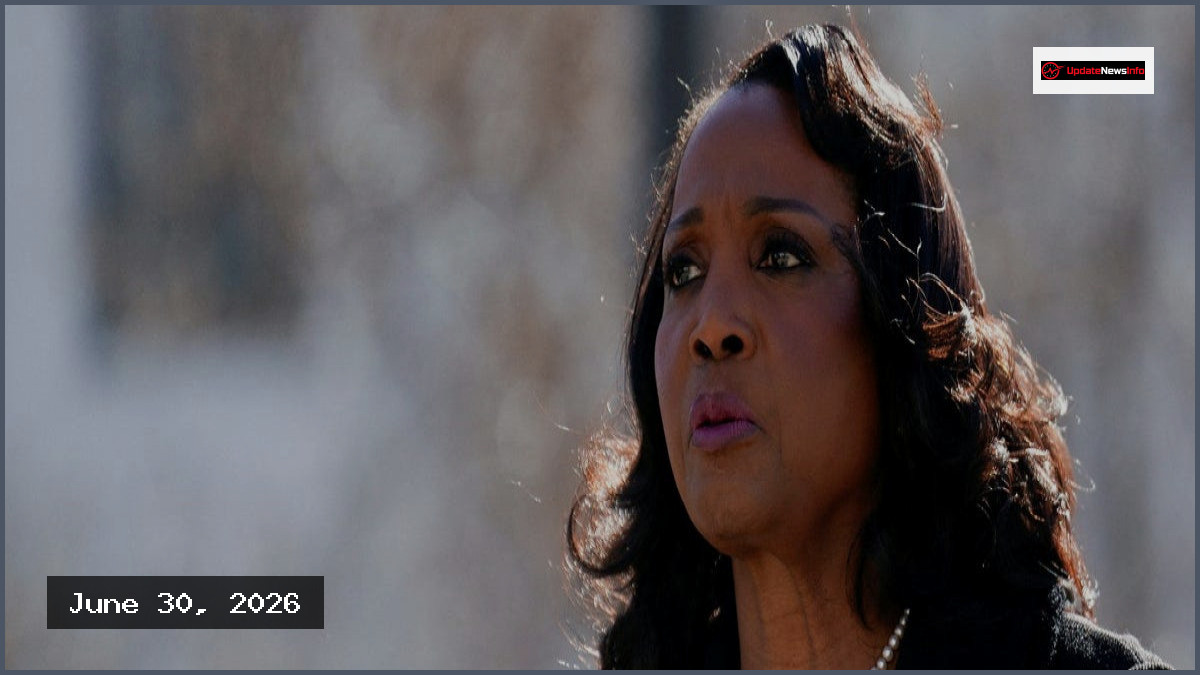
On June 29, the Supreme Court delivered a 5-4 ruling establishing that Donald Trump lacks the authority to fire Federal Reserve Governor Lisa Cook. This decision serves as a significant setback for the president, who has actively sought to influence central bank operations, while securing a victory for the institution’s long-standing independence. The court ordered that Cook remain on the board of governors while she continues to contest the president’s attempt to dismiss her. Consequently, while lower courts will continue to evaluate whether Trump possessed legal “cause” for removal, he is prohibited from terminating her immediately while the litigation persists.
Expressing relief following the ruling, Cook stated her gratitude not for her own sake, but for the American public whose economic stability relies on a central bank that fulfills its mission without political intimidation. She reaffirmed her commitment to upholding the principle of political independence throughout her service at the Federal Reserve. President Trump has frequently pressured Fed policymakers to lower benchmark interest rates to stimulate the economy, a goal that has been central to his efforts to maintain voter favorability during his second term. With recent signs of job growth and inflation, there is an increasing consensus among officials regarding a possible hike later in 2026.
The president attempted to fire Cook last August, citing allegations of fraud regarding two home mortgage applications submitted in 2021, rather than her voting record on interest rates. Following the court’s decision, Trump utilized Truth Social to state that the ruling was based on a “strictly procedural basis,” adding that his administration intends to take immediate action to ensure no wrongdoing remains unaddressed. Cook has consistently denied these allegations, and many legal experts and economists suspect the termination attempt was motivated by the president’s desire to exert influence over monetary policy. Jerome Powell, then-Fed Chair, previously described this as perhaps the most critical legal case in the history of the Federal Reserve.
The legal challenge cost roughly $1.2 million in legal fees, which were primarily covered by two nonprofits, the State Democracy Defenders Fund and Contina Impact, according to public filings. Cook was initially appointed by former President Joe Biden in 2022 to complete an unexpired term, becoming the first Black woman to hold the position, and was reappointed the following year. Her current term is set to conclude in January 2038. Experts like Mike Skordeles, head of U.S. economics at Truist, suggested that the administration was likely seeking any available leverage to sway board votes.
The 1913 Federal Reserve Act provides the president power to remove officials “for cause,” a provision Trump is the first to formally challenge. Chief Justice John Roberts, writing for the majority, argued that adopting the administration’s position would effectively transform the “for-cause” protection into “at-will employment,” an interpretation he noted is inconsistent with the statute enacted by Congress and the national tradition of shielding the central bank from political interference. As a governor, Cook sits on the Federal Open Market Committee, which manages the federal funds rate.
Although Cook historically favors lower rates, she has supported maintaining current levels throughout 2026. However, she has signaled openness to rate hikes due to persistent inflation from Iran war-related supply chain disruptions. Annual inflation has remained above the 2% target since 2021; in May, the Labor Department’s gauge reached 4.2% while the Commerce Department’s metric hit 4.1%. During a May 27 appearance at Stanford’s Institute for Economic Policy Research, Cook noted she is prepared to raise rates if expected disinflation does not materialize. Currently, the committee maintains a target range of 3.5% to 3.75%. The court’s ruling follows the April termination of a Department of Justice investigation into the Fed’s headquarters renovation budget, with Inspector General reports on the project expected later this summer on June 17.