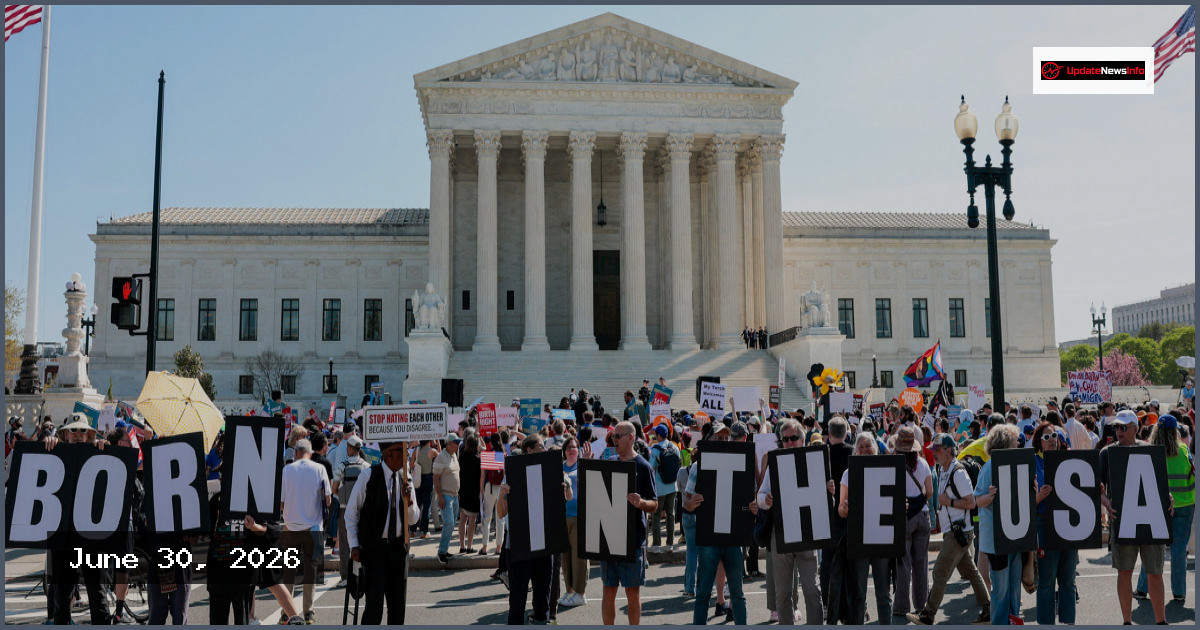
In a significant legal defeat for the administration, the Supreme Court ruled on Tuesday that President Donald Trump’s attempt to restrict citizenship at birth for individuals born on American soil is unlawful. The high court, divided 6-3, determined that the executive order signed by the president on January 20, 2025—the first day of his second term—violated established legal standards.
Five of the justices concluded that the order conflicted with the 14th Amendment of the Constitution, which has historically been interpreted to grant birthright citizenship to nearly everyone born within the United States. Justice Brett Kavanaugh, while part of the majority, noted in a separate opinion that he believed the order violated federal law, though he stopped short of citing a Constitutional breach.
This ruling marks the third major legal setback for the president in recent months, following a February decision invalidating his tariff policies and Monday’s block on the firing of Federal Reserve official Lisa Cook. Despite the court’s conservative majority, which includes three of his own appointees, the justices have now ruled against the president on several key matters.
Chief Justice John Roberts, writing for the majority, asserted that there was very little evidence to support the administration’s attempt to reinterpret laws that have been understood for decades. Roberts emphasized that citizenship represents the right to have rights and participate in the political community. He noted that the 14th Amendment was established following the Civil War to ensure these rights for everyone, including former slaves, and declared, “We keep that promise today.”
Three conservative justices—Clarence Thomas, Samuel Alito, and Neil Gorsuch—would have ruled in favor of the president. In his dissent, Justice Thomas argued that the 14th Amendment was intended specifically for formerly enslaved Black people who lacked another homeland, distinguishing them from the children of foreign temporary visitors. Justice Alito argued in a separate dissent that the ruling maintains an incentive for illegal immigration and criticized the current legal framework as outdated.
Under the rejected proposal, birthright citizenship would have been restricted to children with at least one parent who was either a U.S. citizen or a permanent resident. Babies born to individuals entering the country illegally or to temporary visitors would have been excluded from automatic citizenship. The order had remained blocked by lower courts since it was first issued.
Cecillia Wang, National Legal Director at the American Civil Liberties Union, praised the decision as a reaffirmation of a fundamental American promise. The case relied on long-standing precedents, including the 1898 Supreme Court ruling in United States v. Wong Kim Ark, which established that a person born in the U.S. to foreign-born parents is a citizen. Chief Justice Roberts remarked that the arguments presented by the administration were effectively the same as those rejected by the court over a century ago.